Cries of captivity and liberation on Black Awareness Day

The Passion of Christ continues century after century in the bodies of the crucified. Jesus will agonize until the end of the world, so long as a single one of His brothers and sisters is still subject to some cross, like the Buddhist bodhisatwas (the Illuminated) who pause at the threshold of Nirvana, do not enter, returning to the world of the suffering –samsara– in solidarity with all who suffer — persons, animals and plants. With this conviction, the Catholic Church, in the liturgy of Good Friday, puts these moving words in the mouth of Jesus Christ:
“My people, what have I done, how have I offended you?, answer me. What else could I have done for you? How did I fail you? I had you leave Egypt and fed you manna. I prepared good land for you, and you prepared a cross for your king”.

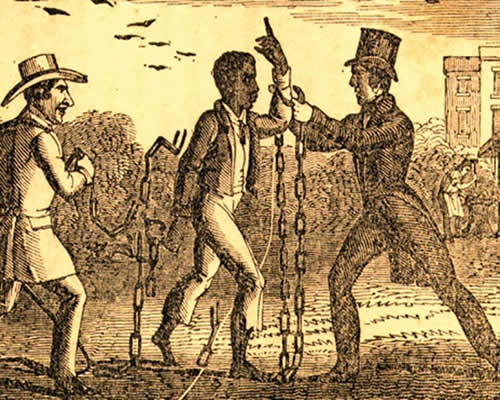
As we Brazilians celebrate the abolition of slavery, (May 13, 1888), we realize that it is still incomplete. The Passion of Christ continues in the passion of the Black people. A second abolition is needed: the abolition of misery and hunger. The cries of captivity and liberation are still heard, coming from the senzalas, and now from the favelas around our cities. The Black population still talks to us through wails and pleading.

“White brother and sister of mine, my people: what have I done to you, how have I offended you? Answer me! ”

I inspired in you music full of banzo and contagious rhythm. I taught you how to use the bumbo, the cuica and the atabaque. It was I who gave you the rock and ginga of the samba. And you took what was mine, made a name… a big name, accumulated money with your compositions and returned nothing to me.

I came down from the mountains and showed you a world of dreams, a world of boundless fraternity. I created for you thousands of multicolored fantasies, and for you I prepared the greatest feast in the world: I danced the carnival for you. And you were so very happy that you gave me a standing ovation. But soon, very soon, you forgot me, sending me back to the mountains, to the favelas, to the naked and crude reality of unemployment, hunger and oppression. .

“White brother and sister of mine, my people: what have I done to you, how have I offended you? Answer me! ”

As an inheritance, I gave you the beans and rice that are the day-to-day dish. Of the left overs I made the feijoada, the vatapá, the efó and the acarajé: the typical cuisine of Bahia and Brazil. And you make me endure hunger. And you let my children die of malnutrition or suffer irremediable brain injury, leaving them forever stunted.

I was violently snatched from my African homeland. I knew the negreros’ nave-phantom. I was made a thing; a “piece“, a slave. I was the Black mother to your children. I cultivated the fields, harvested the tobacco and planted the sugarcane. I did all the jobs. It was I who built the beautiful churches that everyone admires and the palaces that the slave owners inhabit. And you call me sluggish and arrest me as a vagabond. You discriminate against me for the color of my skin and still treat me as if I continued to be a slave.

“White brother and sister of mine, my people: what have I done to you, how have I offended you? Answer me!”

I knew how to resist. I managed to run away and founded quilombos: fraternal societies, without slaves, of people who were poor but free: Blacks, mestizos and whites. In spite of the lashes on my back, I passed cordiality and sweetness to the Brazilian soul. And you sent me to the capitão-do-mato, hunting me like a bug. You razed my quilombos and still now you ensure that abolishing the misery that enslaves cannot be forever a daily and effective truth.

I showed you what it means to be a living temple of God. And therefore, how to feel God in a body filled with axé, and how to celebrate God in rhythm, in dance, and in food. And you repressed my religions, calling them Afro-Brazilian rites or considering them simple folklore. You invaded my terreiros, throwing salt on them and destroying our sacred figures. Often you turned the macumba into a police case. The majority of the youth murdered in the peripheries between 18 and 24 years of age are Black, and because they are Black they are suspected of being at the service of the drug mafias The majority of them are simple laborers.

“White brother and sister of mine, my people: what have I done to you, how have I offended you? Answer me!”

When with so much work and sacrifice I enabled some advance in life, receiving a hard-earned salary, buying my little house, educating my children, singing my samba, supporting my favorite team and being able to have a cold beer with their friends on the week end, you say that I am a Black man with a white man’s soul, thus degrading the value of our souls as dignified and hard working Black men. And in the contests, under equal conditions, you almost always leave me behind, in favor of a white.

And when policies were developed to repair the historic perversity, allowing that which you always denied me, to study and prepare myself in the universities and technical schools, so that I could improve my life and the life of my family, the majority of your people shouted: that violates the Constitution, it is discrimination, a social injustice.

“White brother and sister of mine, my people: what have I done to you, how have I offended you? Answer me!”

My Black brothers and sisters, on this November 20th, the day of Zumbí and of the Black Consciousness, I wish to pay homage to you, to all of you, who have managed to survive during all this long time, because the happiness, the music, the dance and the sacred are all inside of you in spite of all this Way of the Cross. of the sufferings that are unjustly imposed on you.

With much axé and love, Leonardo Boff white and Black, by option.

Leonardo Boff Eco-Theologian-Philosopher Earthcharter Commission

Free translation from the Spanish sent by
Melina Alfaro, alfaro_melina@yahoo.com.ar.

“LaChiesa è dei mistici non del potere”:entrevista de L.Boff ao La Repubblica de Roma


                          “LaChiesaè dei mistici non del potere”

Intervista di PAOLO RODARI a Leonardo Boff 26/11/2018

L aconsidera il suo“canto Ldel cigno”, la traduzione che Leonardo Boff, ex frate francescano ed ex presbitero brasiliano,

Il noto esponente della Teologia della liberazione, fa de l’Imitazione di Cristo di Tommaso da Kempis. A uno dei testi più meditati dopo il Vangelo e ritraducendo partendo dall’edizione della Tipografia poliglotta Vaticana, Boff aggiunge, «nel tramonto della vita», un quinto libro sulla sequela di Gesù.

Freud, Jung e Heidegger lessero Tommaso da Kempis riflettendo sul tema dello svuotamento di sé contro ogni attaccamento al proprio io. Di questo c’è bisogno oggi?

R/«Èun tema centrale e rappresenta l’atteggiamento diGesùche,“pur essendo di natura divina”, ha spogliato séstessoper essere uguale anoi. Questarinuncia all’attaccamento al proprio io è la prima virtù del buddismo e anche del cammino spirituale cristiano. Ed è il tema centrale del più grande dei mistici dell’Occidente, Meister Eckhart, con il suo Abgeschiedenheit,la pratica del distacco. Psicologi come Freud e filosofi come Heidegger hanno compreso tale esigenza di Tommaso da Kempis. Il distacco è il primo passo per il vero processo di individuazione e di identità personale. Èciò che ci assicura il dono più grande dopo l’amore, che èla libertà interiore».

Lei scrive che seguire Gesù significa assumere la sua causa, correre i suoi rischi ed eventualmente accettare il suo stesso tragico destino. Cosa significa?

R/«È una realtà testimoniata dalla Chiesa della liberazione dell’America Latina sotto i regimi militari in vari Paesi.Èquesto tipo di Chiesa a prendere sul serio l’opzione per i poveri, la quale ha prodotto e produce anche oggi tanti martiri, tra i laici e le laiche, i preti e vescovi come Oscar Romero in El Salvador e Angelelli in Argentina».

La Chiesa sembra in alcune sue parti legata a una visione imperialista/costantiniana,
immersa nella storia e votata alla conquista del potere. E Francesco a volte appare come una meteora in un mondo che fatica a tenere il suo passo. Cosa pensa?

R/«Credo sinceramente che la Chiesa-istituzione, cioè la Chiesa come società gerarchica, non si senta parte del popolo di Dio come richiedeva il Concilio Vaticano II, ma al di fuori e al di sopra di esso. Organizzandosi non attorno al più antico concetto di communio , di comunione tra tutti, ma attorno al potere sacro (sacra potestas), escludente perché concentrato solo in alcune mani. Questo tipo di Chiesa è caduta nelle tre tentazioni affrontate e superate da Gesù: quella del potere religioso di riformare il mondo a partire dal tempio; la tentazione del potere profetico di trasformare le pietre in pane, ela tentazione del potere politico, dominare su tutti i popoli. Restano attuali le parole pronunciate dal cattolico Lord Acton in riferimento ai potenti papi del Rinascimento: “Il potere tende a corrompere e il potere assoluto corrompe in modo assoluto”. E ancora più pertinente è quanto affermava Hobbes riguardo al potere, che, diceva, si sostiene solo sul “desiderio incessante di avere sempre più potere”. Tutte parole che si sono concretizzate nella storia della Chiesa, attraverso una concentrazione enorme di potere unicamente nelle mani del clero, con esclusione in particolare delle donne. È stato necessario un papa proveniente dalla fine del mondo, che ha scelto il nome Francesco, archetipo della povertà e della rinuncia a ogni potere, per mostrare come la gerarchia della Chiesa debba orientarsi in base al servizio (ierodulia )enon alpotere sacro (ierarchia )».

Lei subì un certo ostracismo da Roma?

R/«Non ho conservato alcun rancore per la punizione che mi è stata inflitta del silentium obsequiosum. Sapevo che la teologia del potere sacro operante nella testa dei responsabili dell’ex Sant’Uffizio avrebberesoinevitabile lamia condanna. Mi sentivo nel vero e avevol’appoggio della Conferenza dei vescovi del Brasile. Per questo accettai tranquillo l’imposizione del “silenzio ossequioso”, poi sospeso da Giovanni Paolo II».

Papa Bergoglio riceve diverse critiche da settori conservatori


della Chiesa. Perché?

R/«Credocheiconservatori fossero abituati a un papa faraone, con
titoli esimboli del potere ereditati dagli imperatori pagani. Poi all’improvviso arriva un papa al di fuori del quadro tradizionale, che si spoglia di tutto questo apparato profano che allontana i fedeli e asseconda la vanità clericale. Non accettano un papa che non provenga dal loro vecchio e moribondo cristianesimo. Francesco porta l’atmosfera nuova di Chiese che non sono più lo specchio di quelle europee, ma Chiese-fonti, con la loro teologia, la loro pastorale rivolta specialmente ai più poveri, la loro liturgia e il loro modo di rendere lode a Dio».

Si sente sempre un figlio della Chiesa?


R/Si uin figlio della Chiesa di Cristo.«Neltramonto della vita -compirò 80 anni adicembre – non mi preoccupo del passato ma rivolgo i miei occhi all’eternità. Unire il mio nome, quello di un theologus peregrinus,aquello diTommaso da Kempis è per me l’onore più grande. “Ne è valsa la pena?”, si domandava Fernando Pessoa,il più grande poeta portoghese. Faccio mia la sua stessarisposta: “Tutto vale la pena sel’anima non è piccola”. Possodire che, con la grazia di Dio, ho cercato di fare in modo che la mia anima non fossepiccola».

Il libro Imitazione di Cristo e sequela di Gesù
di Leonardo Boff (Gabrielli Editori
trad. di Claudia Fanti, pagg. 253, euro 19)

La rinuncia all’attaccamento al proprio io è la prima virtù del buddismo e del cammino spirituale cristiano

“Francesco è odiato dai clericali di un culto moribondo
che vorrebbero un papa faraone”.

Parla il grande teologo della liberazione Leonardo Boff


The perverse dimension of Brazilian “cordiality”


On 10/31/2014 I published an article in JB online on the meaning of calling the Brazilian a “cordial man”. I am publishing it again, modified, due to its burning timeliness. In the last two years, we have seen an unprecedented wave of hate and discrimination, particularly during the Presidential electoral campaign. There have been insults, slanders, millions of instances of “fake news” and all kinds of filthy language. This displayed the perverse side of the so-called “cordial” nature of the Brazilian people.

Calling a Brazilian a “cordial man” comes from the writer Ribeiro Couto. Sergio Buarque de Holanda popularized the expression, in his well known 1936 book: “Roots of Brasil”, where he devoted the entire Chapter V to it. But he clarifies, contrary to Cassiano Ricardo, who understood “cordiality” as goodness and affable treatment, that deep down, “our ordinary form of social coexistence is just the opposite of affable treatment” (from the 1989 21ª edition, p.107).

Sergio Buarque understands cordiality in the strict etymological sense: the term derives from “heart” (corazon). Brazilians act more from the heart than from reason. Both hate and love come from the heart. The author says it well: “enmity can easily be as cordial as friendship, because both are born from the heart” (p.107). I would say that the Brazilian is more sentimental than cordial, which seems to me more appropriate.

I write this in an attempt to understand the “cordial” feelings that had erupted in the 2018 Presidential campaign. On one side there have been declarations, enthusiastic to the point of fanaticism, and on the other, declarations of fascism, profound hatred and vulgar expressions. It confirmed what Buarque de Holanda wrote: the lack of loving treatment in our social coexistence.

Anyone who has followed the social media must have noticed the very low levels of education, the lack of mutual respect and even the absence of the democratic sense of coexistence with differences. This lack of respect was also seen in the TV programs of the political parties.

To better understand our “cordiality” we must mention the two inheritances that weigh on our citizenry: colonization and slavery. Colonization left us with a feeling of submission, having been forced to adopt the political forms, language, religion and habits of the Portuguese colonizer. La Casa Grande and La Senzala were created as a result. As Gilberto Freyre well demonstrated, it is not just about exterior social institutions: They were internalized in a form of a perverse dualism: On one side was the lord who owns everything and on the other, the servant or server who has little and submits. A social hierarchical structure was also created that is seen in the division between rich and poor. That this structure subsists in the brains of important oligarchs and has been turned into a code for understanding reality, clearly appears in the way people treat each other in the social networks.

Another very perverse tradition was slavery, which was well described by Jesse Souza in his book: “The backwards elite: from slavery to the Lava-Jato” (2018). It is worth remembering that in the years 1817 and 1818, more than half of the population of Brazil consisted of slaves (50.6%). Today nearly 60% has some blood of Afro-descendant slaves in its veins. They are discriminated against, and pushed to the peripheries, humiliated to the point of losing their own self esteem.

Slavery was internalized in the form of discrimination and prejudice against the Blacks, who always had to serve, because previously, the slaves did everything for free, and it is believed that things should continue that way. This is how domestic workers or the haciendas laborers are often treated. A high class madame once said: “the poor already have the family necessities, yet they believe that they have even more rights”. That is the mentality of La Casa Grande.

These two traditions subsist in the Brazilian collective unconsciousness, not so much in terms of class conflict (that also exists) but in terms of conflict regarding social status. It is said that Blacks are lazy, even though we know that they built almost everything in our historical cities. Is also said that Northerners are ignorant, when in truth they are a very creative people, sharp and hard workers. From the Northeast come great writers, poets, and actors; but prejudice pushes them into inferiority.

All these contradictions of our “cordiality” appeared in the tweets, facebook pages and other social media. We are excessively contradictory beings.

I add an argument from an anthropological-philosophical order, in order to understand the emergence of loving and hating in this Presidential electoral campaign. It speaks to the ambiguity of the human condition. Each of us has both the light and shadow dimension, the sim-bolical (that unites) and dia-bolical (that divides). The moderns say that we are simultaneously demented and sapient (Morin), that is, people of rationality and goodness and at the same time of irrationality and evil.

This is not a defect of creation, but a characteristic of the condition humaine. Each of us must know how to balance these two forces, and give primacy to the dimension of light over dark, and to the sapient dimension over the demented.

We must neither laugh nor cry, but try to understand, as Spinoza would say. But understanding is not enough. It is urgent that we practice civilized forms of “cordiality” where the will to cooperate, looking towards the common good, predominates; where minorities are respected and differing political options are welcomed. Brazil needs to unify so that together we can face the grave internal problems, in a project undertaken by all. Only that way will the Brazil that was called “The Land of Good Hope” (Ignacy Sachs) be reborn.

The President elect will not bring national reconciliation, because he, by his style, is a divider, and creator of a social atmosphere of violence and discrimination.

Leonardo Boff Eco-Theologian-Philosopher,Earthcharter Commission

Free translation from the Spanish sent by
Melina Alfaro, alfaro_melina@yahoo.com.ar.
Done at REFUGIO DEL RIO GRANDE, Texas, EE.UU.

Lamentazioni sulla schiavitù e per la libertà dei neri

La Passione di Cristo continua lungo i secoli nel corpo dei crocifissi. Gesù starà in agonia fino alla fine del mondo, fino a quando ci sarà anche uno solo tra i suoi fratelli o una sola sorella appesi a qualche croce, come detto dei bodhisatwas buddisti (gli illuminati), che si fermano sulla soglia del Nirvana, non entrano per ritornare al mondo del dolore – samsara – per essere solidali con chi soffre, siano essi umani, animali o piante. Con questa convinzione, la Chiesa cattolica, nella liturgia del Venerdì Santo, mette in bocca a Cristo queste parole pungenti:

O popolo mio, dimmi che ti ho fatto? In che cosa ti ho contristato? Che cos’altro avrei potuto fare e non ho fatto? Dove ho sbagliato? Ti ho fatto uscire dall’Egitto, ti ho dato da mangiare la manna. Ho preparato una bella terra, e tu, la croce per il tuo re.

Celebrando l’abolizione della schiavitù del 13 maggio 1888, ci siamo resi conto che l’operazione non è ancora completata. La passione di Cristo continua nella passione del popolo nero. Manca una seconda abolizione, della miseria e della fame. Si ode ancora nell’aria l’eco dei lamenti per la schiavitù e per la libertà. Veniva un tempo dalle Senzalas, ora viene dalle favelas e periferie che accerchiano le nostre città.

Il popolo nero ci parla ancora in forma di lamentazione e supplica.

Fratello mio bianco, sorella mia bianca, popolo mio. Che ti ho fatto, in che cosa ti ho contristato? Rispondimi!

Sono stato io a ispirarti la musica carica di banzo e il ritmo contagiante, io ti ho insegnato a usare il bumbo, la cuica e l’atabaque. Io ti ho dato il rock e i movimenti fluidi della samba. E tu hai preso dal mio, hai preso nome e celebrità, hai accumulato denaro con composizioni e non mi hai restituito niente.

Sono sceso da quei colli vertiginosi, ti ho fatto vedere un mondo di sogni di una fraternità senza barriere. Ti ho creato mille e mille fantasie colorite e per te ho preparato la maggior festa del mondo: per te ho ballato il Carnevale e tu eri contento e mi hai applaudito in standing ovation. Ma tu, presto, molto presto ti sei dimenticato di me e mi hai rimandato alla favela, alla realtà nuda e cruda, della disoccupazione, della fame e dell’oppressione.

Fratello mio bianco, sorella bianca, popolo mio, che cosa ho fatto che ti ha rattristato. Rispondetemi!

Io ti ho lasciato in eredità il piatto quotidiano, riso e fagioli. Con gli avanzi che ricevevo facevo la feijoada, il Vatapa, e l’efo e l’ecarajé: la cucina tipica della Bahia e del Brasile e tu mi lasci patir la fame e permetti che i miei bambini muoiano di fame oppure che il oro cervelli siano irrimediabilmente danneggiati bloccando la loro crescita allo stadio infantile.

Io sono stato strappato a viva forza dalla mia patria africana con la forza. Ho conosciuto le navi-fantasma dei negrieri, io ero un oggetto, un pezzo di ricambio schiavo, sono stata la mamma nera de tuoi figli. Ho lavorato i campi, ho raccolto il tabacco, ho piantato la canna da zucchero. Io ho fatto tutti i lavori, io ho costruito tutte le chiese che tutti ci ammirano e i palazzi dove abitavano i padroni degli schiavi. E tu dici che siamo pigri e ci fanno arrestare per vagabondaggio. A causa del colore della mia pelle mi discriminano e mi tratti come se io fossi ancora schiavo.

Fratello bianco, sorella bianca, che cosa ti ho fatto, in che cosa ti ho contristato? Rispondimi!

Io ho saputo resistere, sono riuscito a fuggire e a fondare quilombos: società di senza schiavi, legati da affetto fraterno, gente povera, ma libera, neri, meticci e bianchi. Sono stato io, a dispetto delle scudisciate sulla schiena, a trasmettere la cordialità e la dolcezza dell’anima brasiliana. E tu inviasti il capitano della Capitania per darmi la caccia come a un animale e tu hai fatto radere al suolo i miei quilombos e ancora oggi impedisci che l’abolizione della miseria che schiavizza, sia sempre verità quotidiana e effettiva.

Io ti ho fatto vedere che cosa significa essere tempio vivo di Dio. E per questo come sentire Dio nel Corpo pieno di Axé e celebrarlo con i ritmi di danze e corse, e nel mangiare. E tu hai schiacciato le mie religioni, chiamandole riti afro-brasiliani o semplicemente folclore. Hai invaso i miei terreiros spargendoci il sale distruggendo le nostre figure sacre. Non raramente hai scambiato un evento di macumba come caso di polizia da denunciare al Commissariato. La maggioranze dei giovani ammazzati nelle periferie in età dai 18 ai 24 anni sono neri e per il fatto di essere neri o sospettati di essere a servizio delle mafie della droga. La maggioranza di loro erano semplici lavoratori.

Fratello bianco, sorella bianca, popolo mio, che ho fatto per contristarti? Rispondimi!

Quando con molto sforzo e sacrificio sono riuscito a salire un po’ nella vita guadagnando un salario sudato, comprando la mia casetta, cantando la mia samba facendo tifo per la mia squadra del cuore, potendo permettermi nel weekend una birretta con gli amici, tu dici che sono un nero con l’anima bianca, diminuendo così il valore della nostra anima di neri degni e lavoratori. Nei concorsi, quasi sempre il tuo giudizio va a favore del bianco pur essendo il resto alla pari.

E quando sono state studiate politiche che mettessero una toppa nella perversità storica, permettendomi quello che sempre mi hai negato studiare e laurearmi all’università e alla scuola tecnica, e così migliorare le condizioni della mia vita e della mia famiglia, la maggioranza dei tuoi grida: è contro la Costituzione, è una discriminazione, è un’ingiustizia sociale.

Fratello bianco, sorella bianca, popolo mio. In che cosa ti ho contristato? Rispondimi!

Fratelli neri, sorelle nere, in questo giorno 20 di novembre, giorno di Zombi e della coscienza negra, desidero complimentarmi con voi tutti che siete riusciti a sopravvivere, per tutto questi lunghi anni, perché l’allegria, la musica, la danza e il sacro stanno dentro di voi, nonostante questa via Crucis di sofferenze che ingiustamente vi sono imposte.

Con molto axé e amore

LEONARDO BOFF, bianco e nero per opzione.

Traduzione di Romano Baraglia – Lidia Arato