I just saw the movie, Dos Papas, by Fernando Meirelles, the consecrated Brazilian filmmaker.
In my opinion the movie is technically and aesthetically well made, reproducing the grandiose spaces of the Vatican and its gardens. The movie is based on historical events, with the logical creativity this art form allows, especially in the construction of the dialogues, which reflect their respective theologies and their well known positions.
What I say here is a strictly my personal opinion. I have had the privilege of personally knowing the two Popes, with whom I maintained and maintain close relations and friendship.
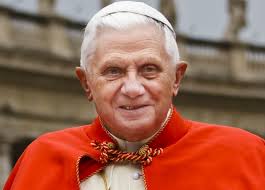
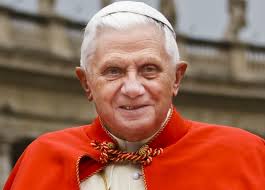
Pope Ratzinger: rigorous and refined
I owe a debt of gratitude to Professor Joseph Ratzinger for having valued positively my doctoral thesis about “The Church as a Fundamental Sacrament in the Secularized World.” It was voluminous, with more than 500 printed pages. Professor Ratzinger helped me financially with a considerable amount of money, and found an editor to publish it when no one wanted to risk publishing a book of such dimensions. The reception in the international theological community was excellent. It is considered a fundamental work, especially by the French Dominican Jean Yves Congar, a well known specialist in the theme, Church.
Professor Ratzinger is a person of a very refined manner, and extremely intelligent. Never have I heard him raise his voice, he is very timid and reserved
When I leaned that he had been elected Pope, I immediately thought: “He is a Pope who will suffer much because he perhaps has never embraced the people, least of all a woman, nor has he ever been exposed to multitudes”.
Our friendship was strengthened by the fact that for five years, beginning in 1974, in Easter week, (which often happens around May), some 25 well known progressive men and women theologians from around the world used to gather in the city of Nimega, in the Low Countries or in other European cities. For a week we would carry on ecumenical discussions, accompanied by a small group of scientist, even Paulo Freire, about topics relevant to the world and to the Church. We published the magazine, Concilium, that appeared in 7 languages and is still being published, (in Brazil by Editora Vozes). In that magazine the best minds of the world collaborate in different fields of knowledge, from sexuality and Liberation Theology to modern cosmology.
Professor Ratzinger almost always would sit by my side. After lunch, while everyone else took a nap, Professor Ratzinger and I would stroll through the gardens, discussing theological themes; our favorites were Saint Augustine and Saint Bonaventure, practically all of whose books I have read.
Each one in his role without breaking the relationship
Made Cardinal and president of the Congregation for the Doctrine of the Faith, in 1984 he had the thankless task of questioning me about my book Church: Charisma and Power. Cardinal Ratzinger fulfilled his institutional role of questioner, and I, that of the defender of my opinions. It was a strong dialogue, but was always elegant on his part, even when, after the interrogatory, there was a second part, namely, an even more difficult encounter with him and Brazilian Cardinals Don Paulo Evaristo Arns and Don Aloysio Lorscheider, who accompanied me in Rome and testified in my favor. We were three against one. I must admit, Cardinal Ratzinger felt uncomfortable.
A year later, I received the culmination of the doctrinal process, resulting in my removal from the chair of theology, from my position in Editorial Vozes, and the imposition of a “silencio obsequioso” that precluded me from talking, teaching, giving interviews or publishing anything. The final decision after the interrogation was conducted by 13 Cardinals (13 to break a tie). Later on, I learned from an emissary of his private secretary that Cardinal Ratzinger had voted in my favor, but it was the losing vote. It must be said that whenever news reporters asked Cardinal Ratzinger about me, he would answer with humor that I am “ein frommer Theologe” (a pious theologian) that one day I would deepen my true theological path.
The movie does not show the refined and elegant figure that characterizes Cardinal Ratizinger. In one scene he raises his voice and almost shouts, which appears to me totally improbable and inconsistent with his character.
In spite of finding ourselves in different situations, he as Pope and I, a theologian promoted to laity, our friendship was never broken. In his ninety years, when a Festschrift (a book in homage) was organized, in which many notable persons made contributions, at the request of Pope Benedict himself, I was asked to write my testimony about him, which I did with pleasure. Friendship is stronger than any doctrine, always human.
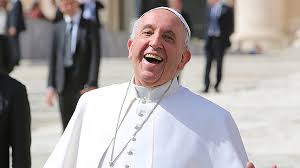
Pope Francis: tender, fraternal and an innovator
With reference to Jorge Mario Bergoglio, now Pope Francis, I would say the following: we met in 1972 in the Colegio Maximo de San Miguel, in Buenos Aires, Argentina. He was exposing the singularity of the spiritual path of Saint Ignatius of Loyola, and I, the spiritual path of Saint Francis. We discussed the hermeneutics of a French writer, whose name I don’t recall, and also aspects of the liberation theology of Argentina (the silenced people and the oppressed culture), and that of our Brazil and of Peruvian (the social injustice and the historical oppression of the poor and the Afro descendants). There is a photo of that gathering that Pope Francis kindly sent me from Rome. That photo shows the entire group of women and men theologians who were in attendance, most of whom are no longer with us, some of them persecuted and tortured by the barbaric repression of the Argentinian or Chilean military. After that meeting we lost track of each other.
Pope Francis: theologian of the integral liberation
Juan Carlos Scannone, recently deceased, the main representative of the theology of liberation in Argentina and Pope Francis’ professor of theology, told me that Bergoglio entered the Jesuit Order as an adult vocation (he was a chemist before, as the movie shows). He immediately liked the theology of liberation of the Argentinian type and he made a promise he always fulfilled even as the Cardinal of Buenos Aires: each week he spent an afternoon and even a day in a slum, always alone, he would walk into the houses and would speak with everyone. He did not live in the Cardinal’s Palace, did not have a car, used the bus or the subway. He lived alone in an apartment, and prepared his own meals.
Bergoglio was General Superior of the Jesuits from Argentina, acting especially in the region of Buenos Aires. As a young man, he was very rigorous. He had to confront a grave situation that until now he carries in his heart: two Jesuits, Father Francisco Jalics and Father Orlando Yorio (I personally met Yorio in Quilmes) lived in a shantytown with the poor and marginalized. All those who worked with the people, as in Brazil in 1964 (and perhaps even today under the new authoritarian government of Bolsonaro) were considered Marxists and subversives. They were watched by the organs of military security. Bergoglio was informed that these two Jesuits were going to be kidnapped with the accompanying torture. He tried to save them, even appealing to the vote of obedience. It is typical of the Jesuit Order, and means that they should leave the favela in order not to be victims of violent repression.
They argued in an evangelical form: “A pastor never abandons his flock, his people; he shares their destiny; it is better to obey the God of the poor, than to obey a human religious superior”.
Ultimately, they were kidnapped and harshly tortured. Jalics reconciled with Bergoglio and lives in Germany, while Yorio felt abandoned and distanced himself from the Cardinal (Yorio died in Uruguay years ago). I could feel his personal bitterness as I tried to understand the impasse that responsible religious authority faces in extreme situations. Even then, Bergoglio hided many in the Colegio Máximo de San Miguel or helped them reach the border of another country to escape certain death.
Pope Francis: caring for the Common Home
Once he was elected Pope, we communicated again. Knowing that I had been intensely occupied with the theme of integral ecology, including the Common Home, Mother Earth, Pope Francis asked for my cooperation, which I gave assiduously. But he warned me: “do not send the texts to the Vatican, because they will not give them to me (the famous papal Curia’s sottoseder: to sit over and forget), but rather, to send them directly to me in care of the Argentinian Ambassador to the Holy See, because every day very early he takes the mate with me”. I always did that. The word goes around that my thoughts and themes are noticeable in the Encyclical letter,Laudato Si: on the Caring for the Common Home (2015). But the encyclical is the Pope’s and he can have whatever advisers he wants. I also sent him texts to the 2019 Pan Amazonic Synod He replied giving thanks.
On selecting the name Francis, at the suggestion of his Brazilian friend, Cardinal Claudio Hummes, who whispered the name Francis to him, and on making a clear option for the poor, he was transformed. The Jesuit rigor was united with the Franciscan tenderness. He is extremely strict with the internal problems of the Vatican Curia, the pedophilia, and the financial corruption of the Vatican Bank. On the other hand, he is visibly tender and fraternal.
No Pope before him has harshly reproved the system that has lost its sensibility, its solidarity with the millions of poor and hungry, its capacity to cry and instead worships the idol of money. Predator of nature, against life and against Mother Earth. We need not say what system he talks about. His option for the poor is strong. Due to his courageous stands on the Earth’s ecological emergency, global warming and the dehumanizing of the human relationships, Pope Francis has become a religious and political leader. His voice is listened to and respected around the world.
Two types of man and two models of Church
The purpose of the movie is to show two types of religious persons and two models for the Church.
First it shows that Ratzinger and Bergoglio, both human, profoundly human. In this sense, they both have their positive side, and also their dark side. For Pope Benedict XVI, it is his indulgence and lenience with the pedophiles. We must not forget that he wrote to all the bishops, under pontifical secrecy that never can be broken, not to turn the pedophile priests and bishops over to the civil tribunals. This would demoralize the institutional Church. They should confess their sin and be transferred somewhere else. Pope Benedict did not realize that it was not only about a sin that could be forgiven by confession. It was a crime against innocent human beings that the civil justice had to investigate and punish. Thought was not given to the victims, but only to safeguarding the image of the Church as an institution. That omission was strongly criticized by Cardinal Bergoglio, as is clearly shown in the movie.
Pope Benedict XVI followed the line of John Paul II, who was a moral and doctrinal conservative. He attempted to relativize the aggiornamento of the Vatican Council II (1962-1965). He saw the Church as a fortress besieged from all sides by enemies, that is, by the errors and deviations of modernity. The proposed solution was to return to the previous great discipline from the Councils of Trent (1545-1563) and Vatican I (1869-1870). The centrality was the orthodoxy and the sane doctrine, as if preaching was what saved, and not the practices. In this line, Cardinal Joseph Ratzinger was strict: more than 110 men and women theologians were condemned, deposed from their chairs, silenced (in Brazil, Yvone Gebara and myself) or punished in some form. One of them, an excellent theologian, was condemned with no explanation. He became so depressed that he thought of suicide. He was cured only when he went to Central America to work with the Comunidades Eclesiales de Base, (Ecclesial Base Communities). The life of faith of the simple and poor people returned to him the meaning of life.
There was a severe ecclesial winter. A whole generation of priests was formed in this doctrinal style, with their eyes on the past, using the symbols of clerical power. In the same way, many bishops were consecrated who were more nearly orthodox authoritarian ecclesiastics than pastors in the midst of their people.
Pope Francis is a different type of religious personality. He comes from the ends of the Earth, far from the old and almost agonizing European Christianity. And he has brought Spring to the Church and the political world.
Pope Francis first innovated the habits. He refused to use the “mozzeta”, that small white cape filled with brocades that popes carried on their shoulders, a symbol of the absolute power of the pagan Roman emperors. In the movie Francis clearly says: “the carnival is over”. He does not accept the cross of gold and continues with his cross of iron, rejects the red Prada shoes and continues with his old black shoes. He does not declare himself as the Pope of the Church, but as the Bishop of Rome, and only from there, Pope of the universal Church. When he was presented as the new Pope, Francis asked the people to pray for him. Only after that did the new Pope bless the people. Here there clearly appears a new theological vision, according to Vatican Council II: first comes the People of God and thereafter comes the Pope and all other ecclesiastic authorities at the service of the People of God.
Pope Francis inspires the Church not with Cannon Law, but with love and collegiality, (consulting with the community of Bishops). In his first public speech, Pope Francis said: “how I would like a Church that is poor, and for the poor”. He does not live in the papal palace, that would be an offense to the poverello from Assisi, but in a boarding house. At meal time, he stands in line like everyone else and comments with humor: “This way it is more difficult to be poisoned”.
Francis foregoes a special automobile and a body of personal protection. He mixes with the people, gives his hand to whomever extends his to him and kisses the children. He is a father and grandfather loved by the multitudes.
His model of Church is of a “field hospital” that cares for all without asking whence they come and what is their moral situation. It is a “Church on the go” towards the human and existential peripheries. He respects dogmas and doctrines, but clearly affirms that he prefers to position himself before the historical Jesus, opting for direct encounters with the people and for the pastoral caring of tenderness. He insists that Jesus came to teach us to live unconditional love, solidarity and forgiveness. To Francis, God’s infinite mercy is central. And he says more: “God does not know eternal condemnation because God would lose in the face of evil. And God can not lose. His mercy has no limit”. Consequently, He calls all, once purified from their wickedness, to the home the Father and Mother of goodness have prepared for all from eternity. To die is to feel called by God; and one happily goes to the Great Encounter.
As for Ecumenism, he emphasizes that the different churches must recognize each other and together be at the service of the Kingdom of justice, solidarity, fraternity and of love, nourishing the sacred flame of spirituality hidden within every person.
It is another type of pontificate, another form of being human; one that recognizes that he lost patience when a woman grabbed his hand and forcefully pressed it. Annoyed, he slapped her hand two or tree times. But the following day, he apologized publicly. He is naturally humble and acknowledges his weaknesses.
Two Popes: different and complementary
Pope Francis opened up all his humanity, allowing himself the right to experience the joy of living, of encouraging his favorite team, the San Lorenzo, of enjoying the music of the Beatles; and even of getting Pope Benedict XVI to dance a tango with him… something unthinkable in a severe German academician. Here he appears not as the Pope, but as the man, Bergoglio who unravels the shy humanity of the man, Ratzinger. The two are different, but they come together as one in a tango of adult persons.
The movie is a beautiful metaphor of the human condition, with two different forms of realizing humanity, which do not oppose but compose and complete each other, one with tenderness and the other with vigor.
The movie is worth seeing, because it makes us think and offers us lessons of mutual listening, of open dialogue, of truths spoken without beating about the bush and of a friendship that grows as the relationship is extended in each encounter. The forgiveness that each gives the other, and the final embrace, long and loving, enlarges the humanity and spirituality that is present in each one of us.
Leonardo Boff Eco-Theologian-Philosopher, of the Earthcharter Commission
Free translation from the Spanish sent by
Melina Alfaro, alfaro_melina@yahoo.com.ar.
Done at REFUGIO DEL RIO GRANDE, Texas, EE.UU.

 Leonardo Boff