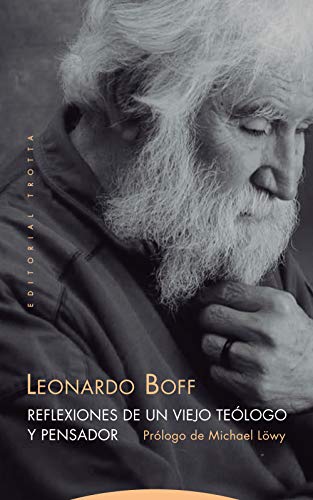
Leonardo Boff: llegar a Dios a través de la física cuántica

Saiu com destaque  na edição espanhola do El Pais, um dos maiores do mundo, um resenha do livro escrito por mim por ocasião de meus 80 anos, traduzido para o espanhol pela editora Trotta:Reflexiones de un viejo teólogo y pensador. No Brasil saiu pela Editora Vozes. Trata-se de um resumo de meu pensamento de mais de 50 anos de trabalho e de reflexão. Publico-o para quem se interessar de ver uma apreciação de um conhecida jornalista espanhola Lola Galán.  LBoff

La ciencia es una aliada en el pensamiento del filósofo brasileño Leonardo Boff, referente de la teología de la liberación, que sueña con una Iglesia descentralizada con un Papa muy parecido al actual

Lola Galán

12 sep 2020 – 19:31 BRT   El  Pais edição espanhola.

Si el teólogo es un ser casi imposible, porque se ocupa de la realidad última, Leonardo Boff ha vivido en esa imposibilidad metafísica la mayor parte de su vida adulta. Y lo ha hecho alejándose lo más posible de los “teólogos perezosos” que trabajan siempre con las ideas ya establecidas. Estamos ante un filósofo que acepta los retos del conocimiento. Y aunque el nombre de Leonardo Boff (Concórdia, Brasil, 1938) está ligado para siempre a la teología de la liberación, su pensamiento se ha adentrado por otros senderos a lo largo de los años.

Sigue defendiendo esa corriente crítica con la Iglesia de poder simbolizada por el Vaticano, que surgió en los años sesenta del siglo pasado y triunfó en una América Latina sacudida por dictaduras y pobreza. Y el planteamiento osado de sus libros podría chocar de nuevo con los guardianes de la ortodoxia dogmática, como ocurrió en los años ochenta cuando publicó Iglesia: carisma y poder. Pero Boff, antiguo sacerdote franciscano, está ya fuera de la jurisdicción vaticana. Hace mucho que colgó los hábitos, y vive plácidamente, con su compañera, en una comunidad no lejos de Río de Janeiro.

Nadie puede reprocharle, por lo tanto, que su discurrir teológico se apoye en la ciencia, que entienda al ser humano como conciencia de la Tierra, y que defienda los principios de la ecoteología en un nuevo libro, Reflexiones de un viejo teólogo y pensador (editorial Trotta, 2020), donde está todo Boff, condensado en poco más de 300 páginas. Reflexiones…, que se publicó hace dos años en portugués, coincidiendo con su 80º cumpleaños, es un verdadero testamento, un compendio de todo su saber que ha ido desgranando en más de un centenar de libros. Y hasta puede leerse como un programa político. “Si no queremos estancarnos y hundirnos en el pantano de los intereses de las minorías poderosas y dominantes sobre las grandes mayorías populares, tenemos que alimentar sueños”, escribe. Él los tiene, al parecer, y quiere transmitírselos a los jóvenes que vienen detrás.

En estas páginas bien traducidas (pocos idiomas discurren tan en paralelo como portugués y español) están los temas centrales del pensamiento de Boff, empezando por Dios. Una palabra que contiene “lo ilimitado de nuestra representación y la utopía suprema de orden, de armonía, de conciencia, de pasión y de sentido supremo que mueven a las personas y a las culturas”.

Si los propios científicos, asombrados por la belleza y armonía del universo, se asoman a ese misterio (que no enigma, explica Boff), ¿por qué no habrían de valerse también de la ciencia los teólogos? El lector encontrará en este libro referencias al origen del universo y del Homo sapiens muy en la línea de Yuval Noah Harari. También nociones de física cuántica, porque Boff ha comprendido que a través de esta rama de la ciencia “se puede entender mejor al ser humano como nudo de relaciones, y al Dios cristiano, la Trinidad, que es siempre relaciones substanciales entre tres divinas personas”, explica por correo electrónico.

No es la primera vez que Boff se adentra en estos territorios. Ya lo hizo en El Tao de la liberación (Trotta, 2012), el volumen que firmó con el cosmólogo Mark Hathaway. Y no hay que olvidar que es un gran admirador del Dalái Lama, que hace tiempo subrayó la proximidad entre física cuántica y espiritualidad. Pero, por más que se empeñe, no hay forma de entender la idea de ese Dios uno y trino. Un dogma que procede más bien de la necesidad de encajar en la divinidad la figura de Jesús de Nazaret, que se autodenominó “Hijo de Dios”.

Reflexiones… habla también de la teología de la liberación, pero lo hace a la luz del mundo moderno. Si tradicionalmente esta corriente ponía en el centro de las preocupaciones de la Iglesia a los pobres, ahora su foco de interés se ha ampliado a todos los que “sufren marginación”, y esto abarca desde la propia Tierra, devastada por los humanos, a los movimientos feministas o a los colectivos LGTBI.

Es necesaria una fe vigorosa para poder ver a Dios realmente en todas las cosas, incluso en las más contradictorias: Leonardo Boff

El Boff polemista, fustigador de la Iglesia institucional, con su boato renacentista, sus liturgias incomprensibles y ese despliegue de riqueza que ha acompañado a papas y cardenales a lo largo de la historia, está también en esta nueva obra. Si acaso, se percibe en estas páginas un pulso más reposado. La institucionalización de las religiones es inevitable, viene a reconocer, y hasta imprescindible para permitir su expansión. Pero recuerda que Jesús nunca le dijo a Pedro “sobre esta piedra edificaré mi Iglesia”, sino sobre esa fe —la fe del apóstol Pedro— “edificaré mi Iglesia”.

Entre poder y carisma, Boff prefiere claramente lo segundo. La Iglesia del pueblo en la que no se imponen las jerarquías. Su sueño es una Iglesia descentralizada en comunidades vivas e independientes en la que el Papa representaría el nexo común. El actual Pontífice, descendiente de italianos como él, parece ajustarse a la perfección a la idea que tiene Boff de Papa ideal. En el libro le llena de elogios, y cita con frecuencia la encíclica ecologista Laudato si, publicada por Jorge Bergoglio en 2015 y en la que ha colaborado el propio Boff.

Y es que el “viejo pensador” sigue siendo profundamente cristiano. El sueño de la teología que proclama es aquel en el que todos “puedan librarse de todo lo que les oprime externa e internamente y vivir como hermanos y hermanas en justicia, solidaridad, respetuosos con la naturaleza y la madre Tierra, en un gran banquete, disfrutando con moderación compartida de los buenos frutos de la gran y generosa madre Tierra”. Una especie de regreso al edén. Toda una utopía con la que la humanidad viene soñando desde la noche de los tiempos. Porque el bien con mayúscu­las no ha dejado de ser una aspiración inalcanzable para los humanos.

¿Qué hacemos con el mal? Boff, el filósofo, lo acepta muy en línea con la idea de sombra de Jung, como una parte que también nos define, porque el ser humano es a la vez sapiens y demens. Tiene que coexistir con esa doble naturaleza de armonía con el cosmos y de sumisión al caos. Para el teólogo brasileño, el mal evidenciaría la condición de “no terminados” de los mortales y del mundo. “Estamos siempre en la prehistoria de nosotros mismos”, escribe. Por eso, es necesaria una “fe vigorosa para poder ver a Dios realmente en todas las cosas, incluso en las más contradictorias”. Y si somos ángeles y demonios en perpetua discordia, al menos, dice Boff, podemos esforzarnos en “domesticar los demonios que nos habitan y dar a los ángeles buenos el mayor espacio posible”

Reflexiones de un viejo teólogo y pensador

“Este precioso libro es una síntesis de la obra y el pensamiento de Leonardo Boff, el teólogo que desafió a Roma y se convirtió en símbolo planetario de la integridad moral. Boff fue uno de los pioneros de la teología de la liberación en Brasil y en América Latina: él defendió, ya desde la década de los años setenta, la opción preferente por los pobres, no como caridad o filantropía, sino como compromiso social con la lucha de los oprimidos y explotados, de los trabajadores y trabajadoras del campo y de la ciudad por su propia liberación…

A partir de los años noventa, Leonardo Boff abre un nuevo capítulo en la historia de la teología de la liberación, integrando la dimensión ecológica. El grito de los pobres y el grito de la Tierra son hermanos, y denuncian el mismo sistema destructor de vidas humanas y de la propia naturaleza…
Al leer los escritos de Leonardo se tiene la nítida impresión de estar escuchando la voz de uno de los profetas del Antiguo Testamento. Es una especie de Isaías del siglo XXI que alza su voz, sin temor ni temblor, contra los poderosos y contra el culto al becerro de oro o Baal, ídolos que exigen sacrificios humanos”.

(Del prólogo de Michael Löwy)

Para comprar el libro en español, acceda al enlace: Amazon.com

Post-covid-19: What cosmology and ethics to incorporate (IV)

The sustainable way of life is brought about by virtuous practices consistent with a sustainable mode of living. There are many virtues in a different possible world. I will be brief because I have already published three volumes with the title, “Virtues for a different possible world” (Sal Terrae 2005-2006). I mention 10 virtues, without detailing their content, because that would take us too far afield.
Virtues of a different possible, and necessary, world
The first virtue is essential caring. I call it essential because according to a philosophic tradition that came from the Romans, passed down through the centuries, which is best expressed by several authors, especially in Heidegger’s central nucleus of Time and Being. Caring, it is seen as the essence of the human being. It ts a precondition for the group of factors necessary for life. Without caring, life would never have arisen, nor could it survive. Some cosmologists, such as Brian Swimme and Stephan Hawking, viewed caring as the essential dynamic of the universe. Had the four fundamental energies lacked the subtle caring to act synergistically, we would not have the world we have. All life is dependent on caring. Because we are biologically imperfect beings, with no specialized organs, without the infinite care of our mothers, we could not have gotten out of our cribs and sought nourishment. We need the caring of others. All that we love, we also care for, and we love all that we care for. With respect to nature, this requires a relationship that is amicable, non aggressive and respectful of her limits.
The second virtue is the awareness of belonging to nature, to the Earth and the universe. We are part of a great Totality that surrounds us. We are the conscious and intelligent part of nature; we are that part of the Earth that feels, thinks, loves and venerates. This feeling of belonging fills us with respect, marvelous amazement and security.
The third virtue is solidarity and cooperation.  We are social beings who not only live, but coexist with others. We know from bio-anthropology that it was the solidarity and cooperation of our anthropoid ancestors that, by searching for food and bringing it for collective consumption, allowed them to rise to the top of the animal kingdom, and inaugurate the human world. Today, with respect to the coronavirus, what can save us is this solidarity and universal cooperation. Solidarity must begin with the least among us and the invisible. Otherwise, it is not universally inclusive.
The fourth virtue is collective responsibility. We discussed its meaning above. It is the moment of consciousness when each member of society understands the good and bad effects of their decisions and acts. The uncontrolled deforestation of the Amazon would be absolutely irresponsible because it would destroy the balance of the rains for vast regions and eliminate the biodiversity that is indispensable for the future of life. We need not mention nuclear war, whose deadly effects would eliminate all life, especially human life.
The fifth virtue is hospitality, as a duty and a right. Immanuel Kant was the first to present hospitality as both a duty and a right in his famous work, “In view of perpetual peace” (1795). Kant understood that the Earth belongs to all, because God did not gift any part of the Earth to anyone. The Earth belongs to all her inhabitants, who are free to go wherever they want. Wherever someone is found, it is everyone’s the duty to offer hospitality, as a sign of common belonging to the Earth; and we all have the right to be welcomed, without distinctions. To Kant, hospitality and respect for human rights would constitute the pillars of a world republic (Weltrepublik). This theme has great topicality, given the number of refugees and widespread discrimination against different groups. Hospitality is perhaps one of the most urgent virtues for the process of globalization, even though it is one of the least commonly practiced.
The sixth virtue is universal coexistence. Coexistence is a primary factor because we are all products of the coexistence of our parents. We are beings of relationships, which is to say, we do not simply live, but we coexist through our lives. We participate in the lives of others, their joys and sadness. However, for many it is difficult to coexist with those who are different, be it in ethnicity, religion, or political ideas. What is important is to be open to the exchange. That which is different always brings us something new that either benefits or challenges us. What we must never do is turn difference into inequality.  We can be humans of many different backgrounds, be it Brazilian, Kechua, Italian, Aymara, Japanese, Peruvian, Azstec, or Yanomami. Each form is human and has its dignity. Today, through the cybernetic mass media of communications, we open windows onto all people and cultures.  Knowing how to coexist with these differences opens new horizons and brings us into a form of communion with everyone. This coexistence also involves nature. We coexist with the landscape, the jungles, the birds and all other animals. It is not just to see the star filled skies, but to enter into communion with the stars, because we come from them and with them we are part of the great All. In fact, we are part of a community of common destiny with all of creation.
The seventh virtue is unconditional respect.Each being, no matter how small, has value in itself, independent of its usefulness to humans. Albert Schweitzer,the great Swiz physician who went to Gabon, Africa, to care for the lepers, profoundly developed the theme. For Schweitzer, respect is the most important basis of ethics, because it includes welcome, solidarity and love. We must start by respecting ourselves, maintaining dignified attitudes and manners that move others to respect us. It is important to respect all beings of creation, because they have value in themselves. They exist or live and deserve to exist or live. It Is especially valuable to respect all human person, because a human is a carrier of dignity, a sacred being with inalienable rights, regardless of their origin. We owe supreme respect for the sacred and to God, the intimate mystery of all things. We must venerate and bend our knees only before God, because only God deserves that attitude.
The eight virtue is social justice and fundamental equality for all. Justice is more than merely giving to each his or her own. Among humans, justice is love and the minimal respect we owe everyone else. Social justice requires guaranteeing the minimum to all persons, without creating privilege, and equally respecting their rights because we are all human beings and deserve to be humanely treated. Social inequality means social injustice and, theologically, it is an offense to the Creator and His sons and daughters. The major perversity that exists nowadays is perhaps that of leaving millions of people in misery, condemned to die before their time. The violence of social inequality and injustice has been revealed in In the age of this coronavirus, . While some people can safely live quarantined in their homes or apartments, the great majority of the poor are exposed to infection and often to death.
The ninth virtue is the tireless search for peace. Peace is one of the most longed for conditions, because given the type of society we have built, we live in constant competition, called on to consume and to exalt productivity. Peace does not exist by itself.  Peace is the fruit of values that must be lived out and bring peace as a result. One of the most certain ways of understanding peace comes to us from the Earthcharter, where is said: «Peace is the plenitude that results from correct relationships with one’s own self, with other persons, other cultures, other lives, the Earth and the Great All, of whom we are part» (n.16 f). As can be seen, peace is the result of adequate relationships and the fruit of social justice. Without these relationships and this justice we will only know a truce, but never a permanent peace.
The tenth virtue is the development of the spiritual meaning of life. Human beings have a corporal exterior through which we relate with the world and other people.  We also have a psychical interior where our passions, great dreams and our angels and demons are found in the architecture of desire. We must control our demons and lovingly cultivate our angels.  Only that way can we enjoy the equilibrium necessary for life.
But we also posses a depth, the dimension where the great questions of life reside: who are we? Where do we come from? Where are we going? What can we look for after this terrestrial life? What is the Supreme Energy that sustains the heavens and keeps our Common Home circling the Sun and maintains her always alive so that we may live? This is the spiritual dimension of the human being, with intangible values, such as unconditional love, trust in life, and courage to confront the unavoidable difficulties. We realize that the world is filled of meaning, that things are more than things, that they are messengers and have another invisible side. We intuit that there is a mysterious Presence that impregnates all things. The spiritual and religious traditions have called this Presence by a thousand names, without ever being able to totally decipher it. It is the mystery of the world that is sent to the Abyssal Mystery that makes that everything be what it is. Cultivating this space makes us more human, more humble, and roots us in a transcendent reality that is adequate to our infinite desire.
                              Conclusion: to simply be human
The conclusion we draw from these long reflections on the coronavirus 19 is: we must simply be humans, vulnerable, humble, connected with each other, part of nature and the conscious and spiritual part of the Earth with the mission of caring for the sacred inheritance we have received, Mother Earth, for us and future generations.
The last phrases of the Earthcharter are inspiring: «That our time be remembered by the awakening of a new reverence to life, by the firm commitment to achieve sustainability and to intensify the struggle for justice and peace, and for the joyful celebration of life».
*Leonardo Boff is an ecotheologian and has written, in three volumes, Virtues for another possible world,  (3 vol.), Sal Terrae, 2005-2006
  Free translation from the Spanish sent by

Done at REFUGIO DEL RIO GRANDE, Texas, EE.UU.

site: http://www.leonardobff.org  

Free translation from the Spanish sent by
Done at REFUGIO DEL RIO GRANDE, Texas, EE.UU.

Post-covid-19: What cosmology and ethics to incorporate (IV)

Post-covid-19: What cosmology and ethics to incorporate (IV)
The sustainable way of life is brought about by virtuous practices consistent with a sustainable mode of living. There are many virtues in a different possible world. I will be brief because I have already published three volumes with the title, “Virtues for a different possible world” (Sal Terrae 2005-2006). I mention 10 virtues, without detailing their content, because that would take us too far afield.
Virtues of a different possible, and necessary, world
The first virtue is essential caring. I call it essential because according to a philosophic tradition that came from the Romans, passed down through the centuries, which is best expressed by several authors, especially in Heidegger’s central nucleus of Time and Being. Caring, it is seen as the essence of the human being. It ts a precondition for the group of factors necessary for life. Without caring, life would never have arisen, nor could it survive. Some cosmologists, such as Brian Swimme and Stephan Hawking, viewed caring as the essential dynamic of the universe. Had the four fundamental energies lacked the subtle caring to act synergistically, we would not have the world we have. All life is dependent on caring. Because we are biologically imperfect beings, with no specialized organs, without the infinite care of our mothers, we could not have gotten out of our cribs and sought nourishment. We need the caring of others. All that we love, we also care for, and we love all that we care for. With respect to nature, this requires a relationship that is amicable, non aggressive and respectful of her limits.
The second virtue is the awareness of belonging to nature, to the Earth and the universe. We are part of a great Totality that surrounds us. We are the conscious and intelligent part of nature; we are that part of the Earth that feels, thinks, loves and venerates. This feeling of belonging fills us with respect, marvelous amazement and security.
The third virtue is solidarity and cooperation.  We are social beings who not only live, but coexist with others. We know from bio-anthropology that it was the solidarity and cooperation of our anthropoid ancestors that, by searching for food and bringing it for collective consumption, allowed them to rise to the top of the animal kingdom, and inaugurate the human world. Today, with respect to the coronavirus, what can save us is this solidarity and universal cooperation. Solidarity must begin with the least among us and the invisible. Otherwise, it is not universally inclusive.
The fourth virtue is collective responsibility. We discussed its meaning above. It is the moment of consciousness when each member of society understands the good and bad effects of their decisions and acts. The uncontrolled deforestation of the Amazon would be absolutely irresponsible because it would destroy the balance of the rains for vast regions and eliminate the biodiversity that is indispensable for the future of life. We need not mention nuclear war, whose deadly effects would eliminate all life, especially human life.
The fifth virtue is hospitality, as a duty and a right. Immanuel Kant was the first to present hospitality as both a duty and a right in his famous work, “In view of perpetual peace” (1795). Kant understood that the Earth belongs to all, because God did not gift any part of the Earth to anyone. The Earth belongs to all her inhabitants, who are free to go wherever they want. Wherever someone is found, it is everyone’s the duty to offer hospitality, as a sign of common belonging to the Earth; and we all have the right to be welcomed, without distinctions. To Kant, hospitality and respect for human rights would constitute the pillars of a world republic (Weltrepublik). This theme has great topicality, given the number of refugees and widespread discrimination against different groups. Hospitality is perhaps one of the most urgent virtues for the process of globalization, even though it is one of the least commonly practiced.
The sixth virtue is universal coexistence. Coexistence is a primary factor because we are all products of the coexistence of our parents. We are beings of relationships, which is to say, we do not simply live, but we coexist through our lives. We participate in the lives of others, their joys and sadness. However, for many it is difficult to coexist with those who are different, be it in ethnicity, religion, or political ideas. What is important is to be open to the exchange. That which is different always brings us something new that either benefits or challenges us. What we must never do is turn difference into inequality.  We can be humans of many different backgrounds, be it Brazilian, Kechua, Italian, Aymara, Wampanoag, Japanese, Peruvian, Aztec, or Yanomami. Each form is human and has its dignity. Today, through the cybernetic mass media of communications, we open windows onto all people and cultures.  Knowing how to coexist with these differences opens new horizons and brings us into a form of communion with everyone. This coexistence also involves nature. We coexist with the landscape, the jungles, the birds and all other animals. It is not just to see the star filled skies, but to enter into communion with the stars, because we come from them and with them we are part of the great All. In fact, we are part of a community of common destiny with all of creation.
The seventh virtue is unconditional respect.Each being, no matter how small, has value in itself, independent of its usefulness to humans. Albert Schweitzer,the great Swiz physician who went to Gabon, Africa, to care for the lepers, profoundly developed the theme. For Schweitzer, respect is the most important basis of ethics, because it includes welcome, solidarity and love. We must start by respecting ourselves, maintaining dignified attitudes and manners that move others to respect us. It is important to respect all beings of creation, because they have value in themselves. They exist or live and deserve to exist or live. It Is especially valuable to respect all human person, because a human is a carrier of dignity, a sacred being with inalienable rights, regardless of their origin. We owe supreme respect for the sacred and to God, the intimate mystery of all things. We must venerate and bend our knees only before God, because only God deserves that attitude.
The eight virtue is social justice and fundamental equality for all. Justice is more than merely giving to each his or her own. Among humans, justice is love and the minimal respect we owe everyone else. Social justice requires guaranteeing the minimum to all persons, without creating privilege, and equally respecting their rights because we are all human beings and deserve to be humanely treated. Social inequality means social injustice and, theologically, it is an offense to the Creator and His sons and daughters. The major perversity that exists nowadays is perhaps that of leaving millions of people in misery, condemned to die before their time. The violence of social inequality and injustice has been revealed in the age of this coronavirus. While some people can safely live quarantined in their homes or apartments, the great majority of the poor are exposed to infection and often to death.
The ninth virtue is the tireless search for peace. Peace is one of the most longed for conditions, because given the type of society we have built, we live in constant competition, called on to consume and to exalt productivity. Peace does not exist by itself.  Peace is the fruit of values that must be lived out and bring peace as a result. One of the most certain ways of understanding peace comes to us from the Earthcharter, where is said: «Peace is the plenitude that results from correct relationships with one’s own self, with other persons, other cultures, other lives, the Earth and the Great All, of whom we are part» (n.16 f). As can be seen, peace is the result of adequate relationships and the fruit of social justice. Without these relationships and this justice we will only know a truce, but never a permanent peace.
The tenth virtue is the development of the spiritual meaning of life. Human beings have a corporal exterior through which we relate with the world and other people.  We also have a psychical interior where our passions, great dreams and our angels and demons are found in the architecture of desire. We must control our demons and lovingly cultivate our angels.  Only that way can we enjoy the equilibrium necessary for life.
But we also posses a depth, the dimension where the great questions of life reside: who are we? Where do we come from? Where are we going? What can we look for after this terrestrial life? What is the Supreme Energy that sustains the heavens and keeps our Common Home circling the Sun and maintains her always alive so that we may live? This is the spiritual dimension of the human being, with intangible values, such as unconditional love, trust in life, and courage to confront the unavoidable difficulties. We realize that the world is filled of meaning, that things are more than things, that they are messengers and have another invisible side. We intuit that there is a mysterious Presence that impregnates all things. The spiritual and religious traditions have called this Presence by a thousand names, without ever being able to totally decipher it. It is the mystery of the world that is sent to the Abyssal Mystery that makes that everything be what it is. Cultivating this space makes us more human, more humble, and roots us in a transcendent reality that is adequate to our infinite desire.
Conclusion: to simply be human
The conclusion we draw from these long reflections on the coronavirus 19 is: we must simply be humans, vulnerable, humble, connected with each other, part of nature and the conscious and spiritual part of the Earth with the mission of caring for the sacred inheritance we have received, Mother Earth, for us and future generations.
The last phrases of the Earthcharter are inspiring: «That our time be remembered by the awakening of a new reverence to life, by the firm commitment to achieve sustainability and to intensify the struggle for justice and peace, and for the joyful celebration of life».
*Leonardo Boff is an ecotheologian and has written, in three volumes, Virtues for another possible world,  (3 vol.), Sal Terrae, 2005-2006

Post-covid-19: what cosmology and ethics incorporate? (I)

Post-covid-19: what cosmology and ethics incorporate? (I)
There is a terrible fact, the systemic attack that nature is realizing against humanity with a diminutive and invisible virus that is causing great concern and taking thousands of persons to death. Facing this true human is important to know what is our reaction to the pandemic? What is this pandemic effect on us? What lesson it teaches us? What cosmology (vision of the world) and what type of ethics (values and principles) lead us to develop? Surely we must learn all that we had to have learned before and we did not. We must had learned that we are part of nature and not its “lords and owners”(Descartes). There is an umbilical connection between the human being and nature. We come from the same cosmic dust  as all other beings and we are the conscious link of the chain of life.
The erosion of the “little god in the Earth’s” image
The modern myth that we are “the little god” in Earth and that we can dispose of her at our whim because she is an inert it without purpose has been destroyed. One of the fathers of the modern scientific method, Francis Bacon, said that we must treat nature as the henchmen of the inquisition treated their victims, torturing them until they gave all their secrets.
Through techno science we have carried out this method to the extreme, reaching the heart of matter and of life. This has been done with a furor without precedents to the point of having destroyed the sustainability of nature and consequently of the planet and of life. We have broken the natural pact that exist with the living Earth: she gives all that we need to live  and in exchange we ought to care for her, preserving her goods and services and giving her rest to restore all that we have taken from her for our life and progress.  We have done nothing of this.
For not having observed the Biblical precept of “protecting and care for the Garden of Eden, The Earth (Genesis 2,15)” and for threatening the ecological basis that sustain all life, she has counterattacked us with a powerful arm, the coronavirus 19. To face it, we have returned to the Middle Ages method that overcame its pandemics with strict social isolation. So that the frightened people, would get out to the streets, in the Munich municipal council (Marienplatz) an ingenious clock was built with dancers and cuckoos so that all would come to appreciate it, something that is still being done today.
The pandemic, that more than a crisis is the demand ofor a change of cosmology (the vision  of the world) and of the incorporation of an ethics with new values, posits us this question: we really want to avoid that nature send us even more lethal viruses that could decimate even the human species? This would be one of the ten that each day disappear forever. Do we want to run that risk?
Generalized unconscious of the ecological factor
Already in 1962, Northamerican biologist and writer Rachel Carson, author of Silent Spring,  warned: “Is little probable that future generations tolerate our lack of prudent preoccupation for the integrity of the natural world that sustains all life… The question is if any civilization can continue a relentless war against life without destroying itself and without loosing the right to be called civilization“.
It sounds like a prophesy of the situation we are living at the planetary level. We have the impression that the majority of humanity, including the political leaders, do not demonstrate enough consciousness of the dangers we face with global warming, with the excessive proximity of our cities and, especially, of the massive agro-business that advances over the virgin nature and to the jungles that a being deforested. We are this way destroying the habitats of millions of viruses and bacteria that wind up being transferred to human beings. According to serious scientists, the coronavirus would not have come though a bat from a market in China, but, simply, from nature.
In the best hypothesis, coronavirus will force us to re-invent ourselves as humanity and to remodel of sustainable and inclusive form the unique Common Home that we have. If what dominated before would prevail, exacerbated to the extreme, then we would have to prepare for the worst.
Many are announcing a new destructive  austerity era in the post-coronavirus. The vultures of the past are already getting together  to return to the same stuff of the past and to impede significant changes. The interests of the financial capital and the lack of a consciousness on the part of those in power and even in great part of the academic knowledge about the gravity of the degradation of nature, do not let them learn anything from the thousands and thousands of dead human beings all over the world caused by the coronavírus.
They want to return to the austerity that is a politics of opportunists, caried out by opportunists, for the bnefit of opportunists. According to CEPAL is calculated that covid-19, due to such politics of austerity worst than before, will leave 215 millions of new poor people in Latin America. (cf. Carta Maior 13/05/2020) However, is good to remember that the life system has gone though several important extinctions (we are within the sixth) but it has always survived.
Life it would seem like –allow me a singular metaphor– a “plague” that no one until now has managed to exterminate. Because life is a blessed “plague”, linked to the mystery of the cosmogenesis and to that Basic Energy, mysterious and loving that presides over all the cosmic processes and also on ours.
Is imperative that we abandon the old paradigm of the will to power and domination over everything (the closed fist) towards a paradigm of caring for everything that exists and lives  (the extended hand) and of the collective co-responsibility.
Eric Hobsbawn wrote in the last paragraph of his 1995 book, The Era of the Extremes: A thing is clear. If humanity wants to have a recognizable future, it cannot be prolonging the past or the present. We will fail if we try to build the third millennia on that base. The price of the failure, this is, the alternative to the change of society is obscurity. (p.506).
This means that we cannot simply return to the situation previous to coronavirus, nor we can think to a return to the pre-iluminist past as the present Brazilian government and others of the extreme right want. (to be continued)
Leonardo Boff is an ecotheologian and philosopher who has written Option Earth: the solution for the Earth does not come from heaven, Record 2009.
Free translation from the Spanish sent by
Done at REFUGIO DEL RIO GRANDE, Texas, EE.UU.