I was in jail and you didn’t let them visit me

There is a very dramatic scene in the Gospel of Saint Matthew, dealing with the Last Judgment, namely, when the final destiny of every human being is revealed. The Supreme Judge does not ask to what Church or religion the person belonged, whether the person accepted the dogmas, or how often the person attended the sacred rites.
That Judge will look to the good and tell them: “Come, blessed of my Father, inherit the kingdom prepared for you from the foundation of the world, for I was hungry, and you fed me; I was thirsty, and you gave me to drink; I was a stranger, and you took me in: I was naked, and you clothed me: I was sick, and you visited me: I was in prison, and you came to see me… every time you did this for one of my little brothers and sisters, you did it for me…and when you did not do it for one of the smallest ones, you did not do it for me” (Gospel of Saint Matthew, 25, 35-45).
What counts in this supreme moment is what we do for those who suffer in this world, and not the preaching. If we have cared for them, we will hear those blessed words.
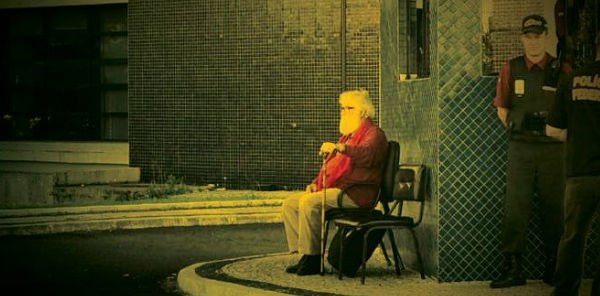
This was experienced by 1980 Argentinian Nobel Peace Prize Laureate Adolfo Perez Esquivel, (1931), who is an architect and well known sculptor, a great activist for human rights and the culture of peace, as well as being profoundly religious, and my supporter. Perez Esquivel asked the Brazilian judicial authorities permission to visit former President Luiz Inacio Lula da Silva, his friend of many years, in jail. I personally witnessed the events noted here.
Perez Esquivel called me from Argentina and on Twitter the conversation is summarized, in sort of a youtube. We would go together, because in 2001 I had received the Alternative Nobel Peace Prize (The Right Livelihood) from the Swedish Parliament. But I told Perez Esquivel that besides embracing a friend of more than 30 years, my visit was to fulfill the Gospel precept, “visit the one who is jailed”. I wanted to reinforce the tranquility of the soul Lula has always maintained. Shortly before he was arrested, he assured me: my soul is serene because nothing accuses me, I feel like a carrier of the truth that possesses its own strength and will manifest itself in due time.
Perez Esquivel and I arrived in Curitiba at different times, on April 18th. We went directly to the great auditorium of the Federal University of Parana, that was already filled with people, for a debate on Democracy, Human Rights and the Brazilian crisis that had culminated with Lula’s jailing. There were university authorities, Celso Amorim, the former Minister of Foreign Relations, representatives of Argentina, Chile, Paraguay, Sweden, and other countries. Beautiful Latin American songs were sung, especially those sung by the magnificent voice of actress and singer Leticia Sabatella. The Afro-descendants danced and sang in their outfits of beautiful colors.
There were several speeches. As if by magic, the general discouragement gave way to an aura of goodwill and hope that the parliamentary-juridical-news media coup would not succeed in determining the future of Brazil. Better yet, that a cycle of domination of the backwards elites would close with the opening of the path to a democracy from below, participant and sustainable.
Before the meeting we had been told that Judge Catalina Moura Lebbos, the right hand of Judge Sergio Moro, had forbidden the visit we wanted to make to President Lula.
Judge Lebbos did not realize the great significance of being a Nobel Peace Prize Laureate. That person has the privilege of traveling all over the world, visiting jails and places of conflict, to promote dialogue and peace. This is supported by the 2015 Document from the United Nations called “The Mandela Rules”, about the Prevention of Crimes and Criminal Justice. That Document also touches on visits to prisoners. Brazil was among the most active countries in formulating The Mandela Rules, but does not follow them in her own territory.
But it was in vain. Judge Lebbos stood firm. The following day, April 19th, we arrived at the encampment where hundreds stood in vigil at the Federal Department of Justice, were Lula is jailed. They shouted to him, “Good morning, Lula”, “Lula free!” and other words of encouragement, hoping that he could hear them perfectly from his cell.
There were police everywhere. We tried to talk with their chief, seeking an audience with the Superintendent of the Federal Police.
The answer was always the same: you cannot, orders from above. After insisting, with telephone calls coming and going, Perez Esquivel received an audience with the Superintendent. He explained the reasons for the humanitarian and fraternal visit to an old and dear friend. But no matter how Perez Esquivel argued and referenced his title of Nobel Peace Prize Laureate, recognized and respected worldwide, he always heard the same old song: You cannot. These are orders from above.
And so, dejected, we returned to be with the people. Personally, I insisted that my visit was purely spiritual. I had planned to give him two books, The Lord is my Shepherd, I lack nothing, a detailed commentary that really nourishes trust. And one by Carlos Mesters, our most articulate exegeta, The Mission of the People who Suffer, describing the helplessness of the Hebrew people in the Babylonian exile, how the Prophets Isiah and Jeremiah consoled them, and how those Prophets fortified the meaning of their suffering and hope.
The Federal Police Department prohibited everything. Not even a note could be sent to President Lula.
Among the people who spoke were representatives of several groups that support Lula’s candidacy for the Nobel Peace Prize, especially a couple from Sweden. Perez Esquivel and I also spoke, reinforcing the hope that in the end, it is this powerful energy that sustains those who struggle for justice, and a different type of democracy. Perez Esquivel announced that he had launched a worldwide campaign to propose Lula as a candidate for the Nobel Peace Prize. There are already thousands of signatures from all over the world. Lula meets all the requirements for the Prize, especially for his social policies that lifted millions of people out of hunger and misery, and for his consistent work for social justice, the basis for peace.
There were many interviews by national and international means of communication. Photos of the event began to be published worldwide, and solidarity came from many countries and groups.
There we came to understand that in effect we live under a regime of exception, in the form of a “golpe blando” that confiscates freedom and denies fundamental human rights.
The spiritual pettiness of our Judges of the Lava Jato and denial of the guaranteed right of a Nobel Peace Prize Laureate to visit his prisoner friend in the spirit of pure humanity and warm solidarity, shames our country. This only corroborates the fact that we effectively are under a regime of exception that negates democracy.
But Brazil is bigger than her crisis. Purified, we will come out better, and proud of our resistance, of our indignation and, starting in the streets and the elections, our courage to retake a rightful State.
We will never forget the sacred words: “I was in jail and you didn’t let them visit me”.

Leonardo Boff Eco-Theologian-Philosopher and of  theEarthcharter Commission

Free translation from the Spanish sent by
Melina Alfaro, alfaro_melina@yahoo.com.ar.
Done at REFUGIO DEL RIO GRANDE, Texas, EE.UU.


With Pope Francis the Western Church ends and the Universal Church begins

The Papacy of Francis, Bishop of Rome and Pope of the Universal Church is now five years old. Many detailed and brilliant accounts have been made about this new spring that has emerged in the Church. For my part, I will emphasize only a few points that are of interest to our reality.

The first point is how the figure of the Papacy, personally lived by Francis himself, has been revolutionized. It no longer is the imperial Pope, with all the symbols inherited from the Roman emperors. Francis himself appears as a simple person, as someone who belongs to the people. His first words on greeting the people were to say, “buona sera”: “good evening”. Then, he presented himself as the Bishop of Rome, called to lovingly guide the Church that exists all over the world. Before offering the official Papal Blessing, he asked the people to bless him. He chose to live, not in a palace — that could have made Francis of Assisi cry– but in a guest house. And there he dines with all the guests.

The second important point is the joyful announcing of the Gospel, as a super abundance of the good life, rather than as the doctrine of the catechisms. It is not about taking Christ to the secularized world, but about discovering the presence of Christ in the world, through the thirsting for spirituality that can be seen everywhere.

The third point is the three poles found at the center of his activities: the encounter with the living Christ, the passionate love for the poor, and the caring for Mother Earth. At the center is Christ, not the Pope. The living encounter with Christ has primacy over doctrine.

Instead of the law, he tirelessly announces mercy and the revolution of tenderness, as he told the Brazilian bishops when he traveled to Brazil.

He expressed the love of the poor in his fist official intervention: “how I would like the Church to be the Church of the poor”. He met with the refugees arriving at the island of Lampedusa, in South Italy. There he had strong words for a certain type of modern civilization that has lost its sense of solidarity and no longer knows how to cry for the suffering of the other.

He raised the ecological alarm with his encyclical letter Laudato Si: About the Caring for the Common Home (2015), addressed to all of humanity. It shows a clear awareness of the risks run by life and the Earth-systems. He therefore expands the ecological discourse beyond environmentalism. He emphasizes that we must create a global ecological revolution (n.5). Ecology is integral, and not only green, because it involves society, politics, culture, education, everyday life and spirituality. It unites the cry of the poor with the cry of the Earth (n. 49). It invites us to feel as our own the pain of nature, because we are all interconnected and involved in a network of relationships. Pope Francis asks us «to nourish a passion for caring for the world … a mysticism that drives us, inner incentives that move, motivate, encourage and give meaning to personal and community actions» (nº 216).

The fourth important point has been to portray the Church not as a closed castle surrounded by enemies, but as a field hospital that serves everyone, without consideration of class, color or religious beliefs. A Church that is always moving towards the others, especially towards the existential peripheries that abound in the world. The Church must serve as an incentive to encourage hope, and show a Christ who came to teach us to live as brothers and sisters in love, equality, justice, open to the Father who has the characteristics of the Mother of mercy and goodness.

Finally, the Pope shows with clear consciousness that the Gospel opposes the powers of this world that accumulate to the point of absurdity, leaving a great part of humanity in misery. We live under a system that puts money at its center, that murders the poor and is a predator of the goods and services of nature. Francis has the harshest words for them. He dialogues with all the religious and spiritual traditions. In the ceremony of the washing of the feet, on Holy Thursday, there was a little Muslem girl.

Pope Francis wants the Churches, with their differences, to unite in the service of the world, especially in the service of the most helpless. This is the true ecumenism in mission.

With this Pope, who “comes from the end of the world”, a Western Church ends and a Universal Church begins, suited to the planetary phase of humanity, called to incarnate itself in the different cultures and to build there a new face, starting from the inexhaustible wealth of the Gospel.

Leonardo Boff Eco-Theologian-Philosopher  and of the Earthcharter Commission

Saint Joseph: saint of the nameless, the powerless and the workers

Besides the four Gospels (Matthew, Mark, Luke and John) that represent the intelligentsia of the faith, as true theologians of the figure of Jesus, there is a vast apocryphal literature (texts that are not officially recognized) that also carry, among other things, the name of gospel, such as the Gospel of Peter, the Gospel of Mary Magdalene and the History of Joseph, the Carpenter, which we will discuss here. They have not been officially accepted because they were not consistent with the prevalent orthodoxy of the second and third Centuries, when most of them appeared. They obey the logic of the imagination and fill the information void of the canonical Gospels, especially about the occult life of Jesus. But they have been of great importance to the arts, especially during the Renaissance, and in popular culture in general. Today’s theology, with its new methods of interpreting the Bible, also values them.

The apocryphal book, The History of Joseph, The Carpenter, (La historia de Jose, el carpintero, Edicion Vozes, 1990), is rich with data about Jesus and Joseph. In reality it is a long narrative that Jesus offers to the Apostles about Joseph, His father. Jesus begins: «Listen now: I will tell you the life of my father, Joseph, the blessed old carpenter».

And Jesus says that Joseph was a carpenter, a widower, with six children, four boys (Santiago, Joseph, Simon and Judas) and two girls (Lisia and Lidia). «That Joseph is my father, as if by the flesh, who got together, as spouse, with my mother Mary».

The Gospel relates Joseph’s disturbance when he found that Mary was pregnant without his participation. It also narrates the birth of Jesus in Bethlehem, the flight to Egypt and the return to Galilee. It finishes by saying: «My father Joseph, the blessed old man, continued working at his profession as a carpenter and that way, with the labor of his hands, we could be maintained. Let it never be said of him that he ate his bread without working».

Speaking of himself, Jesus says: «I myself called Mary, “my mother” And Joseph, “my father”. I obeyed them in everything they ordered me to do, without ever daring to talk back even one word to them. To the contrary, I always treated them with great love».

Continuing, Jesus relates that Joseph married for the first time when he was 40 years old. He was married for 49 years until his wife died. He was then 89 years old. He was a widower for one year. From his marriage with Mary to the birth of Jesus three years would have passed. Joseph, then, would have been 93 years old. He was married to Mary for 18 years. Adding this up, Joseph would have died at 111 years of age.

Later on, he narrates in detail that his father «lost the desire to eat and to drink; he felt that he had lost the ability to perform his work». When the death was near, Joseph lamented, hurling eleven cries. In that moment, Jesus entered the room and reveals Himself as the great Consoler. Jesus says: «Salve, Joseph, my beloved father, old, kind-hearted and blessed». To which Joseph replies: «Salve, a thousand times, dear son. Listening to Your voice my soul regained its tranquility». Then, Joseph recalled moments of his life with Mary and with Jesus; even recalling that once «he had pulled His ear and admonished Him: ‘be prudent, my son’» because He was mischievous at school and had provoked the rabbi.

Jesus then shares this confidence: «When my father spoke those words to me, I could not contain the tears and began to cry, seeing that death was overtaking him». «I, beloved Apostles, was by his head and my mother at his feet… for a long time I held his hands and his feet. He looked at me, pleading with me that we not abandon him. I put my hand on his chest and felt that his soul had already risen to his throat, preparing to leave his body».

Seeing that death was slow in coming, Jesus made a strong prayer to the Father: «Dear Father merciful, Father of truth, eye who sees and ear who listens, listen to me: I am your beloved son, I plead with you for my father Joseph, the work of your hands… Be merciful with the soul of my father Joseph when he goes to rest in your hands, because that is the moment when he needs your mercy most». «After he had exhaled the spirit and I had kissed him; I went over the body of my father Joseph… closed his eyes, closed his lips, and stood up to contemplate him». Joseph had just died.

In the burial Jesus shares another confidence with the Apostles: “I could not contain myself, and hurled Myself over his body and cried for a very long time”. Jesus ends up taking stock of the life of Joseph, His father:

“His life was of 111 years. At the end of such a long time he did not have a single tooth with cavities, and his sight was not weakened. All his appearance was like that of a child. He never suffered any physical discomfort. He continuously worked at his trade as a carpenter until the day when the illness happened that would take him to the grave”.

At the end of his account, Jesus leaves the following mandate: “when you are empowered by my strength and have received the Holy Spirit and are sent to preach the Gospel, also preach about my beloved father Joseph”. The book that I wrote about Saint Joseph, after 20 years of research, tries to respond to the mandate of Jesus.

To tell the truth, Joseph was almost forgotten by the official Church. But the people kept his memory alive, giving the name of Joseph to their sons and daughters, to cities, streets and schools. Joseph is the symbol of the nameless, the powerless, the workers, and the Church of the anonymous.

Leonardo BoffEco-Theolo gian-PhilosopherEarthcharter Commission

Free translation from the Spanish sent by
Melina Alfaro, alfaro_melina@yahoo.com.ar.
Done at REFUGIO DEL RIO GRANDE, Texas, EE.UU.

Dom Pedro Casaldaliga wird 90 Jahre alt: Armut und Befreiung


Der Pfarrer, Prophet und Poet Dom Pedro Casaldaliga feiert am 16. Februar 2018 seinen 90. Geburtstag. Wir möchten ihn gern mit einigen Gedanken ehren, die meiner Meinung nach den roten Faden aufzeigen, der sich durch sein Leben als Christ und Bischof zieht: das Verhältnis, das er zu Armut und Befreiung entwickelte. Unter Gefährdung seines eigenen Lebens erlebte und beobachtete er sowohl Armut als auch Befreiung der am meisten Unterdrückten, der Indigenen und der Landleute, die im Bereich von São Felix del Araguaia of Mato Grosso, Brasilien, ihres Landes beraubt wurden.

Armut hat schon immer humane Aktionen und alle Arten von Interpretationen hervorgerufen. Die Armen fordern uns so sehr heraus, dass unsere Haltung ihnen gegenüber Einfluss auf unsere ultimative Begegnung mit Gott hat. Dies bestätigt sowohl das Totenbuch aus Ägypten als auch die jüdisch-christliche Tradition, die im Text des Matthäus-Evangeliums 25,31ff kulminiert.

Vielleicht besteht das größte Verdienst von Bischof Dom Pedro Casaldaliga darin, dass er die Herausforderungen der Armen der ganzen Welt, vor allem aber derer von Lateinamerika, die mit uns verbunden sind, absolut ernst nahm, sowie auch deren Befreiung.

Gewiss lebte er nach dem folgenden Prozess: Vor jeglicher Überlegung oder Hilfestrategie ist die allererste Reaktion zutiefst menschlich: sich selbst betroffen fühlen und voll Mitgefühl sein. Wie könnten wir nicht auf ihr Flehen hören oder missverstehen, was ihre flehenden Hände versuchen, uns mitzuteilen? Wenn Armut zu Elend wird, erweckt sie in allen sensiblen Personen, wie auch in Dom Pedro, Gefühle der Empörung und heiligen Zorns, wie man es klar in den prophetischen Texten lesen kann, vor allem in denen gegen das kapitalistische und imperialistische System, das immer weiter Armut und Elend hervorruft.

Liebe und Empörung sind die Grundlage der Aktionen, denen es darum geht, Armut zu lindern oder zu beseitigen. Nur diejenigen, die zutiefst lieben und diese unmenschliche Situation nicht akzeptieren, sind wirklich auf der Seite der Armen. Und Dom Pedro bezeugte diese bedingungslose Liebe.

Doch wir sind auch Realisten, denn bereits im Buch Deuteronomium wird gewarnt: “Die Armen werden niemals ganz aus deinem Land verschwinden. Darum mache ich dir zur Pflicht: Du sollst deinen notleidenden und armen Brüdern und Schwestern, die in deinem Land leben, deine Hand öffnen.“ Die Urkirche Jerusalems wird gelobt, dass es in ihr niemanden gab, dem es an etwas gemangelt hätte, denn sie teilten alles, was sie besaßen.

Die Empörung und das Mitgefühl waren es, was Dom Pedro dazu brachten, Spanien zu verlassen und nach Afrika zu gehen und schließlich nicht nur in Brasilien zu landen, sondern dort im Landesinnern, wo die Landleute und die Indigenen die Gier des nationalen und des internationalen Kapitalismus ertragen müssen.

  1. Lesart über den Skandal der Armut

Um die Anti-Wirklichkeit, welche die Armut darstellt, adäquat zu verstehen, sind folgende Klarstellungen hilfreich, die dazu dienen sollen, unser Zusammensein mit den Armen effizient zu gestalten. In den aktuellen Debatten sind drei unterschiedliche Auffassungen über Armut zu beobachten.

Als erstes die traditionelle Sichtweise, die unter einem Armen jemanden versteht, der nicht über die notwendigen Mittel zum Leben verfügt, um Miete zu bezahlen, ein Zuhause zu haben, mit einem Wort: dem es an materiellen Gütern mangelt. Die Armen überleben Arbeitslosigkeit oder unterbezahlte Arbeit und Niedriglöhne. Das System erachtet sie als ökonomische Nullen, verbranntes Öl, Überreste. Da besteht die Strategie in der Mobilisierung derer, die besitzen, um denen zu helfen, die nicht besitzen. Jahrhundertelang wurde eine breite Unterstützung in Namen dieser Vision organisiert. Eine Wohlfahrtspolitik, doch keine partizipatorische, wurde ins Leben gerufen. Dabei handelt es sich um eine Haltung und Strategie, die die Armen in einer Abhängigkeit hält. Die Armen haben ihr transformatives Potenzial noch nicht entdeckt.

Im zweiten Fall, der progressiven Sichtweise, ist das Potenzial der Armen erkannt und durchschaut, dass dieses Potenzial nicht genutzt wird. Durch Bildung und Ausbildung können die Armen sich qualifizieren und weiter entwickeln. Auf diese Weise werden die Armen in den Produktionsprozess einbezogen. Sie verstärken das System, werden Konsumenten, wenn auch auf einem niedrigen Niveau, und tragen dazu bei, die ungerechten sozialen Verhältnisse aufrechtzuhalten, die weiterhin Armut hervorbringen. Dem Staat kommt die Hauptrolle zu in der Schaffung von Arbeitsplätzen für die sozial Schwachen. Die moderne, liberale und progressive Gesellschaftsschicht hat diese Perspektive eingenommen.

Die traditionelle Sichtweise sieht zwar die Armen, erfasst aber nicht ihren kollektiven Charakter. Die progressive Lesart entdeckt zwar den kollektiven Charakter, hat aber nicht erkannt, dass dieser Charakter konfliktbeladen ist. Analytisch betrachtet resultiert die Armut aus Ausbeutungsmechanismen, die die Menschen verarmen und auf diese Weise einen ernsten sozialen Konflikt erzeugen. Diese Mechanismen aufzudecken war und ist immer noch das historische Verdienst von Karl Marx. Ein Gesellschaftstypus, der stets Arme und Ausgeschlossene produziert und reproduziert, ehe er sie in den laufenden Produktionsprozess integriert, muss immer kritisiert werden.

Die dritte Position ist die der Befreiung, die zutiefst davon überzeugt ist, dass die Armen das Potenzial haben, nicht nur die Arbeitskraft und das System zu verstärken, sondern wesentlich seine Mechanismen und seine Logik zu verändern. Die Armen, die ein Bewusstsein dafür haben, sich organisieren und mit anderen Verbündeten zusammentun, können einen neuen Typus von Gesellschaft bilden. Die Armen können nicht nur planen, sondern auch die Bildung einer Demokratie umsetzen, die offen ist für die Partizipation aller auf ökonomischem und sozial-ökologischem Gebiet. Die Universalität und Fülle dieser grenzenlosen Demokratie nennt sich Sozialismus. Dies ist weder eine Perspektive der Wohlfahrt noch ist sie progressiv. Es ist wahrhafte Befreiung, denn sie macht die Unterdrückten zu den Hauptakteuren ihrer eigenen Befreiung und zu den Schöpfern einer alternativen Vision von Gesellschaft.

Die Befreiungstheologie übernahm dieses Verständnis von Armut. Dieser Theologie geht es um die Option für die Armen gegen Armut und zugunsten des Lebens und der Freiheit. Aus Solidarität mit den Armen selbst arm zu werden ist ein Engagement gegen die materielle, wirtschaftliche, politische, kulturelle und religiöse Armut. Das Gegenteil von Armut ist nicht Reichtum sondern Gerechtigkeit und Gleichberechtigung.

Diese zuletzt genannte Perspektive war und ist immer noch zu beobachten und umgesetzt durch Dom Pedro Casaldaliga in all seinen pastoralen Tätigkeiten. Er setzt sogar sein Leben aufs Spiel, um die durch die Großgrundbesitzer von ihrem Land Vertriebenen zu unterstützen. Zusammen mit den Kleinen Schwestern Jesu aus dem Orden von Charles de Foucauld half Dom Pedro bei der Rettung der Tapire, die von der Auslöschung bedroht waren. Es gibt keine soziale und volksnahe Bewegung, die nicht durch diesen Seelsorger unterstützt worden wäre, der sich durch eine außerordentliche Menschlichkeit und Spiritualität auszeichnet.

  1. Die andere Armut: die essentielle Armut und die Armut des Evangeliums

Es gibt noch zwei weitere Dimensionen von Armut, die im Leben von Dom Pedro eine Rolle spielen: die essentielle Armut und die des Evangeliums.

Die essentielle Armut resultiert aus unserer Beschaffenheit als Geschöpfe, eine Armut, die konsequenterweise eine ontologische Grundlage hat, d. h. sie ist unabhängig von unserem Willen. Diese Armut entsteht aus der Tatsache, dass wir unsere Existenz nicht uns selbst zu verdanken haben. Wir existieren in Abhängigkeit von Nahrung, Wasser und den ökologischen Bedingungen des Planeten Erde. In diesem radikalen Sinn sind wir arm. Weder gehört die Erde uns noch haben wir sie geschaffen. Wir sind ihre Gäste, Durchreisende auf einem weiten Weg. Noch mehr: menschlich sind wir abhängig von Personen, die uns willkommen heißen und die mit uns leben, mit den Höhen und Tiefen die unserer menschlichen Kondition eigen sind. Wir sind alle gegenseitig voneinander abhängig. Niemand lebt in und von sich selbst. Wir alle sind involviert in einem Netzwerk von Beziehungen, die unser materielles, psychologisches und spirituelles Leben sichern. Daher sind wir arm und voneinander abhängig.

Diese Conditio humanae zu akzeptieren macht uns demütig und menschlich. Arroganz und übertriebene Selbstbehauptung haben hier keinen Platz, denn diese Eigenschaften können sich nicht selbst aufrechterhalten. Diese Situation lädt uns ein, großzügig zu sein. Wenn wir unser Dasein von anderen empfangen, müssen wir es auch anderen zur Verfügung stellen. Diese essenzielle Abhängigkeit lässt uns dankbar sein gegenüber Gott, dem Universum, der Erde und gegenüber allen, die uns so annehmen, wie wir sind. Dies ist essentielle Armut. Dieser Art von Armut machte Dom Pedro zu einem mystischen Bischof, der allen für alles dankbar ist.

Es gibt auch die Armut des Evangeliums, die von Jesus als eine der Seligpreisungen genannt wurde. In der Version des Matthäus-Evangeliums heißt es: „Selig, die arm sind von Gott, denn ihnen gehört das Himmelreich“ (5,3). Diese Art von Armut steht nicht in direkter Verbindung zu Besitz oder Nicht-Besitz, sondern zu einer Seinsweise, einer Haltung, die wir als spirituelle Kindlichkeit bezeichnen könnten. Armut ist hier Synonym für Demut, Loslösung, inneres Leersein, Verzicht auf jeglichen Willen zur Macht und Selbstbehauptung. Sie impliziert die Fähigkeit, sich selbst zu leeren, um Gott aufzunehmen, Anerkennung der Beschaffenheit des Geschöpfs, vor dem Reichtum der Liebe Gottes, die uns ohne Gegenleistung zuteil wird. Das Gegenteil von Armut ist hier Stolz, Großtuerei und das Verschließen seiner selbst vor den anderen und vor Gott.

Diese Armut bezeichnete die spirituelle Erfahrung des historischen Jesus: Er war nicht nur materiell arm und nahm sich der Sache der Armen an, sondern er machte sich selbst auch arm im Geiste, denn „er entäußerte sich und wurde wie ein Sklave und den Menschen gleich. Sein Leben war das eines Menschen; er erniedrigte sich und war gehorsam bis zum Tod, bis zum Tod am Kreuz“ (Phil 2,7-9). Diese Armut ist der Weg der Evangelien, weshalb sie auch als evangelische Armut bezeichnet wird, wir der Hl. Paulus vorschlägt: „Seid untereinander so gesinnt, wie es dem Leben in Christus Jesus entspricht“ (Phil 2,5).

Der Prophet Zefanja erlebte diese Armut im Geiste als er schrieb: „An jenem Tag brauchst du dich nicht mehr zu schämen wegen all deiner schändlichen Taten, die du gegen mich verübt hast. Ja, dann entferne ich aus deiner Mitte die überheblichen Prahler, und du wirst nicht mehr hochmütig sein auf meinem heiligen Berg. Und ich lasse in deiner Mitte übrig ein demütiges und armes Volk, das seine Zuflucht sucht beim Namen des Herrn“ (Zef 3,11-12).

Diese evangelische Armut und spirituelle Kindlichkeit stehen für die sichtbarsten und überzeugendsten Eigenschaften der Persönlichkeit von Dom Pedro Casaldaliga in seiner armen, doch stets sauberen Kleidung, in seiner humorvollen Sprache, selbst wenn er die Absurditäten der finanzwirtschaftlichen Globalisierung und der neoliberalen Arroganz heftig kritisiert, oder wenn er prophetisch die mittelmäßige Vision der zentralen Führung der Kirche angesichts der Herausforderungen der Elenden dieser Erde anprangert oder wenn es um Themen geht, die die ganze Menschheit betreffen. Diese Haltung der Armut zeigt sich beispielhaft in den Begegnungen mit Christen der Basisgemeinschaften, die in der Regel arm sind, wenn er unter ihnen sitzt und mit tiefer Aufmerksamkeit dem zuhört, was sie sagen, oder wenn er zu den Füßen der Referenten sitzt, seien es Theologen, Soziologen oder Träger anderen qualifizierten Wissens, ihnen zuhört, sich ihre Ideen notiert und demütig Fragen stellt. Diese Offenheit enthüllt ein inneres Leersein, das es ihm ermöglicht, kontinuierlich zu lernen und seine weisen Gedanken über die Wege der Kirche, Lateinamerikas und der Welt darzulegen.

Wenn die gegenwärtigen turbulenten Zeiten vorbei sein werden, wenn Misstrauen und Bosheit vom Strudel der Zeit verschluckt sein werden, wenn wir zurück auf die Vergangenheit blicken und die letzten Jahrzehnte des 20. Jahrhunderts und des Beginns des 21. Jahrhunderts bedenken werden, werden wir einen Stern am Himmel unseres Glaubens erkennen, einen Stern, der scheint, nachdem er Wolken durchquert, Dunkelheit ertragen und Stürme überwunden hat: Es wird die einfache, arme, demütige, spirituelle und heilige Gestalt eines Bischofs sein, der, auch wenn er aus einem anderen Land stammte, einer der Unsrigen wurde, und der trotz seiner Distanz uns nahe kam und Bruder aller wurde, ein universeller Bruder: Dom Pedro Casaldaliga, der heute seinen 90. Geburtstag feiert.

Leonardo Boff Ökologe, Theologe und Philosoph  Mitglied der Erdcharta Kommission

Leonardo Boff, geb. 1938, ist ein Theologe, Philosoph und Autor, der mit Michail Gorbatschow, Maurice Strong u. a. das Dokument der UNO schrieb und publizierte: die Erd-Charta. Er ist bewegt, fasziniert und inspiriert durch Dom Pedro Casaldaliga.