State of the world: civilizational crisis, drama or tragedy?

                             Leonard Boff*

Follow me on this thought: can anyone tell where we’re going? Neither the Dalai Lama, nor Pope Francis nor any authority will be able to say. However, we have three serious warnings: one from Pope Francis in his latest encyclical, Fratelli tutti of 2020: “We are in the same boat: either we are all saved or no one is saved” (n.32). Another also of the greatest authority, the Earth Charter of 2003: «humanity must choose its future and the choice is this: form a global society to take care of the Earth and take care of each other or risk the destruction of ourselves and diversity of life” (Preamble). The third comes from UN Secretary General António Guterres in mid-July 2022 at a conference in Berlin on climate change: “We have this choice: collective action or collective suicide. It is in our hands.”

Most do not sit in the same boat or cultivate care and do not carry out collective actions. Let’s consider some phenomena: Brazil is going through a wave of hatred, lies and violence against an immense range of people, cowardly despised and defamed, a wave encouraged by the president who praises torture, dictatorships, constantly violates the Constitution. Without any evidence, he questions the security of the polls. He summons all the ambassadors to speak ill of our legal institutions and implies that, if he is not re-elected, he will carry out a coup. He commits a crime against the country, reason to challenge his candidacy. And we are not referring to the hunger and unemployment of millions of people in the country.

The ecological situation in the world is no less worrying: in the middle of European summer the weather has reached 40 degrees or more. There are fires in practically every country in the world. They are the extreme events aggravated by global warming. This year in our country we have had great floods in the south of Bahia, north of Minas, the Tocantins River and the Amazon and tragic landslides in Petrópolis and Angra dos Reis, with innumerable victims, and simultaneously prolonged drought in the south . There are 17 outbreaks of war in the world, the most visible of all in Ukraine attacked by Russia with a high power of destruction.

The decision of Western countries, included in NATO, whose main actor is the United States, by establishing “a new strategic commitment” and moving from a defensive pact to an offensive pact, has been very serious. It declares ipsis litteris to Russia as present enemy, and later to China. It is not a question of a competitor or adversary, but of an enemy, which, in the perspective of Hitler’s jurist Carl Schmitt, must be fought and destroyed using all means, including military and, in the limit, nuclear means. As the renowned environmental economist Jeffrey Sachs pointed out, reinforced by Noam Chomsky: if that happened, it would be the end of the species. This would be the great tragedy.

Perhaps the most serious threat comes to us from the aforementioned accelerated global warming. With the combined effort of all the countries until 2030, warming should be limited to 1.5 degrees Celsius until 2030. Now we know that it has accelerated; with the massive entry of methane due to the melting of the polar caps and permafrost has been anticipated to 2027. The last report in three volumes of the Intergovernmental Panel on Climate Change (known by the English acronym IPCC) published a few months ago warned that it could reach long before. There is a danger, previously pointed out by the North American Academy of Sciences, of an “abrupt jump”, which can raise the temperature by 2.7 or more degrees Celsius. The conclusion reached by the IPCC is “that the impacts around the world are a threat to humanity”.

A large part of living organisms fails to adapt and ends up disappearing. In the same way, multitudes of humans can suffer terribly and also die before their time. Such an event may occur in the next 3-4 years. It does not seem that analysts and planners are taking this eventuality into account. Hence it is understood that some climate scientists are technofatalists and skeptics. They claim that with the billions of tons of CO2 and other greenhouse gases already accumulated in the atmosphere (where they remain for nearly 100 years) we are not in a position to prevent global warming. We have arrived too late. Extreme events will inevitably come, becoming more frequent and more damaging, devastating parts of terrestrial biomes and seacoasts. Due to the fact of having science and technology we can only mitigate the harmful effects but not avoid them. It is a crisis of our kind of civilization, that devaste the natural commons of the Earth.

To this dramatic picture we must add the Overload of the Earth: we consume more than it can offer us, since we need more than one and a half Earths (1.7) to cover the demands of human consumption, especially the sumptuous of the upper classes. opulent Faced with this undeniably dramatic scenario, what to think? that perhaps our turn has come to be excluded from the face of the Earth? Given the voracity of the globalized productivist process that knows no moderation, each year nearly 100,000 species of living organisms are disappearing.

Here we can pick up the words of the eminent French naturalist Théodore Monod, which we have quoted a few times: “we are capable of insane and insane behavior; from now on we can fear everything, including the annihilation of the human race: it would be the just price of our follies and our cruelty». This opinion is shared by other notable personalities such as Toynbee, Lovelock, Rees, Jacquard, and Chomsky among others.

We cannot know what our future will be like. But it cannot be an extension of the present. The nature of capitalist logic will not change, if not, it would have to give up being what it is and wants to be: unlimited accumulation without taking care of externalities. As Hans Jonas showed in his book The Responsibility Principle, the fear and awe factor can be decisive. Realizing that it can disappear, the human being will do everything to survive, like the ancient ships that, in danger of sinking, threw all their cargo into the sea. There would be radical changes, especially in the mode of production and in frugal and supportive consumption.

There is still the principle of the imponderable and the unexpected of quantum mechanics. Evolution is not linear. In moments of high complexity and great chaos, it can take a leap towards a new order and achieve another balance. In our case it is not impossible. But it will surely be done at the sacrifice of many human lives as well. It’s our drama.

Finally, we have the theological hope, the Judeo-Christian legacy, which must also be understood as an emergence of the evolutionary process and not as something exogenous. She affirms the principle of life and of the living and life-giving God who created everything out of love. He will be able to create conditions for human beings to change towards another course of their destiny and thus be able to save themselves. But “chi lo sa”? It is up to us to be hopeful of Paulo Freire, that is, to create the conditions for a viable utopia, the hope that the unexpected will happen and that life will always have a future and is destined to change in order to continue and continue to shine.

*Leonardo Boff has written The Painful Birth of Mother Earth: A Society of Fraternity Without Borders and Universal Love, Vozes 2021 and Inhabiting the Earth, Vozes 2022; with Mark Hathaway, The Tao of Liberatioon: explorind the ecology of transformation, Orbis Books,NY 2010.
God Will Not Be Mocked

The Rev. Dr. Walter Brueggemann
Organization: Columbia Theological Seminary, Decatur, GA
Denomination: United Church of Christ

Church Anew
Organization: Church Anew – A Ministry of St. Andrew Lutheran Church, Eden Prairie, MN
Denomination: Evangelical Lutheran Church in America

Those who mock the poor insult their Maker;

Those who are glad at calamity will not go unpunished

(Proverbs 17:5; see 14:21, 22:9, 28:3).

The claims and contours of liberation theology are now clearly articulated. In the 1960s and 1970s Roman Catholic theologians, priests, and bishops in Latin America freshly articulated a way to think, speak, and act about social power, social access, and social resources according to the claims of the gospel. That formulation orbits around the phrase, “God’s Preferential Option for the Poor.” That phrase voices the then scandalous, and still scandalous claim that God is partial to poor people, takes poor people as the object of special care and compassion, and sides with poor people in the class war that the powerful constantly wage against the powerless and resourceless. This interpretive stance, reiterated in many variations, causes scripture to be read very differently, and the mission of the church to be understood and practiced very differently.

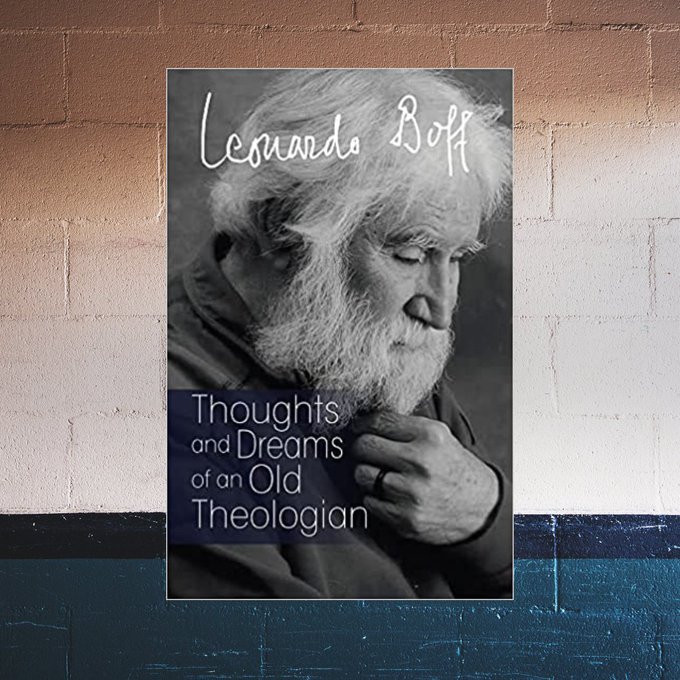
The gains for the church in this articulation are immense. At the same time, however, it appears to me that this hermeneutical stance has not much penetrated the thinking, talk, or action of the church, including the Protestant denominations that I know best. It certainly has not impinged upon so-called evangelical churches that continue in their privatistic, other-worldly ways. And it has not much influenced progressive churches that mostly remain adamantly “liberal” in practice, something very different from “liberationist.” Because of the slowness of the church’s embrace of a liberationist perspective (and in some cases downright resistance), my simple intent here is to call attention to a new book written by Leonardo Boff in his old age, Thoughts and Dreams of an Old Theologian (Orbis Books, 2022). The book is readily readable and accessible, and will serve well as a study guide for a congregation. Boff, a Brazilian, from the outset has been among the earliest and most important voices in calling the church to liberationist perspective and practice. That perspective inevitably has led to a critical stance against the imperial propensity of the Roman Catholic Church, a stance that Boff labels “institutional arrogance.”

That critical stance has caused Boff (and his brother Clodovis, also a theologian) to be twice silenced by the Vatican under John Paul II. Nonetheless, Boff has continued his courageous work as a theologian and a teacher, who now counts Pope Francis as an ally in the work of liberation.

The book, in nine accessible succinct chapters, sums up a lifetime of research, teaching, and testimony. The outline of the book exhibits Boff following the contours of orthodox Trinitarianism, while he unpacks the tradition in fresh and telling ways. In his brief statement on the intention of Jesus, Boff appeals to “Our Father” and its petition for “our bread” (45). He identifies “three fundamental and inevitable hungers”:

The first hunger is for a meeting with Someone good…our kind Daddy (Abba).

The second hunger is the infinite hunger that is never satisfied, the dream of a full meaning for life… This comes with the name Kingdom of God.

There is yet another hunger… This is our daily bread. Without this material basis, talking about our Father and the Kingdom loses its meaning.

Boff summarizes his view of the church that has gotten him into so much trouble with the hierarchy. He pairs the “The Pauline Dimension (Charism) and the Petrine Dimension (Power)” (62). He distinguishes between “power as service” in Jesus and power “as control” in the Petrine Roman model of the church (65). He critiques the self-absorbed power-seeking of the Petrine Church and contrasts it to “the “Christianity of Popular Culture” in which the practical faith of the church, with its compassion and social awareness, does not linger over the perspective of the clergy elite. For good reason, Boff welcomes the great Dogmatic Constitution of the Church (Lumen Gentium) in Vatican II that saw “the people of God” as moving on in faith without excessive respect for the hierarchical structures of the church (71).

The church is not first and foremost a priestly body that creates communities, but the community of those who responded with faith to the call of God in Jesus through his Spirit. The network of these communities forms the People of God because this is the result of a communal, participatory process… Others arise that are more sporadic, but equally important for maintaining the life of the communities; the service of charity, concern for the poor, the promotion of social justice, particularly human, individual, and social rights, and the rights of nature and Mother Earth (74).

By contrast,

In an ecclesiology that regards the church as a hierarchical society (Petrine), there is no salvation for women in the sense of integration into community services and gifts (Pauline). They are forever marginalized, if not excluded. This state of affairs is incompatible with an ecclesiology that is minimally based on the gospel, which has to incorporate human values because they are also divine values. This is the fundamental reason why we should abandon an exclusively Petrine ecclesiology based on society and hierarchy and build up a Pauline ecclesiology, of community and the People of God (75).

Another recurring, crucial accent in Boff’s work is his deep concern for the earth in his “ecotheology.” He sees in our current thinking and practice two “cosmologies in conflict.” One is a “cosmology of conquest, of power as domination” (83). The alternative is a cosmology “gaining strength, the cosmology of transformation and liberation.” This latter option has received compelling articulation in the encyclical of Pope Francis, Laudato Si, “On Care for our Common Home” (2015). Boff pays attention to the processes of living organisms that grow and are transformed at death:

Behind all beings acts Fundamental Energy, also called the Nurturing Abyss of all being, which gave origin to the universe and keeps it in being, bringing into existence new beings. The most spectacular of these is the living Earth and we human beings with our component of consciousness and intelligence and the mission to care for the Earth (85).

Boff’s critique of the cosmology of domination is acute:

It started from a false premise that we could produce and consume without limit on a limited planet. The premise also assumes that the fictitious abstraction known as money represents the highest value and that competition and the pursuit of individual interest will result in general well-being. As I described earlier, it takes the form of a cosmology of domination. This cosmology has brought the crisis into the sphere of ecology, politics, ethics, and now economics. The eco-feminists have pointed out the close connection between anthropocentrism and patriarchy, which since Neolithic times has been doing violence to women and nature (86-87).

In his penultimate chapter Boff returns to his most elemental insistence:

The supreme and absolute principle of ethics is “Liberate the poor.” The principle is absolute because it governs actions always, in every place and for all. “Free the poor” presupposes (a) the condemnation of a social totality, of a closed system that excludes and produces poor people; (b) an oppressor who produces poor and excluded people; (c) poor people unjustly made poor and so impoverished; (d) taking into account the mechanisms that reproduce impoverishment; (e) the ethical duty to dismantle such mechanisms; (f) the urgency to build an escape route from the system that excludes people; and, finally (g) the obligation to bring about the new system in which all in principle have a role in participation, in justice and solidarity, including nature.

This ethics starts from the poor, but it is not just for the poor. It is for all, since no one looking at the face of an impoverished person can feel indifferent; everyone feels concerned. This ethics is fundamentally an ethics of justice, in the sense of restoring the recognition denied to the vast majority and including them in the society from which they feel—and indeed are—excluded (109).

At the outset of this piece I have placed a proverb that, well ahead of contemporary ecclesial formulation, had already seen the truth of God’s “preferential option for the poor.” The proverb asserts that God is particularly attached to and attentive to the poor, those who do not and cannot participate effectively in the production-consumption benefits of the economy.

I noticed the term “mock” in the proverb. The “mocking” of the poor is equivalent to insulting or scorning the creator who is the God of the poor. The equation is a remarkable formulation of a deep conviction of the gospel. We will do well to notice, in the context of this proverb, how it is that much church theology and practice have assumed that God and poor have no connection, as we have fashioned a faith that is individualized and privatized, or that is other-worldly in its escapism. The proverb insists otherwise. It affirms the inevitable, inescapable linkage of God to the economic realities of society, to the political reality that acknowledges not only the presence of the poor, but the production of the poor through the management and manipulation of the economy. This simple equation in the proverb amounts to a critical principle that contradicts our systemic arrangements and summons us to an alternative practice and policy.

The term “mock” in the proverb has led me, perhaps inevitably, to the assertion of the apostle Paul in a quite different context:

Do not be deceived; God is not mocked, for you reap whatever you sow _(Galatians 6:7).

Paul’s assertion is an insistence that God’s world is morally coherent, that it is a network of causes and effects, of deeds and consequences that are connected and guaranteed by the ordering of the creator. Thus “sow…reap.” Paul affirms that this linkage, guaranteed by the creator God, cannot be outflanked because it embodies the will of the creator God. God’s intention cannot be avoided, and God’s will cannot be mocked, either through neglect or defiance.

Consider for a moment this juxtaposition of texts:

God is not mocked;

God is insulted by the mocking of the poor.

So yes, God is mocked:

God is mocked whenever poor people lack food;

God is mocked whenever the children of poor people must attend inadequate schools;

God is mocked whenever poor people cannot receive adequate or reliable health care;

God is mocked whenever poor people are left homeless and without safe shelter; God is mocked whenever some in our society lack the security and dignity for full humanness among us.

God is mocked by an economic system of greed that does not notice the poor, or the poor are excluded from the wellbeing of the economy. But God will not finally be mocked, because God is in resolved solidarity with poor people. It only remains for us to devise social perspectives, policies, and practices that are congruent with the holy God who is alive, well, and active in the world.

Boff has seen all of this with courageous clarity. Because he is a Roman Catholic teacher and theologian, he has been preoccupied with the way the Roman Catholic Church has colluded in this grotesque distortion of creaturely reality. But of course Boff’s concern runs well beyond the Roman Catholic Church. His insistence and anticipation
is that the “peoples church” cannot be contained in any fearful ideology and that the church may indeed impact the body politic in transformative ways.

Boff concludes his final chapter on spirituality with an appeal to the Eucharist:

And now, beloved Earth, I perform the action Jesus performed in the power of his Spirit. Like him, filled with spiritual power, I take you in my impure hands and pronounce over you the sacred words the universe was hiding and which you longed to hear: “Hoc est enim corpus meum: This is my Body. Hic est sanguis meus. This is my blood.” And then I felt it: what was earth was transformed into Paradise, and what was human life was transformed into divine life. What was bread became God’s body, and what was wine became sacred blood. Finally, Earth, with your sons and daughters, you came to God. You became God by participation. At home, at last. (172).

Boff’s book is well worth sustained attentiveness. It is a fierce wake-up call to the reality of God in whom we trust and to whom we respond; it is this God who will, in the end, not be mocked.

Walter Brueggemann

May 20, 2022

……

Walter Brueggemann is one of the most influential Bible interpreters of our time. He is the author of over one hundred books and numerous scholarly articles. He continues to be a highly sought-after speaker.

                                  “A world war in pieces” 

                                             Leonardo Boff

On June 29 of this year 2022 the Madrid Summit of the countries that make up the North Atlantic Treaty Organization (NATO), to which the United States belongs as the main actor, took place. The relationship between these European countries and the United States is one of humiliating subordination.

In this Summit a “New Strategic Commitment” was established that in a certain way goes beyond the European limits and covers the whole world. To reinforce this globalist strategy, Japan, South Korea, Australia and New Zealand were also present. There, something extremely dangerous and provocative of a possible third world war was declared. Russia was reaffirmed as the direct enemy and China as the potential enemy of tomorrow. Nato is not only defensive, it has become offensive.

The perverse category of the “enemy” has been introduced, who must be confronted and defeated. This brings us back to Hitler’s Nazi-fascist jurist Carl Schmitt (1888-1985). In his The Concept of the Political (1932, Vozes 1992) he says: “the essence of a people’s political existence is its ability to define friend and foe” (p.76). By defining the enemy, fighting it, “treating it as evil and ugly and defeating it,” this establishes the identity of a people.

Again Europe falls victim to its own paradigm of the will to power and power as domination over others including nature and life. This paradigm led to two major wars with 100 million victims in the 20th century alone. It seems that it has learned nothing from history and even less from the lesson that Covid-19 is harshly teaching, because it struck like a bolt of lightning over the system and its mantras.

It is now known that behind the war taking place in Ukraine there is a confrontation between the USA and Russia/China as to who holds the geopolitical dominance of the world. Up until now, a unipolar world was in force with the complete predominance of the USA over the course of history, despite the defeats suffered in various military interventions, always brutal and destructive of ancient cultures.

Our master in geopolitics Luiz Alberto Moniz Bandeira (1935-2017) in his meticulous book A desordem mundial:o espectro da total dominação (Civilização Brasileira, RJ 2016) pointed out, of course, the three fundamental mantras of the Pentagon and US foreign policy:

(1)one world-one empire (USA);

(2) full spectrum dominance: dominate the entire spectrum of reality, on land, sea and air with some 800 military bases distributed worldwide;

(3) destabilize all governments of countries that resist or oppose this strategy. No longer through a coup d’état with tanks in the streets, but through the defamation of politics, as the world of the dirty and corrupt, destruction of the reputation of political leaders and a political-media-legal articulation to remove the resisting heads of state.

Effectively this occurred in Honduras, in Bolivia and in Brazil with the coup of this nature against Dilma Rousseff in 2016 and subsequently with the unjust imprisonment of Lula. Now NATO’s New Strategic Commitment obeys this guideline, imposed by the USA, being valid for all under the pretext of security and stability in the world.

It so happens that the American empire is adrift, no matter how much one still appeals to its exceptionalism and to the “manifest destiny” according to which the USA would be the new people of God who will bring democracy, freedom and rights to the nations (always understood within the capitalist code).  However, Russia has recovered from the erosion of the Soviet empire, armed itself with powerful nuclear weapons and unassailable missiles, and is fighting for a strong position in the globalization process. China has emerged with new projects such as the silk road and as an economic power so powerful that it will soon surpass that of the United States. Parallel to this, the Global South has emerged, a group of BRICS countries in which Brazil participates. In other words, there is no longer a unipolar world, but a multipolar one.

This fact exasperates the arrogance of the Americans especially the neocon supremacists who claim it is necessary to continue the war in Ukraine to bleed and eventually wipe out Russia and neutralize China to confront it at a later stage. In this way – this is the neocon claim – one would return to the unipolar world under the dominance of the USA.

Here are the elements that could lead to a third world war, which would be suicidal. Pope Francis in his clear intuition has repeatedly spoken that we are already in a  world war in pieces”. For this reason, in an almost desperate tone (but always personally hopeful) he calls for “we are all in the same boat; either we all save ourselves or no one is saved” (Fratelli tutti n.32). He emphatically states that there are enough madmen in the Pentagon and in Russia who want this war that could There are enough madmen in the Pentagon and in Russia who want this war that could put an end to the human species.

In this way the lethal paradigm of the dominus (lord and master) of modernity is reinforced and the alternative of the frater (brother and sister), proposed by Pope Francis in his encyclical Fratelli tutti, inspired by the best man in the West, Francis of Assisi, is weakened. Either we all fraternize among ourselves and with nature, or else we are, in the words of UN Secretary Antonio Guterrez,”digging our own grave”.

Why has the will to power been chosen over the will to live of the pacifists Albert Schweitzer, Leon Tolstoy and Mahatma Gandhi? Why did Europe, which has produced so many sages and saints, choose this path that could devastate the entire planet to the point of making it uninhabitable? Has it taken as its guide the most dangerous of all archetypes, according to C.G.Jung, that of power, capable of destroying ourselves? I leave open this question that Martin Heidegger took to his grave without an answer. He said: “Only  God can save us”.

For it is in this living God and source of life that we place our hope. This goes beyond the limits of science and instrumental-analytical reason. It is the leap of faith that also represents a virtuality present in the global cosmogenic process.The alternative to this hope is darkness. But light has more right than darkness. In that light we believe and hope.

Leonardo Boff wrote The search for the just measure: the ambitious fisherman and the enchanted fish,Vozes 2022 and Inhabiting the Earth: which is the way to universal brotherhood? Vozes 2021; Thoughts and Dreams of an Old Theologian, Orbis Books,NY 2022.

Another (world) agenda: free life or another civilizational paradigm?

                               Leonardo Boff                          

Previous note: An international group was organized that proposed “another world agenda to liberate life”. The first session was held on 5/5/2022. Each participant (about 20 in all, but not all participated) had 10-15 minutes to present his or her vision of the issue. The basic purpose is how to democratize the scientific knowledge that strengthens the search for an agenda that aims to liberate life. I present here my short presentation, made in French, with the ideas that I have proposed and defended in other writings. So far, as it seems, the new agenda is still situated within the old paradigm (the dominant bubble), and the question of the profound crisis that this paradigm, that of techno-scientific modernity, has provoked and that is putting at risk the future of our life and our civilization, has not been raised. Hence the opportunity to clearly expose a critical and totally unbelieving position regarding the virtuality of this paradigm of liberating life, which is rapidly destroying it. Lboff

*************

Let me get straight to the point: within the current civilizing paradigm, of modernity, is another Agenda possible, or have we reached its insurmountable limits and must we seek another civilizing paradigm if we want to continue living on this planet?

Inspired by three statements of great authority.

The first is from the Earth Charter, adopted by UNESCO in 2003. Its opening sentence assumes apocalyptic overtones: “We stand before a critical moment in Earth’s history, at a time when humanity must choose its future…Our choice is: either to form a global alliance to care for the Earth and each other, or to risk our own destruction and the destruction of the diversity of life” (Preamble).

The second severe statement is from Pope Francis in the encyclical Fratelli tutti (2020): “we are in the same boat, no one is saved by himself,either we all save ourselves or no one is saved”(n.32).

The third statement is from the great historian Eric Hobsbawn in his well-known work The Age of Extremes (1994), in his final sentence: “We do not know where we are going. However, one thing is certain. If humanity wants to have an acceptable future, it cannot be by prolonging the past or the present. If we try to build the third millennium on this basis, we will fail. And the price of failure, that is, the alternative to changing society, is darkness” (p.562).

In other words: our way of inhabiting the Earth, which has brought us undeniable advantages, has reached its exhaustion. All the traffic lights have turned red. We have built the principle of self-destruction, being able to exterminate all life with chemical, biological and nuclear weapons by multiple different ways. The techno-science that has brought us to the extreme limits of the planet Earth’s supportability (The Earth Overshoot) is not able, by itself, as Covid-19 has shown, to save us. We can file the wolf’s teeth down, thinking that we are taking away its voracity. But this does not reside in the teeth, but in its nature.

Therefore, we have to abandon our boat and go beyond a new world agenda. We have reached the end of the road. We have to open a different one. Otherwise, as Sigmunt Bauman said in his last interview before his death, “we will join the procession of those who are heading for their own grave”. We are forced, if we want to live, to recreate ourselves and reinvent a new paradigm of civilization.

Two paradigms: that of dominus and that of frater

I see at this moment the confrontation between two paradigms, well exposed by the encyclical Fratelli tutti:  the dominus paradigm and the frater paradigm. In other words: the paradigm of conquest, expression of the will to power as domination, formulated by the founding fathers of modernity with Descartes, Newton, Francis Bacon, domination of everything, of peoples, as in the Americas, Africa and Asia, domination of classes, of nature, of life, and domination of matter up to its last energetic expression by the Higgs Boson.

The human being (Descartes’ maître et possesseur) does not feel part of nature, but its lord and master (dominus) who in the words of Francis Bacon “must torture nature as the torturer does his victim until she gives up all her secrets”.He is the founder of the modern scientific method, prevalent until today.

This paradigm understands the Earth as a mere res extensa and purposeless, transformed into a chest of resources, considered as infinite that allow an infinite growth/development. However, today we know scientifically that a finite planet cannot support an infinite project, which is the great crisis of the capital system as a mode of production and of neoliberalism as its political expression.

The other paradigm is that of the frater: the brother and sister of all human beings among themselves and the brothers and sisters of all other beings of nature.All living beings have, as Dawson and Crick showed in the 1950s, the same 20 amino acids and the 4 nitrogenous bases, from the most original cell that appeared 3.8 billion years ago, passing through the dinosaurs and arriving to us humans. This is why the Earth Charter says, and Pope Francis strongly emphasises it in his two ecological encyclicals, Laudato Si’ on the care of the common home (2015) and Fratelli tutti (2020): a bond of brotherhood unites us all, “to brother Sun, sister Moon, brother river and Mother Earth” (LS n.92; CT preamble). Human beings feel part of nature and have the same origin as all other beings, “humus” (the fertile earth) from which homo is derived, as male and female, man and woman.

If the first paradigm is one of conquest and domination (the Alexander the Great and Hernan Cortes paradigms), the second shows the care and co-responsibility of all for all (the Francis of Assisi and Mother Teresa of Calcutta paradigms).

Figuratively speaking, we can say: the dominus paradigm is the clenched fist which subdues and dominates. The paradigm of the frater is the outstretched hand that intertwines with other hands for the essential caress and care of all things.

The dominus paradigm is dominant and is at the origin of our many crises and in all areas. The paradigm of the fratern is nascent and represents the greatest longing of humanity, especially of those great majorities mercilessly dominated, marginalised and condemned to die before their time.

But it has the strength of a seed. As in any seed, it contains the roots, the trunk, the branches, the leaves, the flowers and the fruit. That is why hope passes through it, as a principle more than virtues, as that indomitable energy that always projects new dreams, new utopias and new worlds, that is to say, that makes us walk towards new ways of inhabiting the Earth, of producing, of distributing the fruits of nature and of work, of consuming and of organising fraternal and sororal relationships between humans and with the other beings of nature.

The passage from a dominus paradigm to a frater paradigm

I know that the thorny problem of the transition from one paradigm to the other arises here. It will be done processually, with one foot in the old paradigm of dominus/conquest because we must guarantee our subsistence and the other foot in the new paradigm of frater/care in order to inaugurate it from below. Here several assumptions should be discussed, but this is not the moment to do so. But we can advance in one thing: by working the territory, the bioregionalism, the new fraternal/care paradigm can be implemented regionally in a sustainable way, because it has the ability to include everyone and create more social equality and environmental balance.

Our great challenge is this: how to move from a capitalist society of overproduction of material goods to a society that sustains all life, with human-spiritual, intangible values such as love, solidarity, compassion, fair measure, respect and care especially for the most vulnerable.

The advent of a bio-civilisation

This new civilisation has a name: it is a biocivilisation, in which life in all its diversity, but especially personal and collective human life, takes centre stage. Economy, politics and culture are at the service of maintaining and expanding the virtualities present in all forms of life.

The future of life on Earth and the destiny of our civilisation is in our hands. We have little time to make the necessary transformations because we have already entered the new phase of the Earth, its increasing warming. The heads of state are not sufficiently aware of the ecological emergencies and it is still very rare in the whole of humanity.

Leonardo Boff, brazilian theologian, philosopher and wrote: Ecology: cry of the Earth, cry of the poor, Orbis Books 1999/2018; Inhabit the Earth: what is the way to universal brotherhood? Vozes 2022, Catelvecchi,Rom 2022.