
Considero François Houtart, velho amigo pessoal, do Brasil, da A.Latina e de todo Terceiro Mundo, um dos maiores pensadores atuais. É sociólogo e padre belga, de formação marxista, apenas em sua metodologia, sem as vinculações ideológicas que, com cristão, rejeita. Optou por viver no Equador na pesquisa e no apoio ao movimento indégena muito forte naquele país. O presidente Correa foi seu aluno em Louvain. Apresento aqui uma entrevista muito esclarecedora sobre a situação atual da política brasieira e latino-americana. Lboff
“Brasil foi tímido frente aos projetos de integração latina”, diz François Houtart
Sociólogo belga esteve no Brasil para participar de evento no Congresso e conversou com o MST e o Brasil de Fato
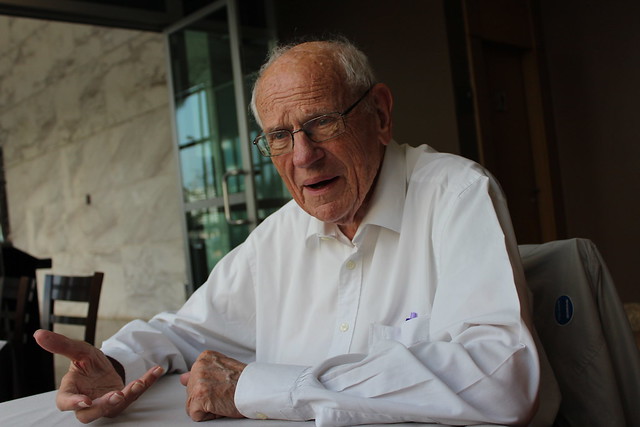
A América Latina, o capitalismo e o atual contexto brasileiro são matéria-prima para as principais reflexões do sociólogo e teólogo belga François Houtart. Radicado no Equador, onde leciona no Instituto de Altos Estudos Nacionais, Houtart é conhecido como o “Papa da antiglobalização”, destacando-se como um dos grandes pensadores de matriz ideológica marxista no continente.
Em Brasília, onde participa de um evento no Congresso Nacional, o teólogo conversou com o Brasil de Fato e o Movimento dos Trabalhadores Rurais sem Terra (MST) sobre o cenário de crise sistêmica global e local, além de temas como reforma agrária, escassez de alimentos, unificação das esquerdas e resistência.
Houtart ainda problematiza a política econômica alinhada ao capitalismo financeiro adotada pelos governos petistas e pondera que, em um cenário de recrudescimento da ação do Estado, é preciso que as forças populares não apenas construam ações de resistência, mas também um projeto de médio e longo prazos, com vistas à derrocada do sistema.
Confira a entrevista abaixo.
Brasil de Fato/MST: O senhor e vários outros intelectuais contemporâneos têm falado sobre o caráter multifacetado (ambiental, político, econômico, etc.) desta crise atual que o mundo tem vivido. Essas diferentes crises têm uma matriz comum ou é necessário fazer ressalvas entre elas?
François Houtart: Não. Em geral, a ideia fundamental é de que a crise é uma coisa comum e parte da lógica do sistema capitalista. Temos uma lógica de acumulação do capital que cobre toda a realidade econômica sem pensar nas consequências ambientais, sociais, etc., porque são consideradas como externalidades, e não é o capital que paga por esses danos. Agora, há uma dimensão imensa de destruição da biodiversidade e da base material da vida, como a água, por exemplo, e é algo de tal dimensão que não se pode ignorar que finalmente a base dessas crises todas é a lógica de exploração da natureza pelo capitalismo, que também traz muitas consequências sociais e culturais.
Há uma economista alemã que diz que o capitalismo está como desconstrutor de todas as formas passadas da produção e da organização econômica e social, mas também construtor de uma nova forma. Mas agora esse aspecto de construção está em perigo pelo aspecto de destruição, que é tão forte no mundo inteiro que não se pode pensar que é possível continuar dessa maneira indefinidamente. Por isso vários economistas e outros pensadores têm dito que o capitalismo terminou seu ciclo histórico. Tem um historiador egípcio que fala em capitalismo senil, mas é um capitalismo ainda muito forte e capaz de resistir de maneira ainda mais violenta quando está chegando ao final do seu ciclo.
Durante a crise de 2008, os movimentos e outros atores que analisam a conjuntura internacional já apontavam a existência de uma crise civilizatória, que não era unicamente uma crise econômica. Mesmo assim, tivemos depois desse período, uma intensificação dos processos de exploração da força de trabalho, do meio ambiente, etc. Por que não conseguimos impedir esse processo?
O problema é que justamente as experiências sociais-democratas da Europa, por exemplo, e dos países progressistas da América Latina (AL) foram experiências talvez pós-neoliberais, mas não pós-capitalistas. Elas são dominadas ainda pela lógica do capitalismo, por muitas razões. Uma parte porque a potência do capitalismo internacional é muito grande e também porque todas as organizações econômicas internacionais estão a serviço da reprodução do capitalismo. E também porque os líderes novos que temos conhecido na AL não têm outra perspectiva que não seja uma modernização do capitalismo. Talvez com um vocabulário e um discurso muito anticapitalistas, anti-imperialistas, mas com políticas de fato de reprodução de outro tipo de capitalismo que pensam o sistema mais como uma norma social, mas que ainda assim é capitalismo.
O senhor disse em uma entrevista que o capitalismo monopolista vem dominando a economia da AL. Quais são as consequências disso para a concepção de desenvolvimento dos líderes políticos da região? Como fica a conexão entre esse projeto econômico e a política?
Essa concepção, na verdade, opera em todo o mundo, não só na AL. É que a concepção dos novos lideres políticos é ainda de neodesenvolvimentismo, sem uma visão crítica da modernização. Eles Adotaram uma visão acrítica da modernização. No Equador, por exemplo, isso é muito claro. O que fazemos é um capitalismo moderno. E esta ideia de modernizaçao muito tecnocrata é uma modernidade muito afetada pela lógica do capital, e o que a desenvolveu foram as forças produtivas, mas pensando que isso seria a única via para um desenvolvimento de uma sociedade e de um país.
E essa concepção finalmente faz, como resultado, com que o papel da esquerda seja ajudar o capitalismo a se reproduzir em novas circunstâncias. Não é uma crítica fundamental à lógica do capitalismo. E o mesmo se passou com os países socialistas, ou seja, não é uma coisa só dos capitalistas. A União Soviética, por exemplo, adotou também de maneira acrítica esse conceito de modernidade, a partir de uma ideia de inesgotabilidade, mas a realidade é diferente disso, porque inclusive o progresso não é linear. É dialético, é cíclico, e a terra não é inesgotável. Assim, isso explica, por exemplo, por que a URSS destruiu a natureza ainda mais do que o capitalismo e por que na China o modelo de desenvolvimento é uma catástrofe ambiental.
Penso que esse conceito de modernizar a sociedade está associado à lógica do capital de exercer a lógica do valor de troca, e não do valor de uso. Um desenvolvimento para fazer crescer o lucro do capital, na verdade, porque o dogma é que o capital é o único motor da economia. Se quer fazer crescer a economia, é necessário favorecer a acumulação do capital. Isso me parece, talvez, até de maneira não consciente, mas é real. E isso é a base de concepção não só da maioria dos novos líderes da AL, mas também dos líderes de outras partes do mundo.
O senhor falou de uma concepção tradicional de desenvolvimento mesmo nas gestões de governos ditos progressistas aqui na AL. No cenário brasileiro, tivemos uma reconfiguração do papel do Estado, em especial na distribuição das riquezas, mas tivemos ao mesmo tempo o rico e o pobre ganhando. Que rupturas deveriam ter sido feitas para que houvesse efetivamente um modelo de desenvolvimento pautado nos interesses coletivos?
O que podemos dizer para o Brasil, quando se veem as cifras, é que houve uma redistribuição do lucro, mas não da riqueza. Quando se comparam gastos sociais com outros gastos, vemos que os primeiros são uma parte relativamente pequena ainda, mas houve sim uma luta contra a pobreza e pelos programas sociais, de saúde, etc. Ok, isso é positivo, mas não houve uma real distribuição da riqueza. Talvez não tenha sido possível politicamente, mas o fato é que os pobres ganharam muito, mas os ricos não perderam muito.
A ideia era guardar um equilíbrio para não provocar uma situação caótica, mas, quando vem a crise do sistema capitalista, não é mais possível continuar esse tipo de modelo. Esse é o problema. E aí, como pensar uma redistribuição da riqueza? A primeira coisa é uma reforma agrária séria, não somente se tratando de algumas propriedades, mas uma reforma no aspecto mais fundamental. Em nenhum país da AL se fez isso para transformar a sociedade rural.
Agora, se isso era possível ou não, é outra questão também. Penso que seria possível fazer alguns passos mais fundamentais… Houve muita generosidade com os mais ricos e as grandes empresas. Uma generosidade com o lucro do capital. (…) No caso do governo do PT, por exemplo, havia bastante poder pra fazer ou não, mas não me parece que o modelo, o projeto do PT tenha sido outro além de favorecer também o capital local.
A combinação entre a crise econômica e a de alimentos é um fenômeno novo, associado à globalização, ou podemos buscar raízes num passado histórico mais distante?
Não podemos apagar o passado, mas temos que ver os fatores novos, que são dois. Um deles é a introdução do capital financeiro. Nos anos de 2008 e 2009, houve um aumento enorme do preço de grãos na Bolsa de Chicago, em parte provocado e artificial, porque foi puramente especulativo, ou seja, não era por escassez. Isso porque, em 2008, o capital financeiro entra em crise e busca outros lugares para ganhar rapidamente muito dinheiro, e a alimentação é um desses lugares. Nesse período, eu vi um empregado de uma multinacional, em Londres, o centro do capitalismo europeu, aconselhar os clientes de multinacionais e de grandes fortunas privadas a investirem em alimentação porque era o lugar de lucro mais rápido. Segundo a FAO, em dois anos, 150 milhões de pessoas foram incluídas nas faixas da extrema pobreza e da fome, resultado imediato do capitalismo financeiro.
O segundo aspecto é a concentração, uma característica do capitalismo, mas se trata da concentração do capital agrário. Não só o controle de terras, mas de todo o ciclo de produção, desde os insumos até a comercialização por grandes empresas, como Monsanto e Syngenta, que controlam também as sementes. É praticamente uma contrarreforma agrária. No Equador, não temos dados porque não há censo agrícola há bastante tempo e o governo não quer fazer para não mostrar a concentração de terras. Não há apenas uma concentração de terras, mas a concentração de todo o ciclo agrário.
A política externa brasileira, durante os mandatos do governo Lula (2003-2010), se intitulava como sendo de postura “altiva e ativa” na relação com os outros países, de tentativa de construção de um protagonismo nas relações internacionais. Com a nomeação de José Serra (PSDB) para o Ministério das Relações Exteriores, que manifestou repúdio à posição de países como Venezuela e Cuba de não reconhecimento do processo de impeachment, o governo afirmou que adotará uma relação “despartirizada” e “sem ideologias” com os países. Qual o caminho que o Brasil deve seguir, na sua avaliação, na relação com os países, em especial da América Latina?
É verdade que a integração econômica latino-americana é fundamental para lutar contra o capitalismo de monopólio, porque é unicamente com um bloco maior que o continente vai poder lutar contra a força das grandes multinacionais. Um país como a Venezuela não é capaz de lutar contra as multinacionais, ainda menos a Bolívia e o Equador. Assim, Bolívia e Equador precisam aceitar as condições das multinacionais para minas e petróleo, por exemplo.
O perigo é que essas empresas saiam do país. A força delas é tão grande que, mesmo a Venezuela escolhe não fazer nada, temendo a saída da empresa. Somente com uma integração econômica como o Mercosul se pode resolver uma parte da luta contra o capitalismo monopolista. O que ocorreu com o Brasil antes de Serra foi uma política tímida de integração. O Brasil não foi o motor da integração latino-americana, sempre pôs freios, no Mercosul, na Unasul, porque é uma grande potência e tem muito mais possibilidades de atuar do que Equador e Bolívia, por exemplo.
Assim, a tendência foi a de considerar que talvez o Brasil não necessitasse desse tipo de integração porque tinha uma economia muito forte, por isso foi tímido frente aos projetos de integração. Por outro lado, desenvolveu uma política de expansão exterior, principalmente na África, com o etanol contando com apoio de grandes empresas como a Odebrecht e apoiada pelo Partido dos Trabalhadores. Mais da metade das viagens de Lula à África foram pagas pela Odebrecht, a serviço do capital local. A Ambev, por exemplo, comprou agora mais de 50% de todas as fábricas de cerveja do mundo. O centro é na Bélgica, mas o poder é brasileiro. E assim, uma multinacional brasileira tem exatamente as mesmas práticas que outras multinacionais e teve o apoio do governo porque era capital brasileiro.
Na África é ainda mais grave, porque resultou em contratos muitos negativos para países africanos, principalmente os referentes à exploração do etanol. Em 2010 foi firmado um tratado entre comunidade europeia, Brasil e Moçambique para produção de cana de açúcar, que abasteceria a Europa com a energia renovável ou verde, com capital europeu, tecnologia brasileira e danos para Moçambique. Um sétimo do território de Moçambique foi destinado à cana de açúcar, com uma destruição terrível da natureza. Isso foi uma política da gestão de Lula, e não de Temer.
Então, temos como fatores da política externa na gestão anterior não favorecer demais a integração latino-americana porque o Brasil era uma potência. Outro fator era favorecer o capitalismo brasileiro. E o terceiro fator foi o BRICS levar novas possibilidades de competência contra o capitalismo ocidental, mas não é um projeto anticapitalista, e sim um projeto anti-hegemônico contra a hegemonia do capitalismo norte-americano e europeu. Todos os países dos BRICS são neoliberais. Rússia é totalmente neoliberal, assim como o novo diretor do Banco Central da Índia foi funcionário do Fundo Monetário Internacional, por exemplo. É um projeto anti- hegemônico, e nesse sentido é bom, mas veja que não é anticapitalista. Serra, evidentemente, vai acelerar a fragilidade dos projetos de integração latino-americana, a Unasul, a Alba. Vai evitar todo o freio ao capitalismo financeiro internacional. Com os BRICS não sei qual será sua atitude; pode até aceitá-lo, porque não é um bloco anticapitalista. É certo que sua política externa irá promover o capitalismo brasileiro no exterior e permitir a introdução do capitalismo internacional no Brasil.
Como construir uma unidade das forças de esquerda se a gente vive um momento de tanta polarização e também de uma aceitação do discurso adotado, por exemplo, pelo governo de Michel Temer de que é necessário promover o desenvolvimento econômico a qualquer custo, até mesmo violando direitos sociais? Como promover essa resistência?
O projeto agora deve ser, por um lado, de resistência, mas não pode ser unicamente isso. Os sindicatos operários, por exemplo, em sua maioria, estão na luta para conservar conquistas do passado. Veja que não é uma luta pra mudar o sistema, e, por conta disso, eles se integram mais e mais à lógica do sistema, lutando apenas pelo resguardo de conquistas. Temos que ter resistência sim, mas com uma visão mais adiante, que é a mudança sistêmica, e no sentido também de aproveitar a crise pra mostrar que este sistema não pode se reproduzir a longo prazo e que as lutas são necessárias pra ir contra a lógica dele, não só para recuperar ou manter conquistas do passado. É preciso construir um projeto de longo prazo, um horizonte.
Edição: José Eduardo Bernardes
 Leonardo Boff