Chico Mendes’ Legacy for the Pan-Amazonic Synod

Francisco Alves Filho, better known as Chico Mendes, was a genuine child of the jungle, identified with her. A self educated man, he came to understand that because it sees nature more as a nuisance than as an ally, current development disregards nature and works against her. Chico Mendes was one of the few who understood sustainability as a dynamic and self regulating equilibrium of the Earth, thanks to the chain of inter-dependency among all beings, especially the living beings who live by recycling resources and therefore are forever sustained. The Amazon is the main example of this natural sustainability.

Those who knew him and enjoyed his friendship knew his profound identification with the Amazon jungle, with her immense biodiversity, the seringales (rubber tree plantations), the animals, and the smallest signs of life of the jungle. Chico Mendes had the spirit of a modern day Saint Francis.

He divided his time between the city and the jungle. Deep in his body and soul he would hear the strong call of the jungle when he was in the city. He felt part of, not above the jungle. That is why he periodically returned to his seringal and to communion with nature. There he was in his habitat, in his true home.

But his socio-ecological consciousness caused him to leave the jungle to spend time organizing the seringueros (rubber workers), founding labor union cells and participating in struggles of resistance: the famous“empates” strategy, where the seringueros, with their children, their elders and other allies, peacefully stood in front of the machines that cut down the trees, blocking their entry into the rubber reserves, and preventing the destruction they caused.

Facing the fires, such as those presently devouring the Amazon, that in 2019 have had 74,155 focal points, covering 18,627 square kilometers, Chico Mendes suggested, in the name of the Movement of the Peoples of the Jungle, creating extract reserves, which the Federal Government accepted in 1987. He put it correctly: “we, the seringueros, understand that the Amazon cannot be transformed into an untouchable sanctuary. On the other hand, we also understand the urgent need for development, but without cutting down trees, or threatening the life of the peoples of the planet”.

Mendes affirmed: “at the beginning I defended the seringueros, but soon I understood that I had to defend nature, and finally I understood that I had to defend humanity. Therefore we proposed an alternative, for preserving the jungle that simultaneously can be economic. We thought then of creating the extracting reserves” (cf. Grzybowski, C., (org.) The Testament of the Man of the Jungle: Chico Mendes by himself, (El testamento del Hombre de la Selva: Chico Mendes por él mismo), FASE, Rio de Janeiro 1989 p.24).

He himself explained how it would function: “In the extracting reserves we will commercialize and industrialize the products that the jungle generously offers us. The university must oversee the extracting reserve. That is the only way the Amazon will not disappear. That reserve will not have owners. It will be a common good of the whole community. We will use the products but will not be the owners” (cf. Jornal do Brasil 24/12/1988). “This way an alternative could be found to the savage extraction that only benefits the speculators. A felled mahogany tree in Acre sells for from 1 to 5 dollars; if sold in the European market, it costs from 3 to 5 thousand dollars”.

On Christmas Eve, 1988, he fell victim to the hatred of the enemies of nature and humanity. Five bullets killed him. He left his Amazonian life to enter universal history and the collective sub-consciousness of all persons who love our planet and its biodiversity.

Chico Mendes has become an archetype that encourages the struggle for the preservation of the Amazon jungle and the peoples of the jungle, a struggle now assumed by millions all over the world. We understand the indignation of many members of the G-7, led by Emmanuel Macron, the President of France, against the irrational devastation promoted by Brazil’s President Jair Bolsonaro, who is committing a crime against humanity and deserves to be judged for that crime. The Amazon is a common good of humanity.

The Amazon mega-projects (Brazilian and foreign) show the predatory type of development of capitalism. It produces growth that has been appropriated by the few at the expense of the jungle and the misery of her peoples. Is contrary to life and the enemy of the Earth. It is the result of an insane irrationality.

Decisions are made about such Pharaonic projects in cold offices without sound information, far from the enchanting scenery, blind to the supplicant faces of the sertanejos and indifferent to the innocent eyes of the Indigenous people. They are decisions made by people without empathy, with neither respect for the jungle, nor human solidarity.

The work project of the Pan Amazonic Synod is different. There the voice that will be more present and listened to will be that of the people of the jungle. They know how to protect the forest. They will offer the best suggestions for combining protection of the jungle and extraction and production of its natural goods.

This “development”, made with the people and by the people, erases the legitimacy of the dominant idea, especially that of the agro-business, that the jungle and the forests must be eradicated because otherwise modernity cannot thrive.

Studies have shown that it is not necessary to destroy the Amazon jungle to obtain profits. The extraction of fruits from the palm trees (açaí, burití or moriche, bacába or milpesillo, chontaduro, etc.), Brazil nuts, rubber, vegetable oils and dies, alkaloid substances for pharmacology, and substances of herbicide and fungicide value, are more profitable than all the deforestation that under the Bolsonaro government has grown by more than 230%.

Only 10% of the tierras roxas (lands of the Indigenous), already identified as of excellent fertility, can be converted into major world agrarian productivity areas. The exploitation of minerals and timber can occur along with permanent reforestation, that assures the green nature of the affected areas (cf. Moran, E., The human economy of the Amazon populations (La economía humana de las poblaciones amazónicas, Vozes, Petrópolis 1990, 293 y 404-405); Schubart, H., Ecology and the the use of the jungles, (Ecología y utilización de las selvas, in Salati, E., Amazon, development, integration, ecology, Amazonia, desarrollo, integración, ecología, op.cit. 101-143).

The Amazon can be a test of a possible alternative, in consonance with the rhythm of her exuberant nature, respecting and giving value to the wisdom of the original peoples.

For the Pan Amazonic Synod, that will take place in October 2019, in Rome, Chico Mendes will be a paradigmatic example and a source of inspiration.

Leonardo Boff Eco-Theologian-Philosopher.Earthcharter Commissioner

Free translation from the Spanish sent by
Melina Alfaro, alfaro_melina@yahoo.com.ar.
Done at REFUGIO DEL RIO GRANDE, Texas, EE.UU.


The Amazon:The Common Wealth of the Earth and Humanity

The Amazon:The Common Wealth of the Earth and Humanity

The current fires in the Brazilian and Bolivian Amazon demonstrate the importance of the Amazonian biome to the equilibrium and future of life. The gravity of the situation is seen in the carelessness with which the President of Brazil treats environmental issues, denying the most serious scientific data and the threat to the Indigenous reserves, aggravated by the way the Minister for the Environment has dismantled the principal organs for protecting the jungle and the Indigenous lands, and the uncontrolled advance of agro-business into the virgin jungle.

According to some international specialists, the Amazon is the second most vulnerable area on the planet with respect to climate change as caused by human beings. Pope Francis himself warned «that the future of humanity and of the Earth is bound to the future of the Amazon; is manifested for the first time with such clarity that the challenges, conflicts and emergent opportunities in a territory dramatize the dangers to the survival of planet Earth and the coexistence of all of humanity». Those are grave words, underrated by the big predatory corporations, because they know that they should change their modes of production, consumption and waste management. But they prefer profits over caring for human and earthy life.

With good reason, Pope Francis has called for a Pan Amazon Synod in October, this year, whose theme will be: “The Amazon: new paths for the Church and for an integral ecology”. It will be about applying his encyclical letter, “About the caring of the Common Home”, to avoid a world-wide socio-ecological catastrophe. It will not be about an environmental and green ecology, but about an integral ecology, that includes the environment, society, politics, economy, daily life and the spiritual dimension.

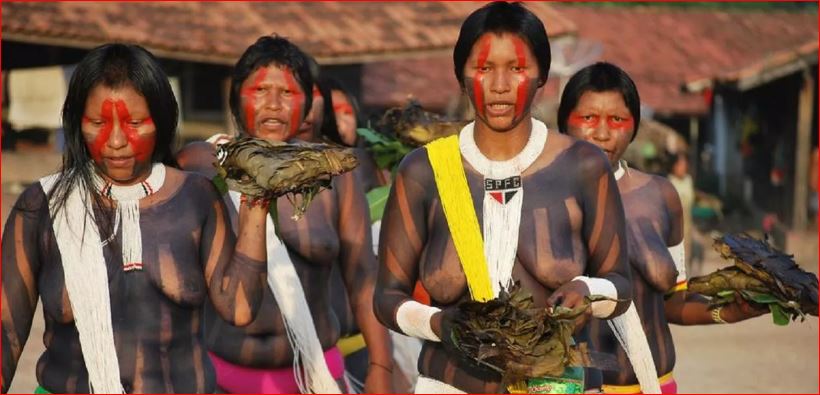
Some general data about the Amazonian biome: It covers an area of 8,129,057 square kilometers in nine countries: Brazil (67%), Peru (13%), Bolivia (11%), Colombia (6%), Ecuador (2%), Venezuela (1%), Suriname, Guyana and French Guiana (0.15). It has over 37,700,000 inhabitants, of which 2.8 million are Indigenous, from 390 different nations, who speak 240 languages, of the rich matrix of 49 linguistic branches, a unique phenomenon in the history of wold linguistics.

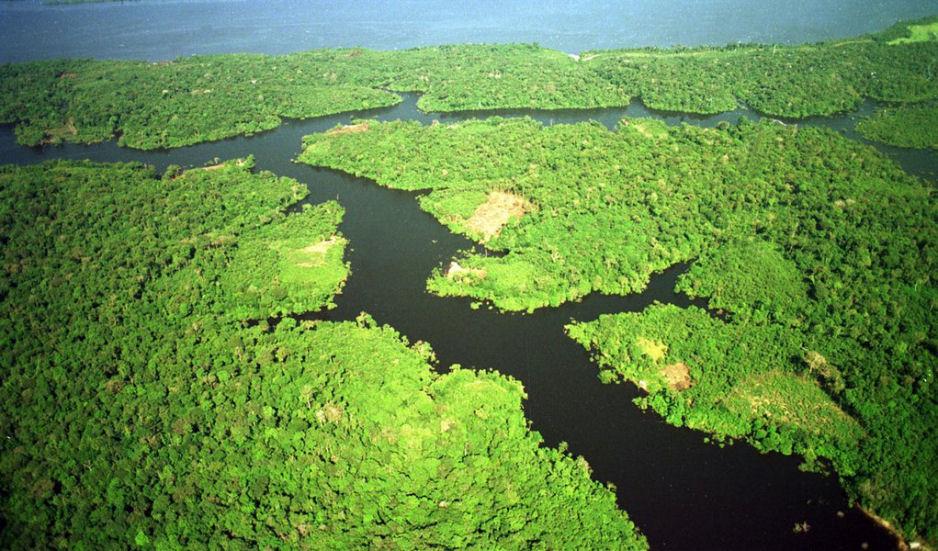
Three Amazon rivers exist: the one visible on the surface; the aerial, so called, “flying rivers” (each 20 meter-wide tree canopy top produces 1000 liters of water that bring the rains to the [so called] «closed biome», from the South up to the North of Argentina); the third river, invisible, is the river“rez do chão” (do not confuse this with the tourist place, Rez do Chão), a subterranean river that flows underneath the actual Amazon.

The entire Amazon biome is a Common Wealth of the Earth and of Humanity. That is evident in what the astronauts have seen: from the Moon or from spacecraft, Earth and Humanity form a single entity. The human being is the portion of the Earth that began to feel, to think, to love and to care. We are Earth, as Pope Francis and the Bible itself emphasizes.

Now in a planetary phase, we find ourselves together in the same and unique Common Home. The time of nations is passing. Now is the time of the Earth, and we must organize ourselves to guarantee the means that will sustain our existence and that of Nature. No one owns the Earth. She is our Common Good. Everyone has the right to be on the Earth. Since the Amazon is part of the Earth, no one should consider that they own that which is a Good of all and for all. Brazil, at most, has the responsibility of administering the Brazilian portion, (67%) which Brazil is doing irresponsibly. Hence such wide-spread concern.

The Amazon biome is presently the object of the world’s greed, given its wealth. There is too much violence. Since the mid 1980s the Brazilian Amazon has produced more than 12 martyrs, Indigenous. lay and religious; 6 in Ecuador; 2 in Peru and countless more in Colombia.

At the August G-7 gathering in Biarritz, France, the importance of the Amazon biome to the equilibrium of the climate and the Earth herself was evident. I suspect that they still see it conventionally, as a trunk full of resources for their economic projects. I suspect that they have not internalized the vision of the new ecology that sees the Earth as a living super organism, and us as part of that super organism and not as her masters. If the Amazon were totally destroyed, everything from the South of Brazil up to the North of Argentina and Uruguay would be transformed in a desert. Hence the vital importance of that multinational biome.

The irresponsibility of President Jair Bolsonaro is so great that world jurists plan to accuse him of ecocide, a crime recognized by the UN in 2006, and take him before the tribunal of the «crimes against Humanity».

I finish with the words of Miguel Xapuri Ianomâmi, an Indigenous Yanomami:

“You have God, we have Omama. She created life, and the Yanomamis, She permits all that happens. We are in constant communication with Her”. Who in the secular world could speak from the heart in this form?

Leonardo Boff Eco-Theologian-Philosopher,Earthcharter Commission

Free translation from the Spanish sent by
Koinonia, info@servicioskoinonia.org.
Done at REFUGIO DEL RIO GRANDE, Texas, EE.UU


For millions of years the Amazon flowed into the Pacific

In function of the PanAmazonic Synod let’s continue delving into the history of the Amazon ecosystem.

Euclides da Cunha (1866-1909), a classic of Brazilian letters, was also a passionate researcher of the Amazon region, and in 1905 he wrote: «Human intelligence could not support the weight of the powerful reality of the Amazon, human intelligence would have to grow up with her, adapting to her in order to to dominate her» (A lost paradise, Um paraíso perdido, Collection of essays on the Amazon, Petropolis 1976,15). This statement shows the exuberant richness of this vast ecosystem..

Paradoxically, the Amazon also suffers the most violence. To see the brutal face of the predatory capitalist system, we need only to visit the Amazon. The monstrous nature of the spirit of modernity, the rationalization of the irrational and the implacable logic of the anti-nature system is visible there.

The Brazilian state, national and multinational enterprises, formed a huge trio and gave rise to what has come to be called “The Amazon mode of production”. cf. Mires, F., Discourse of nature: ecological and political in Latin America, (Discurso de la naturaleza: ecología y política en América Latina, DEI, San José 1990, 119-123). It is a form of production/ destruction that is terrifyingly predatory, applying intensive technology against nature, declaring war against the rain forest, exterminating native and adventitious populations, super exploiting the work force, even to the point of slavery, seeking production to satisfy the world market.

The continental Amazon comprises 6.5 million square kilometers, covering two fifths of Latin America, half of Peru, a third of Colombia and large parts of Bolivia, Venezuela, Guyana, French Guiana and Suriname, as well as 3.5 million square kilometers of Brazil.

Geologically, the proto-Amazon during the paleozoic era (between 550 to 230 million years ago) was a gigantic gulf opening towards the Pacific Ocean. South America was still connected to Africa. In the cenozoic era. At the start of the tertiary period, some 70 million years ago, the Andes began to emerge, and during the plioceno and the pleistoceno and for thousands and thousands of years thereafter, the Andes blocked the water from reaching the Pacific. The whole Amazon depression was converted in a liquid paradise until it found a path to the Atlantic Ocean, as is now the case. (cf.Soli,H., Amazônia, fundamentos da ecologia da maior região de florestas tropicais, Vozes, Petrópolis 1985, 15-17).

According to recent investigations, the Amazon, which with 7,100 kilometers is the world’s longest river, whose origins are found between the Mismi, (5.669 m), and the Kcahuich, (5.577 m), mountains, South of the city of Cuzco, in Peru. The Amazon is also the river with the largest flow, averaging 200,000 cubic meters flow per second. By itself, the Amazon contains from 1/5 to 1/6 of the mass of water that all of Earth’s rivers jointly launch into the oceans and seas. The principal bed of the river is an average of 4 to 5 km wide with a depth that varies from 100 meters in Obidos to 4 meters at the mouth of the Xingu river.

The Amazon offers the largest genetic heritage. As Eneas Salati, one of our finest researchers, said: «In a few hectares of the Amazon jungle there exist more species of plants and insects than all the flora and fauna of Europe» (Salati, E., Amazônia: desenvolvimento, integração, ecologia, Brasiliense/CNPq, S.Paulo 1983; cf. Leroy, J.-P., Uma chama na Amazônia, Vozes/Fase, Petrópolis 1991,184-202; Ribeiro, B., Amazônia urgente, cinco séculos de história e ecologia, Itatiaia, B.Horizonte 1990, 53). But we should not deceive ourselves: this exuberant jungle is extremely fragile, because it stands on one of the poorest and most leached soils of the Earth, as we wrote in the previous article.

According to historian Pierre Chaunu, 2 million people lived In the pre-Colombian Amazon, and in all of South America there were around 80 to 100 million; 5 million of them in Brazil.

The people of those times developed a subtle handling of the jungle, respecting her uniqueness, but at the same time, modifying the habitat to stimulate plant life that was useful for humans. As anthropologist Viveiros de Castro affirms: «The Amazon we see now is what resulted from centuries of social intervention, and the societies that live there are the result of centuries of coexistence with the Amazon» (“Sociedades indígenas y naturaleza”, en Tempo e Presença, n.261, 1992, 26). E. Miranda is still more emphatic: «Little of nature remains in the Amazon that is untouched and unaltered nature by humans» (Quando o Amazonas corria para o Pacífico, Vozes, Petrópolis 2007, 83).

There were around 1,400 tribes in pre-Cabral Brazil, 60% of them in the Amazon area. Languages were spoken that belonged to 40 groups subdivided into 94 different families; a fantastic phenomenon that caused ethnologist Berta Ribeiro to affirm that «nowhere else on Earth was found such a linguistic variety as that observed in tropical South America» (Amazônia urgente, op.cit. 75).

It is worth noting that in the interior of the Amazon jungle, 1,100 years before the arrival of the Europeans an immense space (almost an “empire”) of the tribe tupi-guarani was formed. It included territories that stretched from the Andean foothills, created by the river, up to the basin of the Paraguay and the Parana, reaching up to the North and North East to descend to the Pantanal and gaucho pampas.

Practically all of the Brazilian forest, with few exceptions, was conquered by the tupi-guarani (cf.Miranda, E., Quando o Amazonas corria para o Pacífico, op.cit.92-93). A “proto-state” was created, with extensive commerce with the Andes and the Caribbean.

This demolishes the belief in a savage character and civilizing vacuum of the Amazon.

Leonardo Boff Eco-Theologian-Philosopher Earthcharter Commission

Free translation from the Spanish sent by
Melina Alfaro, alfaro_melina@yahoo.com.ar.
Done at REFUGIO DEL RIO GRANDE, Texas, EE.UU.

The Amazon: neither savage, nor the World’s Lungs or Granary

The Pan-Amazon Synod that will take place in Rome this October, requires a better knowledge of the Amazon ecosystem. Myths must be ferreted out.

The first myth: the Indigenous people as wild, genuinely natural, and therefore, in perfect harmony with nature. The Indigenous are regulated not by cultural but by natural criteria. The Indigenous are in a sort of a biological siesta with nature, in a perfect, passive, adaptation to its rhythms and logic.

This ecologization of the Indigenous is a fantasy, resulting from the fatigue of urban life, with its excessive technology and artificiality.

What we can say is that the Amazon Indigenous are as human any other, and as such, they are in constant interaction with the environment. More and more, research reveals the interaction between the Indigenous and nature, and their mutual affects on each other. The relationships are not “natural,” but cultural, like ours, in an intricate web of reciprocity. Perhaps the Indigenous have something unique that sets them apart from modern man: they experience and understand nature as part of their society and culture, an extension of their personal and social body. For them, nature is not, as it is for the modern man, a mute and neutral object. Nature speaks and the Indigenous listen and understand her voice and her message. Nature is part of society and society is part of nature, in a constant process of reciprocal adaptation. For that reason the Indigenous are much better integrated than we are. We have much to learn from the relationship the Indigenous maintain with nature.

The second myth: The Amazon is the lungs of the world.Specialists affirm that the Amazon jungle is in a state of climax. That is, the Amazon is in an optimal state of life, a dynamic equilibrium in which everything is well utilized and therefore everything is in balance. The energy captured by plants is put to good use through the interactions of the food chain. The oxygen they liberate during the day through photosynthesis is utilized at night by the plants themselves, and other living organisms. Therefore, the Amazon is not the world’s lungs.

But the Amazon does function as a great fixer of carbon dioxide. In the process of photosynthesis great quantities of carbon are absorbed. And carbon dioxide is a principal cause of the greenhouse effect that warms the Earth (in the last 100 years it grew by 25%). If one day the Amazon were totally deforested, nearly 50 billion tons of carbon dioxide a year would be launched into the atmosphere. That would cause a massive extinction of living organisms.

The third myth: the Amazon as the world’s bread basket. That is what the first explorers thought, such as von Humboldt and Bonpland and the Brazilians planners while the military was in power (1964-1983). That is not true. Research has shown that “the jungle lives by herself” and in great part “for herself” (cf. Baum, V., Das Ökosystem der tropischen Regenswälder, Giessen 1986, 39). The jungle is luxuriant but the soil is poor in humus. This sounds paradoxical. Harald Sioli, the great specialist in the Amazon, put it clearly: “the jungle actually grows on the soil and not from the soil” (A Amazônia, Vozes 1985, 60). And he explains: the soil is only the physical support for an intricate web of roots. The trees’ roots are intertwined and mutually support each other at the base. An immense balance and rhythm is formed. All the jungle moves and dances. This is why, when one tree falls it drags several other trees down as well.

The jungle maintains her exuberant character because it is a closed chain of nutrients. Aided by the water that drips from the leaves and runs down the tree trunks, a bio-layer of leaves, fruits, small roots, and wild animal droppings decomposes into the soil. It is not the soil that nourishes the trees. It is the trees that nourish the soil. Those two sources of water wash down, carrying the excrement of tree dwelling animals and of the larger species, such as birds, coatis, macaques, sloths and others, as well as the myriad of insects that live in the tree tops. An enormous quantity of fungi and countless micro-organisms make these nutrients available to the roots. Through the roots, the plants absorb them, guaranteeing the captivating exuberance of the Amazon Hileia. But it is a closed system, with a complex and fragile equilibrium. Any small deviation can have disastrous consequences.

The humus commonly is not more than 30-40 centimeters deep, and can be washed away by torrential rains. In a short time, sand would appear. The Amazon without the jungle would be transformed into an immense sabana or even a desert. That is why the Amazon never can be the granary of the world, but will continue being the temple of the greatest biodiversity.

The specialist of the Amazon, Shelton H. Davis, noted in 1978 a truth that is still valid in 2019: “A silent war is presently being waged against the Aboriginal peoples, against innocent peasants and against the ecosystem of the jungle in the Amazon basin” (Victims of the miracle, Saar 1978, 202). Until 1968 the jungle was practically intact. Ever since, with the great hydroelectric projects and agribusiness; and now with the anti-ecologism of the Bolsonaro government, the brutalization and devastation of the Amazon continues.

Leonardo Boff  is Eco-Theologian-Philosopher and of theEarthcharter Commission

Free translation from the Spanish sent by
Melina Alfaro, alfaro_melina@yahoo.com.ar.
Done at REFUGIO DEL RIO GRANDE, Texas, EE.UU.