Brazil,Bolsonaro,Theology of Liberation and the Attacks on the Church:Nathalia Toledo Urban

Brazil Fascism Human Rights International Left Politics Liberation Theology

Brazil, Bolsonaro, Liberation Theology and the new attacks on the Church

Bolsonaro’s government is becoming well known for their paranoia against “invisible enemies,” one of their traits is to accuse the most unthinkable people/institutions to be leftists. After accusing BBC, The EU and The economist of being communists, Bolsonaro’s government has a new target: The Catholic Church! It might sound surprising and even random to many specially for non-Brazilians to hear that, but the truth is, The Catholic Church had and still has an important impact among social programs in Latin America, mostly thanks to the Theology of Liberation.

The Theology of Liberation is a non-partisan movement that started during the 70’s, their philosophy encompasses several streams of thought interpreting the teachings of Jesus Christ as liberator of unjust social, political, and economic conditions. The movement is not based on the ecclesiastical interpretation of reality, but on the reality of poverty and exclusion. Its proponents have described it as an analytical and anthropological interpretation of the Christian faith.

But, by adding several currents of thought, the movement absorbed beliefs of Umbanda (an Afro-brazilian religion), Spiritism, Islam and even Shamanism.

Leonardo Boff Copyright:© Rafael Stedile

In spite of the internationalization of Liberation Theology, Latin America gathers its greatest representatives, such as the Peruvian priest Gustavo Gutiérrez, the Brazilian Leonardo Boff and the Uruguayan Juan Luis Segundo. According Leonardo Boff, the central point of Theology of Liberation is the concrete of the poor, its oppressions, the degradation of its lives and the sufferings without account that suffers. Without the poor and the oppressed there is no Liberation Theology, “Every oppression calls for a liberation.”

The Catholic Church dedicated two documents to Liberation Theology in the 1980s, considering it heretical and incompatible with Catholic doctrine. Just to give an historical political context the 3 countries were under military dictatorship during the “birth” of those ideas. Even though in Brazil, the majority of Catholics supported the dictatorship, many rebellious priests were very hands on fighting against the military’s authoritarian views and specially interested in protecting the poor workers and peasants that were being massacred by the government.

The oppressive police even monitored churches and masses, especially the ones happening in the biggest cities.  According to the Brazilian government at the time some priests were contaminated by the Marxism ideology and were using their power to spread subversive propaganda. The Ecumenical Documentation and Information Centre produced in 1988 a list of 12 forms of attack suffered by the Church: defamation, invasion, imprisonment, torture, murder, kidnapping, prosecution, subpoena, expulsion, censorship, prohibition and counterfeiting.

Between 1969 and 1981, there were 15 deaths or disappearances of clerics or lay people that were involved in the church’s social movements. People like, Father Antônio Henrique Pereira da Silva Neto, direct auxiliary of Archbishop Dom Hélder Câmara. He was kidnapped, tortured and killed in Recife in May 1969, Santo Dias, leader of the Worker’s Pastoral , killed by a back shot fired by a military police officer during a strike in São Paulo, Alexandre Vanucchi Leme, a student at the University of São Paulo, who died of injuries caused by torture in the premises of the Second Army, in the capital of São Paulo.

And student leader Honestino Guimarães da Silva, a member of The Catholic Student Youth, arrested and tortured in, Rio, his body is still missing. Father João Bosco Burnier, murdered on 1976 the forces of repression in Conceição do Araguaia, he and the bishop D. Pedro Casaldaliga, defended women who were being tortured by militaries.

There were 18 cases of banishment or expulsion. Father James Murray was expelled, for celebrating Mass in black and for reading the Declaration of Human Rights during his homily. And the most famous case Frier Betto, arrested twice, he wrote his experiences during that dark period of the Dictatorship in books, the most famous Baptism of Blood, which tells about the involvement of Dominican Friers at the Ação Libertadora Nacional, a communist guerrilla group, the book was adapted and became a movie in 2006.

Santo Dias: Shot in the back by a soldier.

So, lets talk about present days: Bolsonaro’s government is trying to bring back that whole McCarthyist “communist threat” in 2019. In their vision, the Church is a traditional ally of the Worker’s Party (PT) and is organizing itself to lead debates with the left; the alert to the government came from reports from the Brazilian Intelligence Agency (Abin), headed by General Heleno, and military commandos; the reports are from recent meetings of Brazilian cardinals with Pope Francisco to discuss the Pan Amazonian Synod, which will gather in October in Rome, bishops from all continents.

The debate will address the situation of indigenous peoples, climate change caused by deforestation and quilombo and according to the article in the Estado de São Paulo, based on documents circulating in the Planalto, the Internal security military judged that sectors of the Church allied with social movements and leftist parties, members of the so-called ‘progressive clergy’, wanted to use the Synod to criticize the Bolsonaro’s government and gain international impact.

And of course their fears are being fed by all neopentecostal population that since day one were lining themselves with Bolsonaro.

Many theologists believe that the Theology of Liberation died, because many of their biggest supporters are dead or old, but their legacy is still very much alive.

In 1991, after almost a decade fighting with cardinals from Rome (in special Cardinal Ratzinger, latter the Pope Benedict XVI) Boff, wrote to the Vatican asking for a dispensation of his vows, and nowadays he’s a philosopher and social political activist.

Sources: Leonardo Boff’s blog: https://leonardoboff.wordpress.com
Estado de São Paulo: https://noticias.uol.com.br/ultimas-noticias/agencia-estado/2019/02/10/planalto-ve-igreja-catolica-como-potencial-opositora.htm
Baptism of Blood (movie trailer): https://youtu.be/uhBemy_vXCk

By Nathália Toledo Urban
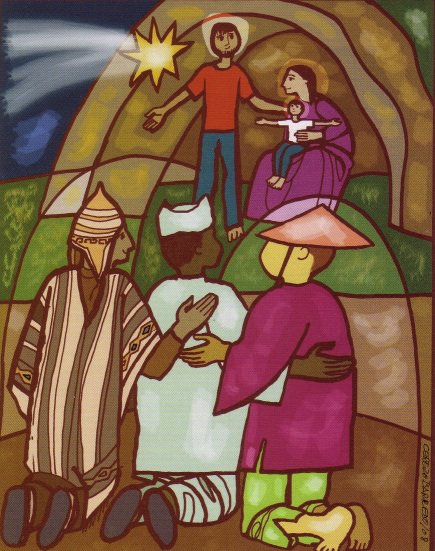


Despite the problems, Christmas is still Christmas

Chegou-me somente agora a tradução inglesa de meu texto sobre o Natal. Como o Natal é mais que uma data mas um espírito de paz e de amor, vale também para atual situação sob a qual vivemos: Lboff

These are somber times around the world and in our country. There is too much rage and hatred. Above all, is the lack of sensitivity towards our fellow human beings, especially the children, such as the Baby Jesus, who lives in the streets and suffers abuse. But in spite of it all, we are living the humanity that our God assumed; a very contradictory human condition.

Christianity is not about announcing the death of God, but about humanity, the benevolence and the merciful love of God. We see the Baby between the ox and the mule: the joviality and eternal youth of God Himself smiles through Him.

Passing through Bethlehem of Judah, I heard a tender whisper. It was the voice of Mary rocking her infant: “My Baby, my Sun, how will I clothe you? How will I nurse you, if you are the one who nourishes all creatures”?

From the manger also came an angelical voice: “Oh human creature, why are you afraid of God? Don’t you see that His mother swaddled His fragile little body? A child neither threatens nor condemns any one. Don’t you hear His soft cry? More than helping others, He needs to be helped and cuddled”.

Let’s not allow what Saint John wrote in his gospel to come true: “He came to His people and His people did not receive Him”. We want to be among those who do receive Him, as a brother and companion in the journey.

God’s entrance into the world was not overwhelming. It occurred at the margins of official history, outside the city, in the middle of the darkest night, in an animal shed. Nothing was known either in Rome, the capital of the empire, or in Jerusalem, the religious center of the People of Israel. Almost no one noticed: only those with a simple heart, such as the pastors of Bethlehem. They came to the shed where the Divine Child was shivering from the cold.

The Nativity offers us the key to deciphering some of the most inscrutable mysteries of our afflicted existence. Human beings have always questioned others and themselves: why is our existence so fragile? Why all the humiliation and the suffering? And God was silent. But in the Nativity an answer is found: God made Himself as fragile as we are. God humiliated himself and suffered as all human beings suffer. This was God’s answer: not in words but with a gesture of identification. We are no longer alone in our immense loneliness. God is with us. His name is Jesus.

The Nativity also gives us the key to the meaning of being human. We are an unfinished project. Only the Infinite can realize our full humanity. And it so happened that the Infinite became human so that the human could realize his Infinite project. The Infinite became a human being so that the human being could become Infinite.

To finish, nothing is more moving than these verses about the Child Jesus by the great Portuguese poet Fernando Pessoa:

He is the Eternal Child, the God we were missing.

He is so human that it is natural.

He is the divinity that smiles and plays.

Because of that I know with all certainty

That He is the true Child Jesus.

He is a child so human that He is divine.

We get along so well, the two of us,

In the company of everything,

That we never think of one in the other.

But we live the two of us together,

With an intimate agreement,

Like the right hand and the left hand.

When I die, Child of mine,

Let me be a child, the smallest one.

Take me in your arms and carry to your home.

Undress my tired and human being.

And lay me in your bed.

And if I wake, tell me stories,

That I may go back to sleep.

And let me play with your dreams,

Until I am born one day

You know which one it is.

Merry Christmas to all, men and women. Let’s trust: there is a Star, such as the star of Bethlehem, that illuminates our path no matter how dark it may be. Even if I do not know the path, Child Jesus, You know it; and You know it very well.

Leonardo Boff Eco-Theologian-Philosopher Earthcharter Commission

Free translation from the Spanish
Done at REFUGIO DEL RIO GRANDE, Texas, EE.UU.


The Mysterious Destiny of Each One

Each of us is as old as the universe, 13.7 billion years. We were all there in that tiny point, smaller than the head of a pin, but full of energy and matter. The big bang created the enormous red stars, containing all the physical-chemical elements that comprise the universe and and all beings that were created from them. We are the sons and daughters of the stars and cosmic dust. We are also the portion of the living Earth that has come to feel, think, love and venerate. Through us, the Earth and the Universe knows that it forms a large Whole. And we can develop awareness of that belonging.

What is our place in that Whole ? More immediately, in the process of evolution? On Mother Earth? In human history? We cannot know that yet. Perhaps it will be the great revelation when we make the alchemc pass from this side of life to the other. There, I hope, all will be clear and we will be surprised because everything is interrelated, forming the immense chain of beings and the fabric of life. We will fall, that I believe, into the arms of God-Father-and-Mother of infinite mercy for whomever needs it, due to wickedness, and in a eternal loving embrace for those whose lives were guided by good and love. After passing through the clinic of God-mercy, the others will also come.

As an infant of a few months, I was condemned to die. M y mother remembers, and my aunts would always repeat, that I had “ el macaquiño ”, the popular name for profound anemia. Whatever I took in, I would vomit. Everyone said, in the véneto dialect: “poareto, va morir” : “poor little child, he will die” .

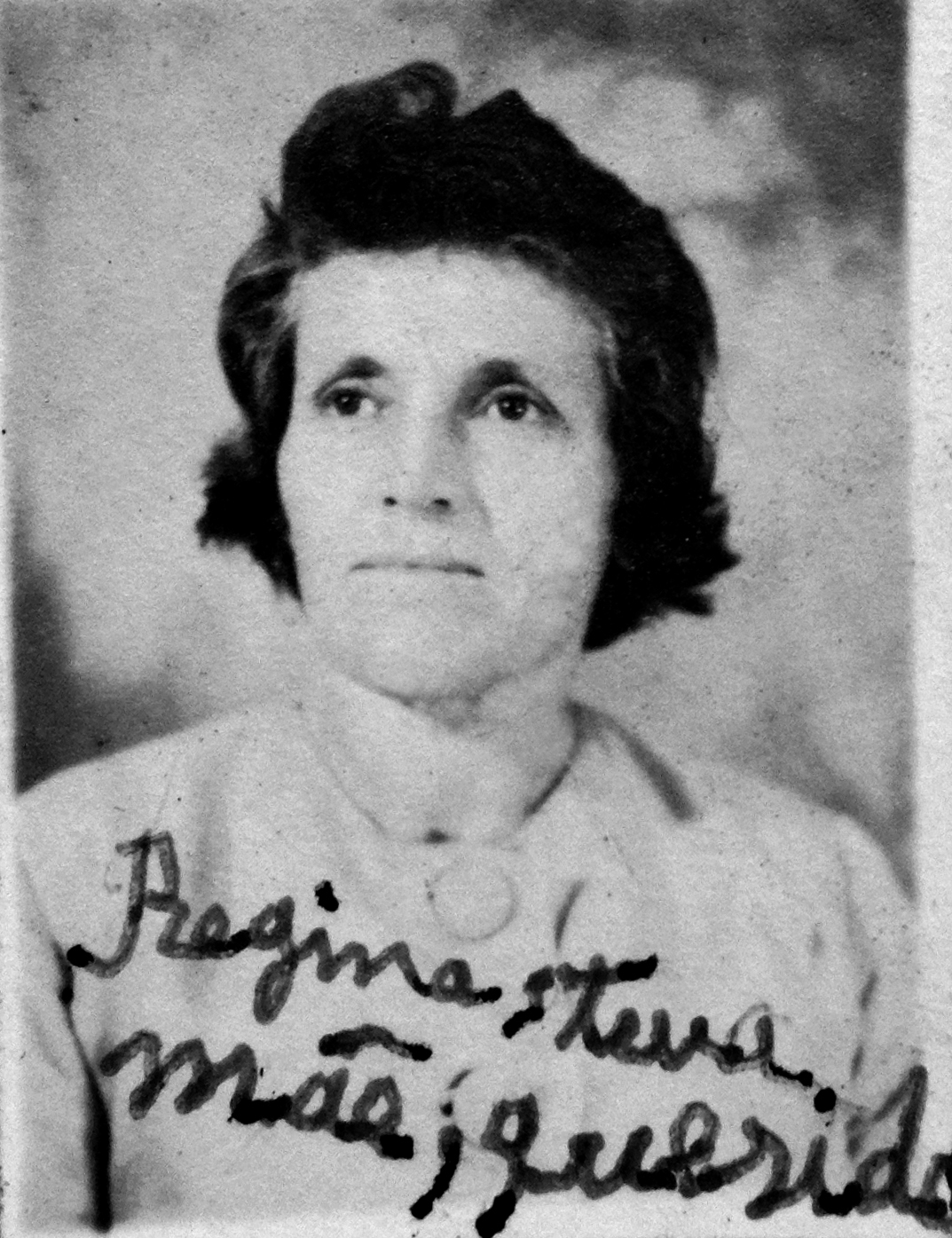
Desperate and in secret from my father, who did not believe in such things, my mother went to the prayer woman , to the old Campañola . She prayed, and told to my mother: “give the child a bath with these herbs and after baking bread in the oven, wait until it is lukewarm and put your little child inside” . That is what Regina, my mother, did. She scooped out the freshly baked bread and put me inside. And she left me there for a good while.

A transformation occurred. When I was taken out, as they say, I began to cry and seek my mother’s breast and to suckle my mother’s milk. Afterwards, my mother would chew some stronger foods and she would give that to me. I began to eat and become stronger. I survived. And here I am, officially an 80 year old man.

I went through several close calls that could have cost me my life: a DC-10 plane in flames on way to New York; a car accident with a dead horse on the highway that left me totally broken; a huge nail that fell in front of me when I was studying in Munich, that could have killed me if it had fallen on my head. I fell into a deep snow covered ravine in the Alps and some Bavarian peasants, seeing my dark habit and that I was falling deeper and deeper, pulled me out with a rope. And there were others.

Norberto Bobbio gave me the title honorary doctor of politics from the University of Turin. He understood that the theology of liberation had made an important contribution by affirming the historic strength of the poor. The classic helpfulness or mere solidarity, keeping the poor always dependent, is insufficient, it is not enough. The poor can be the subjects of their own liberation when they are made aware ( concientizados) and organized. We overcame the ” for the poor.” We insist on walking ” with the poor,” they being the protagonists. And those who can and have that charisma, live as the poor. Many did, such as Dom Pedro Casaldaliga.

II remember that I began my words of gratitude for the degree I received from that noble figure, Norberto Bobbio, with: “I come from carved stone, from the bottom of history, when we barely had the means to survive. My Italian ancestors and my family made a clearing in an uninhabited region covered with pine groves, in Concordia, on the edge of Santa Catarina. They had to struggle to survive. Many died for lack of medical care. Later on I rose on the ladder of evolution: the 11 brothers studied, went to the university, and I was able to complete my studies in Germany. And now I am here in this famous University ”. At Bobbio’s request, I did a study of the purposes of Theology of Liberation, that has at the core the preferential option for the poor, against poverty and in favor of social justice. I have given many lectures all over the world, I have written a lot, wiped away tears and kept strong the hope of militants who were frustrated by the course of events in our country.

What will my destiny be? I do not know. I took as my motto that of my father, who lived it: “who does not live to serve, does not have a life worth living” . God has the last word.

Leonardo Boff Eco-Theologian-Philosopher Earthcharter Commission


The Mysterious Destiny of Each One

Each of us is as old as the universe, 13.7 billion years. We were all there in that tiny point, smaller than the head of a pin, but full of energy and matter. The big bang created the enormous red stars, containing all the physical-chemical elements that comprise the universe and and all beings that were created from them. We are the sons and daughters of the stars and cosmic dust. We are also the portion of the living Earth that has come to feel, think, love and venerate. Through us, the Earth and the Universe knows that it forms a large Whole. And we can develop awareness of that belonging.

What is our place in that Whole? More immediately, in the process of evolution? On Mother Earth? In human history? We cannot know that yet. Perhaps it will be the great revelation when we make the alchemc pass from this side of life to the other. There, I hope, all will be clear and we will be surprised because everything is interrelated, forming the immense chain of beings and the fabric of life.

We will fall, that I believe, into the arms of God-Father-and-Mother of infinite mercy for whomever needs it, due to wickedness, and in a eternal loving embrace for those whose lives were guided by good and love. After passing through the clinic of God-mercy, the others will also come.

As an infant of a few months, I was condemned to die. My mother remembers, and my aunts would always repeat, that I had “el macaquiño”, the popular name for profound anemia. Whatever I took in, I would vomit. Everyone said, in the véneto dialect: “poareto, va morir”: “poor little child, he will die”.

Desperate and in secret from my father, who did not believe in such things, my mother went to the prayer woman, to the old Campañola. She prayed, and told to my mother: “give the child a bath with these herbs and after baking bread in the oven, wait until it is lukewarm and put your little child inside”. That is what Regina, my mother, did. She scooped out the freshly baked bread and put me inside. And she left me there for a good while.

A transformation occurred. When I was taken out, as they say, I began to cry and seek my mother’s breast and to suckle my mother’s milk. Afterwards, my mother would chew some stronger foods and she would give that to me. I began to eat and become stronger. I survived. And here I am, officially an 80 year old man.

I went through several close calls that could have cost me my life: a DC-10 plane in flames on way to New York; a car accident with a dead horse on the highway that left me totally broken; a huge nail that fell in front of me when I was studying in Munich, that could have killed me if it had fallen on my head. I fell into a deep snow covered ravine in the Alps and some Bavarian peasants, seeing my dark habit and that I was falling deeper and deeper, pulled me out with a rope. And there were others.

Norberto Bobbio gave me the title honorary doctor of politics from the University of Turin. He understood that the theology of liberation had made an important contribution by affirming the historic strength of the poor. The classic helpfulness or mere solidarity, keeping the poor always dependent, is insufficient, it is not enough. The poor can be the subjects of their own liberation when they are made aware (concientizados) and organized. We overcame the “for the poor.” We insist on walking “with the poor,” they being the protagonists. And those who can and have that charisma, live as the poor. Many did, such as Dom Pedro Casaldaliga.

II remember that I began my words of gratitude for the degree I received from that noble figure, Norberto Bobbio, with: “I come from carved stone, from the bottom of history, when we barely had the means to survive. My Italian ancestors and my family made a clearing in an uninhabited region covered with pine groves, in Concordia, on the edge of Santa Catarina. They had to struggle to survive. Many died for lack of medical care. Later on I rose on the ladder of evolution: the 11 brothers studied, went to the university, and I was able to complete my studies in Germany. And now I am here in this famous University”.

At Bobbio’s request, I did a study of the purposes of Theology of Liberation, that has at the core the preferential option for the poor, against poverty and in favor of social justice. I have given many lectures all over the world, I have written a lot, wiped away tears and kept strong the hope of militants who were frustrated by the course of events in our country.

What will my destiny be? I do not know. I took as my motto that of my father, who lived it: “who does not live to serve, does not have a life worth living”. God has the last word.

Leonardo Boff Eco-Theologian-Philosopher Earthcharter Commission

Free translation from the Spanish sent by
Melina Alfaro, alfaro_melina@yahoo.com.ar.
Done at REFUGIO DEL RIO GRANDE, Texas, EE.UU.