Covid-19 Obliges us to think: What is Essential?

As the renowned German philosopher, Jürgen Habermas, affirmed in an interview about Covid-19:  “We have never known so much about ignorance as we do now.”  Science is indispensable for survival and for explaining the complexity of modern societies, but it cannot be arrogant and pretend, as certain pseudo-scientists postulate, that it can resolve all problems.  To tell the truth, what we do not know is infinitely greater than what we know.  All knowledge is finite and imperfect.  That is now being proven in our frantic search for an effective vaccine against Covid-19.  We do not know when a vaccine will be available, nor when the epidemic will be over.

The virus leaves us with a sunset feeling on the horizon of life and of hope, and occasions that which is well described in the twitter message of the judge and author Andréa Pachá (“Life is not Just”):  :The pandemic has wrought much havoc.  Some is physical, concrete and definitive.  Other damage is subtle, but devastating.  It steals from us the desire to go, to play, to have plans, including those that are utopian and chimeric, that will never come to fruition, but which feed the soul.”

We sense that there is a profound collective depression and melancholy that even makes us furious against the virus about which we know and can do so little.  We all feel surrounded by the ghost of contamination, of confinement and of death.

The reality is that we live under an extraordinary emergency such as the tsunami in Japan that affected nuclear sites, one of which continues to emit radioactivity, affecting the coasts of India, of Thailand and even the coasts of California, playing a part in the horrendous fires of the Amazon, of the Pantanal and of the forests of California.  With Covid-19 we are faced with an extreme emergency, which affects the whole planet.  It is a consequence of a profound ecological erosion caused by the voraciousness of big business which wants only material gain from the destruction and extraction of the forests, the expansion of monocultural crops such as soy beans or the cattle grazing and the excessive urbanization of the whole world.

That intrusion of humans into nature, without any sense of respect for its intrinsic value, held as a mere means of production and not as something alive, of which we are a part and not lords and masters denies in us the respect of nature’s limits of sustainability.  It has produced the destruction of the habitats of thousands of viruses in animals and plants which have been transferred to other animals and even to humans.

We must incorporate new concepts:  zoonosis (the illness that comes from the animal world: birds, swine and cattle) and zoonotic transfer (an animal affliction transmissible to humans.  As of now these will enter our vocabulary not only as scientific terms.

One of the greatest specialists in virus, David Quammen (Montana, USA), alerts us to this in his video Spillover:  the Next Human Pandemic (2015).  “It is inevitable that a great pandemic is coming.  It can kill tens of thousands, hundreds of thousands or millions of people depending on the circumstances and the forms of our reactions, but some of these things will occur.  There will certainly be a zoonotic event.  It will originate in animals, not humans.  There will certainly be a virus.”  Let us pay attention to this warning of a noted scientist.

Faced with this extreme emergency tied to the lack of national and international mobility, social isolation, distancing and the use of masks, it is appropriate that we ask the most fundamental questions of our lives.  In the final analysis what counts most in the end?  What is really essential?  What are reasons that have brought us to such an extreme emergency?  What must we do and what can we do after the pandemic passes?  These are unavoidable questions.

We will then discover that there is no greater value than life and the entire community of life.  Life arose some 3.8 thousands of million years ago and the human race around 8 to 10 million years ago.  Life passed through various devastating moments but always survived.  And with life comes the means of life without which it cannot defend itself, namely water, soil, the atmosphere, the biosphere, the climates, the labor and nature which offers us all that we need to live and survive.  There is the human community that takes us in and offers us the bases of the social and spiritual order that holds us in cohesion as humans.  The accumulation of material goods, individual wealth and unabated competition are of no value.  What saves us as living and social beings is solidarity, cooperation, generosity and the care for one another and the environment.

These are the human-spiritual values, contrary to those of the material capital, for which Covid-19 represents a thunder bolt that is breaking it to bits.  We cannot return to what was, so as not to provoke Mother Earth and nature.  If we do not change our relationship to one of respect and care, we will be sent another virus, perhaps a more lethal and final one (The Big One) which could decimate the human species.

This time of forced seclusion is a time for reflection and ecological conversion, a time to decide what type of Common Home we want for the future.  We must grow in solidarity and in love for all creation, especially for our fellow human brothers and sisters.  

We will be “solidarity men and women”, the beginning of a new era, in which life and its diversity will be central and all else will be subservient to it.  Together we will rejoice in the happy celebration of life.

Leonardo Boff is an ecotheologian and philosopher and has written Covid-19: the Counterattack of the Earth against Humanity which will be published soon by the Vozes publishers.

Translation from Portuguese by Maria José Govito Milano.
Frateli tutti: Politics as Tenderness and Affection

The new encyclical of Pope Francis, signed at the tomb of Francis of Assisi, in the city of Assisi, on October 3rd, will be a landmark document in the social doctrine of the church.  Its themes are vast and detailed, always aiming to highlight values, and to strongly criticize liberalism.  It will certainly be analyzed by Christians and non-Christians since it is directed to all people of good will.  Here I will point out that which I consider innovative in light of previous teachings of Popes.  

In the first place it needs to be clear that the Pope presents a paradigm alternative to our forms of living in our Common Home, subject as it is to multiple threats.  He describes the “dark clouds” which he equates, as he himself has asserted in various pronouncements, to a gradual third world war.  Actually there is no common plan for humanity (n.18).  But a thread is evident throughout the encyclical:  “the realization that no one is saved alone; we can only be saved together” (n. 32).  That is the new plan, expressed in these words:  “I offer this social encyclical as a modest contribution to reflection in the hope that in the face of present-day attempts to eliminate or ignore others, we may prove capable of responding with a new vision of fraternity and of social friendship” (n.6)

We must understand this alternative well.  We have arrived at and are still within the paradigm which is at the base of modernity.  It is anthropocentric.  It is the reign of the lord:  the human being as the lord and master of nature and of the Earth which only have meaning to the extent that they are valuable to him.  He has changed the face of the Earth and he has brought many advantages, but he has created the essential of autodestruction.  Actually it is the impass of the “dark clouds”.  Faced with this cosmic vision, the encyclical Fratelli tutti proposes a new paradigm:  that of brother and of frater, a universal fraternity and one of social friendship.  It moves the center: from an individualistic and technological-industrial civilization to a civilization of solidarity, of preservation and of care for all life.  That is the natural intention of the Pope.  In that about face is our salvation; we will overcome the apocalyptic vision of the threat of the end of the species by a vision of hope that we can and must change course.

To do this we need to feed hope.  The Pope says: “I invite everyone to renewed hope that speaks to us of something deeply rooted in every human heart, independently of circumstances and of the historical conditions in which we live” (n.55).  Here resounds the hope principle, which his more than the virtue of hope, but a principle, an interior mover to project new dreams and visions, so well formulated by Ernst Bloch.  He emphasizes: “the statement that as human beings we are brothers and sisters, which is not an abstraction but a concept that becomes concrete and enfleshed, puts before us a series of challenges that displaces us, forcing us to see things in a new light and to develop new responses” (n.128).  As is inferred, we are dealing with a new route, with a paradigmatic change of course.

Where to begin?  Here the Pope reveals his basic stance with frequent references to social movements:  “We shouldn’t hope for anything from the powers that be because it is always the same story or worse; begin by yourselves”.  For that reason he suggests:   “We can start from below and, case by case, act at the most concrete and local levels, and then expand to the farthest reaches of our countries and our world” (n.78).  The Pope now encourages ecological discussion.  Our local experience needs to develop “in contrast to” and “in harmony with” the experiences of others living in diverse contexts  (n. 147).

There are long reflections about the economy and politics but he says:  “politics must not be subservient to the economy, nor should the economy be subject to the dictates of an efficiency-driven paradigm of technocracy ” (n.177).  He makes a bruising critique of the market.  The marketplace, by itself, cannot solve every problem, however much  we are asked to believe this dogma of neoliberal faith.  Whatever the challenge, this impoverished and repetitive school of thought always offers the same recipes.  Neoliberalism simply reproduces itself by resorting to the magic theories of “spillover” or “trickle” – without using the name – as the only solution to societal problems” (n.168).  Globalization brings us closer but not more as brothers (n.12).  It only creates partners but not brothers and sisters (n. 101).

In the parable of the Good Samaritan there is a rigorous analysis of the various players who come on the scene and it applies to political economy culminating with the question:  “with whom do you identify (with the wounded person on the road, with the priest, with the Levite or with the stranger, the Samaritan, despised by the Jews)?  This is a blunt, direct and resolute question.  With which of these do you identify” (n.64)?  The Good Samaritan is a fitting model of social and political love (n.66).

The new paradigm of fraternity and of social love is displayed in publicly rendered love, in the care for the weakest, in the manner of dialogue and encounter, in habitual tenderness and affection.  In terms of the culture of encounter, I take the liberty of citing the Brazilian poet Vinicius de Moraes in his Samba of Blessing in his world of 1962 “Encontro Au bon Gourmet”  where he says:  “Life is the art of encounter although there can be so many divergencies in life” (n.215).  Politics is not to be reduced to disputes over power and to the separation of powers.  Surprisingly he says:  “Even in politics there is a place for tender loving care: for the youngest, the most  debilitated, the poorest; they must touch us and they have the “right” to fill us, body and soul; yes, they are our sisters and brothers and we must love them and trust them as such: (194).  And if someone asks what tenderness is, here is the response:  “love that is close and concrete; it is a movement that comes from the heart and reaches the eyes, the ears, the hands” (n. 196).  Here we recall the words of Gandhi, one of the inspirations of the Pope, alongside Saint Francis, Martin Luther King, and Desmond Tutu:  politics is a gesture of love for people, of care of common things.

Together with tenderness comes politeness which we would translate as courtesy, recalling the prophet Courtesy who proclaimed to all passersby on the streets of Rio de Janeiro “Courtesy begets courtesy” and “God is Courtesy” in the style of Saint Francis.  And politeness is defined as: “a state of mind which is not sharp, rude or hard, but rather pleasant and delicate, which strengthens and encourages; a person who has this quality helps others so as to alleviate their burdens” (n.223).  This is a challenge to bishops and priests:  to create a revolution of tenderness.  Solidarity is one of the foundations of human and social life.  It finds concrete expression in service which can take a variety of forms in an effort to care for others:  in great part it is caring for human vulnerability” (n.115).  That solidarity showed itself absent and is only efficacious in the struggle against COVID -19.  Solidarity avoids the bifurcation of humanity into ‘my world’ and the ‘others’ that is ‘them’.  Many are no longer considered human beings with an inalienable dignity, and become only “them” (n.27).  The Pope concludes with a profound wish:  “that we will think no longer in terms of ‘them’, but only ‘us’” (n.35).

So that that challenge of a dream of universal fraternity and of social love can be enfleshed he calls upon all religions “to make a rich contribution to building fraternity and defending justice in society” (n.271).

Finally he evokes the figure of the little brother of Jesus Charles de Foucauld who wanted to be “definitively the universal brother” among the Muslim population in the desert of north Africa  (n.287).  Making this his proposal Pope Francis observes:  “Only by identifying oneself with the least can one be a brother of all; may God inspire that dream in each one of us. Amen” (n.288).

We stand before a man, Pope Francis, who in following his inspiring source, Francis of Assisi, also made himself a universal man, embracing all and identifying himself with the most vulnerable and invisible of our cruel world.  He ignites the hope that we can and must nourish the dream of fraternity of universal love without borders.  

He has done his part.  Now it is up to us to not leave the dream as only a dream but that it be a seed of a new form of life together, as sisters and brothers and the environment, in the same Common Home.  Will we have the time and wisdom to make that leap?  The “dark clouds” will certainly continue.  But we have a lamp in this encyclical of hope of Pope Francis.  It does not dispel all the clouds.  But it is sufficient to discern well the road to be traveled by all.

Leonardo Boff is an ecotheolgian, philosopher and Brazilian writer who wrote Francis of Assisi and Francis of Rome, published by Editora May de Ideias, Rio, 2015.

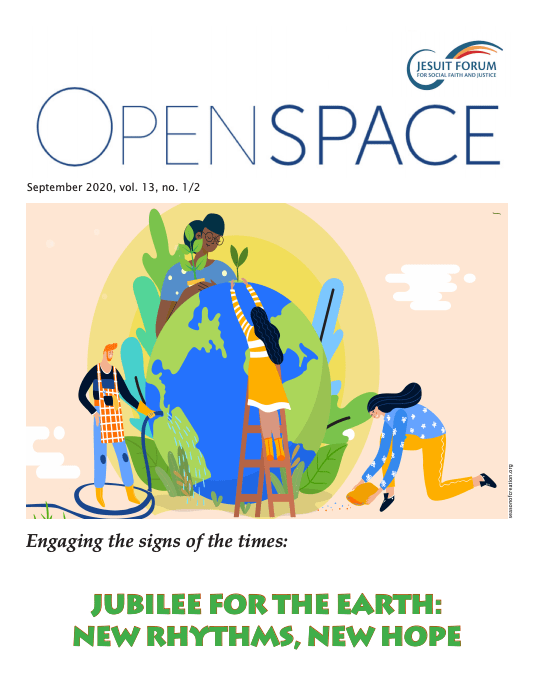
Engaging the signs of the times: JUBIEE FOR THE EARTH: NEW RHYTHMS, NEW HOPE

OPENSPACE
SEPTEMBER 2020, Vol.13, no. 1/2

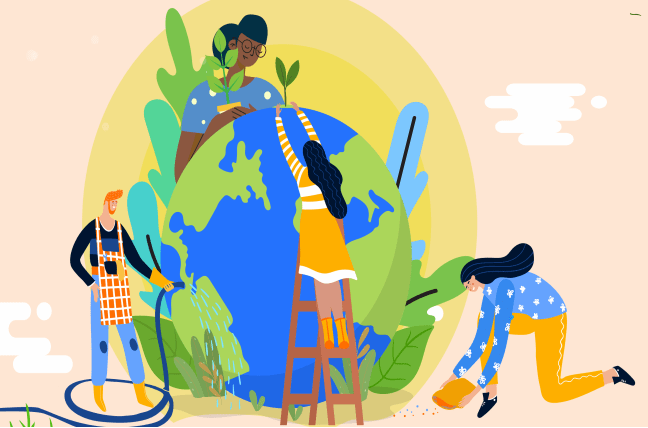
From September 1 to October 4, we celebrate the Season of Creation – a time to reflect on our relationship with the Earth. This year, the theme is “Jubilee for the Earth: New Rhythms, New Hope.”

In the Hebrew tradition, Jubilee is a time for righting our relationships with others – to free those held in captivity, to let the Earth rest and regenerate, and to ensure a just distribution of the Creator’s gifts so that all may have the means to live and thrive.

To help envision and discern what this may entail, this issue of OpenSpace draws on the reflections shared in three webinars held between May and June of this year tocelebrate the fifth anniversary of Pope Francis’s encyclical, Laudato Si’: On Care for our Common Home.

In different ways, the pieces reflect on the challenge of changing the way we relate to one another and the wider Earth community, calling us to a deep metanoia – a change of heart, an ecological conversion.

In the first piece, I dialogue with Leonardo Boff, my friend and co-author of
The Tao of Liberation: Exploring the Ecology of Transformation (Orbis, 2009) and Ecology and the Theology of Nature (Concilium, 2018).

Leonardo has written more than seventy books on liberation theology, ecology, and spirituality. His influence on Laudato Si’ is evident in the idea first expressed in his writings of listening to “the cry of the Earth and the cry of the poor” (LS 49).

Together, we dialogue on some of the key themes arising from Laudato Si’ including the ecological crisis, integral ecology, ecological conversion, and spirituality.

In Women Resisting Extractivism, Sherry Pictou, Bertha Zuniga Cáceres, and Elizabeth López Canelas reflect on how women – particularly Indigenous women – are often adversely and disproportionately affected by extractive industries such as mining, logging, and petroleum exploitation. At the same time, women often lead the resistance to destructive forms of “development” and promote an alternative vision of care and the sustenance of life.

In Just Transitions, Allie Rougeot and Mauricio López share their reflections on what a more just and sustainable society might look like and how we might move towards such a vision. John McCarthy, SJ then shares reflections on an ecological spirituality and the ways we speak about the more-than-human world.

At the end of this issue, you will find questions to guide dialogue using the forum process. If you would like to further explore these themes, see our guide On Care for our Common Home at http://tiny.cc/forumguides

All the articles are based on transcripts of the webinars available to view online at http://tiny.cc/JesuitForumTV. They have all been edited for clarity and brevity.

I wish to express my deep gratitude for all those who have contributed to this issue with their insights and reflections.

– Mark Hathaway, Executive Director


OPENSPACE is published by the Jesuit Forum for Social Faith and Justice.

To order extra copies, please send an email to contact@jesuitforum.ca
To subscribe to the electronic version, please visit our website: http://www.jesuitforum.ca


Leonardo Boff: llegar a Dios a través de la física cuántica

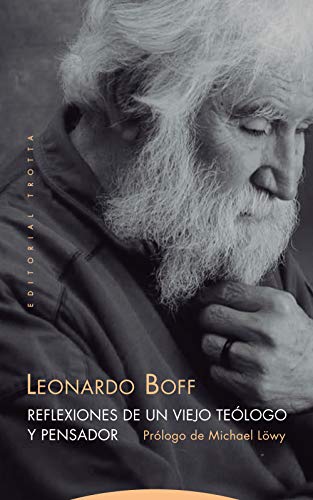
Saiu com destaque  na edição espanhola do El Pais, um dos maiores do mundo, um resenha do livro escrito por mim por ocasião de meus 80 anos, traduzido para o espanhol pela editora Trotta:Reflexiones de un viejo teólogo y pensador. No Brasil saiu pela Editora Vozes. Trata-se de um resumo de meu pensamento de mais de 50 anos de trabalho e de reflexão. Publico-o para quem se interessar de ver uma apreciação de um conhecida jornalista espanhola Lola Galán.  LBoff

La ciencia es una aliada en el pensamiento del filósofo brasileño Leonardo Boff, referente de la teología de la liberación, que sueña con una Iglesia descentralizada con un Papa muy parecido al actual

Lola Galán

12 sep 2020 – 19:31 BRT   El  Pais edição espanhola.

Si el teólogo es un ser casi imposible, porque se ocupa de la realidad última, Leonardo Boff ha vivido en esa imposibilidad metafísica la mayor parte de su vida adulta. Y lo ha hecho alejándose lo más posible de los “teólogos perezosos” que trabajan siempre con las ideas ya establecidas. Estamos ante un filósofo que acepta los retos del conocimiento. Y aunque el nombre de Leonardo Boff (Concórdia, Brasil, 1938) está ligado para siempre a la teología de la liberación, su pensamiento se ha adentrado por otros senderos a lo largo de los años.

Sigue defendiendo esa corriente crítica con la Iglesia de poder simbolizada por el Vaticano, que surgió en los años sesenta del siglo pasado y triunfó en una América Latina sacudida por dictaduras y pobreza. Y el planteamiento osado de sus libros podría chocar de nuevo con los guardianes de la ortodoxia dogmática, como ocurrió en los años ochenta cuando publicó Iglesia: carisma y poder. Pero Boff, antiguo sacerdote franciscano, está ya fuera de la jurisdicción vaticana. Hace mucho que colgó los hábitos, y vive plácidamente, con su compañera, en una comunidad no lejos de Río de Janeiro.

Nadie puede reprocharle, por lo tanto, que su discurrir teológico se apoye en la ciencia, que entienda al ser humano como conciencia de la Tierra, y que defienda los principios de la ecoteología en un nuevo libro, Reflexiones de un viejo teólogo y pensador (editorial Trotta, 2020), donde está todo Boff, condensado en poco más de 300 páginas. Reflexiones…, que se publicó hace dos años en portugués, coincidiendo con su 80º cumpleaños, es un verdadero testamento, un compendio de todo su saber que ha ido desgranando en más de un centenar de libros. Y hasta puede leerse como un programa político. “Si no queremos estancarnos y hundirnos en el pantano de los intereses de las minorías poderosas y dominantes sobre las grandes mayorías populares, tenemos que alimentar sueños”, escribe. Él los tiene, al parecer, y quiere transmitírselos a los jóvenes que vienen detrás.

En estas páginas bien traducidas (pocos idiomas discurren tan en paralelo como portugués y español) están los temas centrales del pensamiento de Boff, empezando por Dios. Una palabra que contiene “lo ilimitado de nuestra representación y la utopía suprema de orden, de armonía, de conciencia, de pasión y de sentido supremo que mueven a las personas y a las culturas”.

Si los propios científicos, asombrados por la belleza y armonía del universo, se asoman a ese misterio (que no enigma, explica Boff), ¿por qué no habrían de valerse también de la ciencia los teólogos? El lector encontrará en este libro referencias al origen del universo y del Homo sapiens muy en la línea de Yuval Noah Harari. También nociones de física cuántica, porque Boff ha comprendido que a través de esta rama de la ciencia “se puede entender mejor al ser humano como nudo de relaciones, y al Dios cristiano, la Trinidad, que es siempre relaciones substanciales entre tres divinas personas”, explica por correo electrónico.

No es la primera vez que Boff se adentra en estos territorios. Ya lo hizo en El Tao de la liberación (Trotta, 2012), el volumen que firmó con el cosmólogo Mark Hathaway. Y no hay que olvidar que es un gran admirador del Dalái Lama, que hace tiempo subrayó la proximidad entre física cuántica y espiritualidad. Pero, por más que se empeñe, no hay forma de entender la idea de ese Dios uno y trino. Un dogma que procede más bien de la necesidad de encajar en la divinidad la figura de Jesús de Nazaret, que se autodenominó “Hijo de Dios”.

Reflexiones… habla también de la teología de la liberación, pero lo hace a la luz del mundo moderno. Si tradicionalmente esta corriente ponía en el centro de las preocupaciones de la Iglesia a los pobres, ahora su foco de interés se ha ampliado a todos los que “sufren marginación”, y esto abarca desde la propia Tierra, devastada por los humanos, a los movimientos feministas o a los colectivos LGTBI.

Es necesaria una fe vigorosa para poder ver a Dios realmente en todas las cosas, incluso en las más contradictorias: Leonardo Boff

El Boff polemista, fustigador de la Iglesia institucional, con su boato renacentista, sus liturgias incomprensibles y ese despliegue de riqueza que ha acompañado a papas y cardenales a lo largo de la historia, está también en esta nueva obra. Si acaso, se percibe en estas páginas un pulso más reposado. La institucionalización de las religiones es inevitable, viene a reconocer, y hasta imprescindible para permitir su expansión. Pero recuerda que Jesús nunca le dijo a Pedro “sobre esta piedra edificaré mi Iglesia”, sino sobre esa fe —la fe del apóstol Pedro— “edificaré mi Iglesia”.

Entre poder y carisma, Boff prefiere claramente lo segundo. La Iglesia del pueblo en la que no se imponen las jerarquías. Su sueño es una Iglesia descentralizada en comunidades vivas e independientes en la que el Papa representaría el nexo común. El actual Pontífice, descendiente de italianos como él, parece ajustarse a la perfección a la idea que tiene Boff de Papa ideal. En el libro le llena de elogios, y cita con frecuencia la encíclica ecologista Laudato si, publicada por Jorge Bergoglio en 2015 y en la que ha colaborado el propio Boff.

Y es que el “viejo pensador” sigue siendo profundamente cristiano. El sueño de la teología que proclama es aquel en el que todos “puedan librarse de todo lo que les oprime externa e internamente y vivir como hermanos y hermanas en justicia, solidaridad, respetuosos con la naturaleza y la madre Tierra, en un gran banquete, disfrutando con moderación compartida de los buenos frutos de la gran y generosa madre Tierra”. Una especie de regreso al edén. Toda una utopía con la que la humanidad viene soñando desde la noche de los tiempos. Porque el bien con mayúscu­las no ha dejado de ser una aspiración inalcanzable para los humanos.

¿Qué hacemos con el mal? Boff, el filósofo, lo acepta muy en línea con la idea de sombra de Jung, como una parte que también nos define, porque el ser humano es a la vez sapiens y demens. Tiene que coexistir con esa doble naturaleza de armonía con el cosmos y de sumisión al caos. Para el teólogo brasileño, el mal evidenciaría la condición de “no terminados” de los mortales y del mundo. “Estamos siempre en la prehistoria de nosotros mismos”, escribe. Por eso, es necesaria una “fe vigorosa para poder ver a Dios realmente en todas las cosas, incluso en las más contradictorias”. Y si somos ángeles y demonios en perpetua discordia, al menos, dice Boff, podemos esforzarnos en “domesticar los demonios que nos habitan y dar a los ángeles buenos el mayor espacio posible”

Reflexiones de un viejo teólogo y pensador

“Este precioso libro es una síntesis de la obra y el pensamiento de Leonardo Boff, el teólogo que desafió a Roma y se convirtió en símbolo planetario de la integridad moral. Boff fue uno de los pioneros de la teología de la liberación en Brasil y en América Latina: él defendió, ya desde la década de los años setenta, la opción preferente por los pobres, no como caridad o filantropía, sino como compromiso social con la lucha de los oprimidos y explotados, de los trabajadores y trabajadoras del campo y de la ciudad por su propia liberación…

A partir de los años noventa, Leonardo Boff abre un nuevo capítulo en la historia de la teología de la liberación, integrando la dimensión ecológica. El grito de los pobres y el grito de la Tierra son hermanos, y denuncian el mismo sistema destructor de vidas humanas y de la propia naturaleza…
Al leer los escritos de Leonardo se tiene la nítida impresión de estar escuchando la voz de uno de los profetas del Antiguo Testamento. Es una especie de Isaías del siglo XXI que alza su voz, sin temor ni temblor, contra los poderosos y contra el culto al becerro de oro o Baal, ídolos que exigen sacrificios humanos”.

(Del prólogo de Michael Löwy)

Para comprar el libro en español, acceda al enlace: Amazon.com