Coronavirus awakens the human in us

The coronavirus pandemic forces us all to think: what really counts, life or material goods? The individualism of each on his own, without concern for the other, or the solidarity of one with the other? Can we continue exploiting, thoughtlessly, the natural goods and services, in order to live every more comfortably, or can we take care of nature, the vitality of Mother Earth and good living, namely, harmony among and with all of nature’s beings? Has it ever been worthwhile for the war loving countries to accumulate ever more weapons of mass destruction, now that they are brought to their knees before an invisible virus, revealing the inefficacy of all that deadly apparatus? Can we continue with our consumerist life style, accumulating unlimited wealth in only a few hands, at the expense of millions of poor and miserable human beings? Is it still meaningful that each country affirms its sovereignty, in opposition to that of other countries, when we need a global government to solve global problems? Why have we still not discovered the unique Common Home, Mother Earth, and our duty to care for her, so that we all, nature included, may fit within her?

These are question that can not be avoided. No one has the answers. However, one saying, attributed to Einstein, is true: “the world vision that created the crisis cannot be the same as the one that leads us out of the crisis”. We must drastically change. The worst thing would be if everything ended up as before, with the same consumerist and speculative logic, perhaps with greater fury now. Then, maybe because we learned nothing, the Earth would send us another virus that perhaps could put an end to the disastrous human project.

But we can look at the war the coronavirus is producing all over the planet, from another, positive, angle. The virus forces us to discover our deepest and most authentic human nature. Our nature is ambiguous, good and bad. Let’s look at the good dimension.

In the first place, we are beings of relationships. We are, as I have repeated numerous times, a knot of total relationships in all directions. Consequently, no one is an island. We tend to build bridges in all directions.

In the second place, as a result, we all depend on one another. The African expression, “Ubuntu”, says it well: “I am myself through you”.Consequently, all individualism, the soul of capitalist culture, is false and anti-human. The coronavirus proves it. The health of one depends of the health of the other. This mutual dependency, consciously assumed, is called solidarity. In another time, solidarity enabled us to leave the anthropoid world and allowed us to become human, living together and helping each other. These weeks we have seen moving gestures of true solidarity, giving not just our left overs, but sharing what we have.

In the third place, we are essentially caring beings. Without caring, from our conception and throughout life, no one could subsist. We must care for everything: for ourselves, otherwise we could get sick and die; we must care for the others, those who could save me or I could save them; I must take care of nature: otherwise, she will come at us with a dreadful virus, devastating droughts and floods, extreme weather events; caring for Mother Earth so that she continues giving us all that we need to live, and so that she still wants us on her soil, even though for centuries we have wounded her pitilessly. Especially now, under attack by the coronavirus, we all must be caring, caring for the most vulnerable, staying home, maintaining social distance, and take care of the sanitation infrastructure, without which we could witness a humanitarian catastrophe of Biblical proportions.

In the fourth place, we discover that we all must be co-responsible, this is, to be conscious of the beneficial or malefic consequences of our acts. Life and death are in our hands, human lives, social, economic and cultural lives. That the State or a few people show responsibility is not enough; it must be everyone’s responsibility, because we are all affected and each of us can affect the others. We must all accept confinement.

Finally, we are spiritual beings. We discover the strength of the spiritual world that constitutes our Profound, where great dreams are created, where the ultimate questions about the meaning of our lives are born, and where we feel that a loving and powerful Energy that impregnates everything must exist; Energy that sustains the starry heavens and our own lives, over which we do not have full control. We can open up to that Energy, welcome her as in a wager, trust that this Energy holds us in the palm of her hand and, in spite of all the contradictions, that she guarantees a good end for all the universe, for our history, both wise and demented, and for each and everyone of us. Cultivating this spiritual world we feel stronger, more caring, loving, and in the end, more human.

With these values we are given the ability to dream and to build a different type of world, bio-centered, in which the economy, with a different rationality, sustains a globally integrated society, strengthened more by affective alliances that by legal pacts. It will be the society of caring, gentleness and the joy of living.

Leonardo Boff Eco-Theologian-Philosopher  of the Earthcharter Commission
Free translation from the Spanish sent by
Melina Alfaro, alfaro_melina@yahoo.com.ar.
Done at REFUGIO DEL RIO GRANDE, Texas, EE.UU.

Coronavirus: Gaia’s reaction and revenge?

Everything relates to everything: that is now a data point in the collective consciousness of those who develop an integral ecology, such as Brian Swimme, many other scientists, and Pope Francis, in his Encyclical Letter, “On the Caring for the Common Home”. All beings of the universe and of the Earth, including us, human beings, are part of the intricate web of relationships, spun in all directions, in such a way that nothing exists outside of those relationships. That is also the basic thesis of the quantum physics of Werner Heisenberg and Niels Bohr.

It was well known by the original peoples, as expressed in 1856 by the wise words of Duwamish Grandfather Seattle: “Of one thing we are certain: the Earth does not belong to man. Man belongs to the Earth. All thing are interrelated like the blood that unites a family; everything is interrelated with everything. That which wounds the Earth also wounds the sons and daughters of the Earth. It was not man who knit the web of life: man is merely a tread of the web of life. Everything that man does against that web, is also done to man himself”. This is to say, there is an intimate connection between the Earth and the human being. If we hurt the Earth, we also hurt ourselves, and vice versa.

This is the same perception the astronauts enjoyed from their spacecraft and the Moon: The Earth and humanity are a single and unique entity. Isaac Asimov said it well in 1982 when, at the request of The New York Times, he summarized the 25 years of the Space age: “Its legacy is the verification that, from the perspective of the spacecraft, the Earth and humanity form a sole entity (New York Times, October 9, 1982)”. We are Earth. Man, Hombre, comes from húmus, fertile earth, the Biblical Adam means son and daughter of the fertile Earth. After this verification, never again have we lost consciousness of the fact that the destiny of the Earth and of humanity are inseparably united.

Unfortunately, we are seeing that which Pope Francis laments in his ecological Encyclical Letter: “we have never mistreated and wounded so much our Common Home as we have done in the last two centuries” (nº 53). The voracity of the form of accumulation of wealth is so devastating that some scientists say that we have inaugurated a new geologic era: the anthropocenic era. Namely, it is the human being himself who threatens life and accelerates the sixth massive extinction, which we already are experiencing. The aggression is so violent that more than a thousand species of living beings disappear each year, giving way to something worse than the anthropocene, the necrocene: the era of mass production of death. Since the Earth and humanity are interconnected, massive death is produced not only in nature but also in humanity itself. Millions of people die of starvation, thirst, victims of war or of the social violence everywhere in the world. And uncaring, we do nothing.

James Lovelock, who offered the theory of the Earth as a self regulating super living organism, Gaia, wrote a book titled, Gaia’s Revenge, (La venganza de Gaia, Planeta 2006). He suggested that the current diseases, such as dengue, chikungunya, the zica virus, sars, ebola, measles, the current coronavirus and the generalized degradation in human relationships, marked by a profound social inequality/injustice and the lack of a minimal solidarity, are the reaction of Gaia for the offenses that we continually inflict on her. I would not say, as Lovelock does, that it is all “the revenge of Gaia”, because she, as the Great Mother she is, does not take revenge, but gives us great signals that she is ill, (typhoons, melting of the polar ice, droughts and flooding, etc.); and, in the end, because we do not learn the lesson, she takes reprisals, such as the aforementioned diseases .

I remember the book-testament by Theodore Monod, perhaps the only great contemporary naturalist, “And if the human adventure should fail” (Y si la aventura humana fallase, Paris, Grasset 2000): «we are capable of senseless and demented behavior, from now on anything could happen, really, anything, including the annihilation of the human race; that could be the just price for our madness and cruelty» (p.246).

This does not mean that all the governments of the world, resigned, will stop struggling against the coronavirus and protecting the people, or of urgently searching for a vaccine to combat it, in spite of its constant mutations. Besides an economic-financial disaster, it could mean a human tragedy, with an incalculable number of victims. But the Earth will not be satisfied with these small compensations. She pleads for a different attitude towards her: of respect for her rhythms and limits, of caring for her sustainability, and of us feeling more like the sons and daughters of Mother Earth, the Earth herself who feels, thinks, loves, venerates and cares. In the same way that we care for ourselves, we must care for her. The Earth does not need us. We need the Earth. Perhaps she does not want us in her face anymore, and would keep on gyrating on the sidereal space, but without us, because we were ecocidal and geocidal..

Since we are intelligent beings and lovers of life, we can change the course of our destiny. May the Spirit Creator strengthen us in this purpose.

Leonardo Boff Eco-Theologian-Philosopher  of the Earthcharter Commission

Free translation from the Spanish sent by
Melina Alfaro, volar@fibertel.com.ar.
Done at REFUGIO DEL RIO GRANDE, Texas, EE.UU.

Coronavirus: Gaia’s reaction and revenge?

Everything relates to everything: that is now a data point in the collective consciousness of those who develop an integral ecology, such as Brian Swimme, many other scientists, and Pope Francis, in his Encyclical Letter, “On the Caring for the Common Home”. All beings of the universe and of the Earth, including us, human beings, are part of the intricate web of relationships, spun in all directions, in such a way that nothing exists outside of those relationships. That is also the basic thesis of the quantum physics of Werner Heisenberg and Niels Bohr.

It was well known by the original peoples, as expressed in 1856 by the wise words of Duwamish Grandfather Seattle: “Of one thing we are certain: the Earth does not belong to man. Man belongs to the Earth. All thing are interrelated like the blood that unites a family; everything is interrelated with everything. That which wounds the Earth also wounds the sons and daughters of the Earth. It was not man who knit the web of life: man is merely a tread of the web of life. Everything that man does against that web, is also done to man himself”. This is to say, there is an intimate connection between the Earth and the human being. If we hurt the Earth, we also hurt ourselves, and vice versa.

This is the same perception the astronauts enjoyed from their spacecraft and the Moon: The Earth and humanity are a single and unique entity. Isaac Asimov said it well in 1982 when, at the request of The New York Times, he summarized the 25 years of the Space age: “Its legacy is the verification that, from the perspective of the spacecraft, the Earth and humanity form a sole entity (New York Times, October 9, 1982)”. We are Earth. Man, Hombre, comes from húmus, fertile earth, the Biblical Adam means son and daughter of the fertile Earth. After this verification, never again have we lost consciousness of the fact that the destiny of the Earth and of humanity are inseparably united.

Unfortunately, we are seeing that which Pope Francis laments in his ecological Encyclical Letter: “we have never mistreated and wounded so much our Common Home as we have done in the last two centuries” (nº 53). The voracity of the form of accumulation of wealth is so devastating that some scientists say that we have inaugurated a new geologic era: the anthropocenic era. Namely, it is the human being himself who threatens life and accelerates the sixth massive extinction, which we already are experiencing. The aggression is so violent that more than a thousand species of living beings disappear each year, giving way to something worse than the anthropocene, the necrocene: the era of mass production of death. Since the Earth and humanity are interconnected, massive death is produced not only in nature but also in humanity itself. Millions of people die of starvation, thirst, victims of war or of the social violence everywhere in the world. And uncaring, we do nothing.

James Lovelock, who offered the theory of the Earth as a self regulating super living organism, Gaia, wrote a book titled, Gaia’s Revenge, (La venganza de Gaia, Planeta 2006). He suggested that the current diseases, such as dengue, chikungunya, the zica virus, sars, ebola, measles, the current coronavirus and the generalized degradation in human relationships, marked by a profound social inequality/injustice and the lack of a minimal solidarity, are the reaction of Gaia for the offenses that we continually inflict on her. I would not say, as Lovelock does, that it is all “the revenge of Gaia”, because she, as the Great Mother she is, does not take revenge, but gives us great signals that she is ill, (typhoons, melting of the polar ice, droughts and flooding, etc.); and, in the end, because we do not learn the lesson, she takes reprisals, such as the aforementioned diseases .

I remember the book-testament by Theodore Monod, perhaps the only great contemporary naturalist, And if the human adventure should fail (Y si la aventura humana fallase, Paris, Grasset 2000): «we are capable of senseless and demented behavior, from now on anything could happen, really, anything, including the annihilation of the human race; that could be the just price for our madness and cruelty» (p.246).

This does not mean that all the governments of the world, resigned, will stop struggling against the coronavirus and protecting the people, or of urgently searching for a vaccine to combat it, in spite of its constant mutations. Besides an economic-financial disaster, it could mean a human tragedy, with an incalculable number of victims. But the Earth will not be satisfied with these small compensations. She pleads for a different attitude towards her: of respect for her rhythms and limits, of caring for her sustainability, and of us feeling more like the sons and daughters of Mother Earth, the Earth herself who feels, thinks, loves, venerates and cares. In the same way that we care for ourselves, we must care for her. The Earth does not need us. We need the Earth. Perhaps she does not want us in her face anymore, and would keep on gyrating on the sidereal space, but without us, because we were ecocidal and geocidal..

Since we are intelligent beings and lovers of life, we can change the course of our destiny. May the Spirit Creator strengthen us in this purpose.

Leonardo Boff Eco-Theologian-Philosopher,Earthcharter Commission

Free translation from the Spanish sent by
Melina Alfaro, volar@fibertel.com.ar.
Done at REFUGIO DEL RIO GRANDE, Texas, EE.UU.

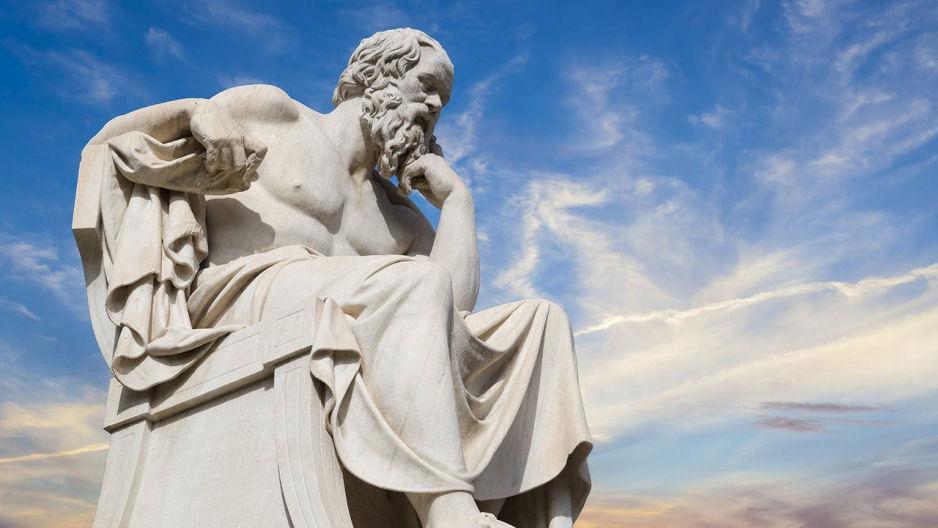
Were he alive today, Socrates would die of sadness

We are living times of the post: post-modern, post-capitalist, post-neoliberal, post-communism, post socialism, post-democracy, post-religious, post-Christian, post-human and, very recently, post-truth. Practically everything has its “post”. This fact only shows that we have not yet found the term that defines our times, and we are prisoners of the old. However, here and there signs appear that a fitting name is about to come. In other words, we do no know yet how to define our times.

This began with the expression post-truth. It was coined by the Serbo-Northamerican dramatist, Steve Tesich, in a 1992 article of The Nation, and used again by him when he ironically wrote about the scandal of the Gulf War. President Bush, Jr., gathered with all his Cabinet, excused himself for a few minutes. As a Christian Fundamentalist, Bush, Jr. went to ask the advise of the Good Lord. Says President Bush, Jr., “on my knees I asked the Good Lord to illuminate the decision that I was to make; it became clear to me that we had to go to war against Saddam Hussein”. The best intelligence affirmed that there were no weapons of mass destruction. It was a post-truth. But thanks to the “Good Lord” and against all intelligence, Bush, Jr., reaffirmed: “We are going to war”. And, barbarians, they went and destroyed one of the most ancient great civilizations of the world.

The 2016 Oxford Dictionary selected it as the word of the year, defining it as follows: “That which relates to the circumstance where objective facts are less influential on public opinion than personal emotions and beliefs”. Truth is not important, only my truth matters. British journalist Matthew D’Ancona dedicated a whole book to the term – “Post-truth: the new war against facts in times of fake news (Faro Editorial 2018). In that book he shows how personal belief and conviction predominates over the cold facts of reality.

It is painful to affirm that the whole philosophic tradition of the West and the East, that implied an exhaustive effort in search of the truth of things, is now being invalidated by an unprecedented historical movement that affirms that the truth of reality and the strength of facts is somehow irrelevant. What matters are my beliefs and convictions: only those facts and versions, whether true or false, that fit my beliefs and convictions will be considered . For me they are the truth. This worked very well in the presidential campaigns of Donald Trump and Jair Bolsonaro.

If Socrates, who incessantly dialogued with his interlocutors about the truth of justice, beauty and love, were to witness the predominance of post-truth, he surely would not need to drink the hemlock. He would die of sadness.

Post-truth reveals the depth of the crisis of our civilization. It represents the cowardice of the spirit that refuses to see and live with that which is. It must be deformed and shaped to the subjective taste of the people and groups, usually political.

Here we find the words of the Spanish poet, Antonio Machado, fugitive from the persecution of fascist dictator Francisco Franco: “Your truth? No, the truth. And come with me to search for it. Your truth? Keep it to yourself”. Shamefully, now it is no longer necessary to search together for the truth. Taught to be individualists by capitalist culture, each one takes as truth that which serves them. A few face the “truthful” truth, and let themselves be measured by it. But reality resists and overcomes and gives us hard lessons.

As Ilya Prigogine, Nobel laureate in thermodynamics, well observed in his book, The end of certitudes (1996): we live in times of possibilities more than certitudes, which does not impede the search for the truth of the laws of nature. Zygmunt Bauman would prefer to speak “of the liquid realities” as a characteristic of our times. He would say that with irony, because this is how the truth of things (the truth of life, of love, etc.) was sacrificed. It would be the empire of everything goes; of all is worthy. But we know that not all is worthy, such as to rape a child.

Post-truth is not the same as fake news: these are lies and slanders diffused to millions against persons or political parties by digital means. They played a decisive roll in the victory of Bolsonaro and in the triumph of Trump as well. Here, shamelessness, lack of character and a total lack of commitment to facts, rule. In post truth, the selection of that, truth or false, which fits my vision of things, predominates. Its defect is its uncritical lack of discernment to seek that which is really true or false.

I do not believe that we are in an era of the “post-truth”. The perverse does not have a way to sustain itself so as to create a history. Truth – whose light never goes out – always has the last word.

Leonardo Boff Eco-Theologian-Philosopher Earthcharter Commission

Free translation from the Spanish sent by
Melina Alfaro, alfaro_melina@yahoo.com.ar.
Done at REFUGIO DEL RIO GRANDE, Texas, EE.UU.