The perverse dimension of Brazilian “cordiality”


On 10/31/2014 I published an article in JB online on the meaning of calling the Brazilian a “cordial man”. I am publishing it again, modified, due to its burning timeliness. In the last two years, we have seen an unprecedented wave of hate and discrimination, particularly during the Presidential electoral campaign. There have been insults, slanders, millions of instances of “fake news” and all kinds of filthy language. This displayed the perverse side of the so-called “cordial” nature of the Brazilian people.

Calling a Brazilian a “cordial man” comes from the writer Ribeiro Couto. Sergio Buarque de Holanda popularized the expression, in his well known 1936 book: “Roots of Brasil”, where he devoted the entire Chapter V to it. But he clarifies, contrary to Cassiano Ricardo, who understood “cordiality” as goodness and affable treatment, that deep down, “our ordinary form of social coexistence is just the opposite of affable treatment” (from the 1989 21ª edition, p.107).

Sergio Buarque understands cordiality in the strict etymological sense: the term derives from “heart” (corazon). Brazilians act more from the heart than from reason. Both hate and love come from the heart. The author says it well: “enmity can easily be as cordial as friendship, because both are born from the heart” (p.107). I would say that the Brazilian is more sentimental than cordial, which seems to me more appropriate.

I write this in an attempt to understand the “cordial” feelings that had erupted in the 2018 Presidential campaign. On one side there have been declarations, enthusiastic to the point of fanaticism, and on the other, declarations of fascism, profound hatred and vulgar expressions. It confirmed what Buarque de Holanda wrote: the lack of loving treatment in our social coexistence.

Anyone who has followed the social media must have noticed the very low levels of education, the lack of mutual respect and even the absence of the democratic sense of coexistence with differences. This lack of respect was also seen in the TV programs of the political parties.

To better understand our “cordiality” we must mention the two inheritances that weigh on our citizenry: colonization and slavery. Colonization left us with a feeling of submission, having been forced to adopt the political forms, language, religion and habits of the Portuguese colonizer. La Casa Grande and La Senzala were created as a result. As Gilberto Freyre well demonstrated, it is not just about exterior social institutions: They were internalized in a form of a perverse dualism: On one side was the lord who owns everything and on the other, the servant or server who has little and submits. A social hierarchical structure was also created that is seen in the division between rich and poor. That this structure subsists in the brains of important oligarchs and has been turned into a code for understanding reality, clearly appears in the way people treat each other in the social networks.

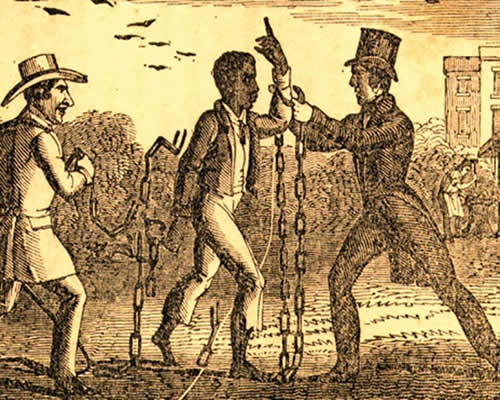
Another very perverse tradition was slavery, which was well described by Jesse Souza in his book: “The backwards elite: from slavery to the Lava-Jato” (2018). It is worth remembering that in the years 1817 and 1818, more than half of the population of Brazil consisted of slaves (50.6%). Today nearly 60% has some blood of Afro-descendant slaves in its veins. They are discriminated against, and pushed to the peripheries, humiliated to the point of losing their own self esteem.

Slavery was internalized in the form of discrimination and prejudice against the Blacks, who always had to serve, because previously, the slaves did everything for free, and it is believed that things should continue that way. This is how domestic workers or the haciendas laborers are often treated. A high class madame once said: “the poor already have the family necessities, yet they believe that they have even more rights”. That is the mentality of La Casa Grande.

These two traditions subsist in the Brazilian collective unconsciousness, not so much in terms of class conflict (that also exists) but in terms of conflict regarding social status. It is said that Blacks are lazy, even though we know that they built almost everything in our historical cities. Is also said that Northerners are ignorant, when in truth they are a very creative people, sharp and hard workers. From the Northeast come great writers, poets, and actors; but prejudice pushes them into inferiority.

All these contradictions of our “cordiality” appeared in the tweets, facebook pages and other social media. We are excessively contradictory beings.

I add an argument from an anthropological-philosophical order, in order to understand the emergence of loving and hating in this Presidential electoral campaign. It speaks to the ambiguity of the human condition. Each of us has both the light and shadow dimension, the sim-bolical (that unites) and dia-bolical (that divides). The moderns say that we are simultaneously demented and sapient (Morin), that is, people of rationality and goodness and at the same time of irrationality and evil.

This is not a defect of creation, but a characteristic of the condition humaine. Each of us must know how to balance these two forces, and give primacy to the dimension of light over dark, and to the sapient dimension over the demented.

We must neither laugh nor cry, but try to understand, as Spinoza would say. But understanding is not enough. It is urgent that we practice civilized forms of “cordiality” where the will to cooperate, looking towards the common good, predominates; where minorities are respected and differing political options are welcomed. Brazil needs to unify so that together we can face the grave internal problems, in a project undertaken by all. Only that way will the Brazil that was called “The Land of Good Hope” (Ignacy Sachs) be reborn.

The President elect will not bring national reconciliation, because he, by his style, is a divider, and creator of a social atmosphere of violence and discrimination.

Leonardo Boff Eco-Theologian-Philosopher,Earthcharter Commission

Free translation from the Spanish sent by
Melina Alfaro, alfaro_melina@yahoo.com.ar.
Done at REFUGIO DEL RIO GRANDE, Texas, EE.UU.

The great front of socio-ethical values

We are living through dramatic socio-political times. Never in our history has there been such wide spread hate and rage, especially in the social mass media. A terrifying figure that embodies the dark dimension and everything that has been repressed in our history has been elected President. He has infected great part of his electors. This figure has managed to bring to light the dia-bolical (that which separates and divides) that always accompanies the sym-bolical (that which unifies and congregates), in such a devastating way that the diabolical has inundated the consciousness of many and weakened the symbolical to the point of dividing families, tearing friends apart and liberating violence, both verbal and physical.

This is directed particularly against the political minorities, who in fact are the numeric majorities, such as the Black population, plus the Indigenous, the quilombolas and those of different sexual orientation.

We need a leader or a few leaders with enough charisma to pacify, or to bring about peace and social harmony: a person of synthesis. The President-elect will not be that person, because he lacks those characteristics. To the contrary, he reinforces the dark dimension, which is present in all of us, but which we control through civility, ethics, morality and religion, through the dimension of light. Anthropologists teach us that we are all simultaneously sapiens and demens, or in Freud’s language, we are marked by the principle of life (eros) and the principle of death (thanatos).

The challenge of each person and of any society is to see that these two energies, that cannot be denied, are balanced, giving hegemony to the sapiens and the principle of life. Otherwise, we would wind up devouring each other.

At present this point of balance has been lost in our country. If we want to coexist and to build a society that is minimally human, we must strengthen the positive forces that are opposing the negative ones. Is urgent that we release the light, tolerance, solidarity, caring and love for truth that are rooted in our human essence. But how to do it?

The wise men and women of humanity, without forgetting the wisdom of the original peoples, bear witness that there is one and only one path. This path was well expressed by the poverello from Assisi, when he sang: where there is hate, may I bring love; where there is discord, may I bring union; where there is darkness, may I bring light and where there is error, may I bring truth.

Truth has been particularly withheld by the former captain who speaks in threats and hate, contrary to the spirit of Jesus, transforming truth into horrible falsehoods and insults. It is good to quote the verse of the great Spanish poet, Antonio Machado: “Your truth, no, the Truth. And come with me, let’s find it together. Your truth, keep it to yourself”. The genuine truth must unite rather than divide us, because no one owns the truth. We all participate in the truth, one way or another, without a spirit of ownership.

To defend democracy and social rights, in addition to a broad political front, we need another broad front, formed of all the political, ideological and spiritual tendencies with the values needed to take us out of the present crisis

This is important: we must employ the tools they will never be able to use, such as love, solidarity, fraternity and sisterhood, the right of everyone to be happy and for truth to be transparent, the right to a little corner of Land of the Common Home that God has destined for all, to a decent home, to practice compassion towards those who suffer, with respect and understanding, renouncing any spirit of revenge. It is worth mentioning Pope Francis’ three “t’s”: Tierra, (land), Techo, (home) and Trabajo (work), as fundamental rights.

Through these values, that are also Gospel values, we must attract the faithful of the Pentecostal Churches against the Pastors who are true wolves. On becoming aware of these values, that humanize them and bring them together to the true God who is above and within all, and whose true name is Love and Mercy, instead of threats of hell, the faithful will liberate themselves from servility to a discourse that reaches more into their pockets, than into the good of their souls.

Hate is not defeated by more hate, nor violence by even more violence. Only the hands that intertwine with other hands, shoulders that are offered to the weak, and unconditional love, will let us create, in the words of the unjustly hated Paulo Freire, a less evil society where it is not so hard to love.

This is the secret that would make Brazil a great nation of the tropics that, in the uncontrollable process of globalization, could help put forth a human face; jovial, happy, hospitable, tolerant, tender and fraternal..

Leonardo Boff Eco-Theologian-Philosopher Earthcharter Commission

Free translation from the Spanish sent by
Melina Alfaro, alfaro_melina@yahoo.com.ar.
Done at REFUGIO DEL RIO GRANDE, Texas, EE.UU.

Democracy on the brink of the abyss

There are moments in life when we have to chose which political side we are on.
On the side of democracy that respects freedom, allows demonstrations of citizens and understands itself to be within a democratic State based on rights.

Either we are on the side of the one who denies democracy, praises the 1964 military dictatorship, lauds its torturers, whose victims, according to him, should not have been tortured, but simply shoot, starting with former President Fernando Henrique Cardoso, who detests homosexuals and advocates repressing them, who reviles the quilombolas, who, according to him, are good for nothing, not even for reproducing themselves, who scorns the Indigenous people, advocates a weapon in the hand of every Brazilian, publicly humiliates his own daughter, saying that she was born of “carelessness”, and who would be incapable of loving a homosexual son.

That man, a retired captain with no experience in public administration, who confesses that he understands nothing about the economy, nor of health or education, because that supposedly is the charge of the respective ministers … He does not understand that it is a President’s mission to define public policies, to set the path for the nation and to leave the execution of those policies to competent ministers.

That candidate, who received the most votes in the first electoral round and also has a large advantage over his opponent for the second round, shows a clear taste for Nazi-Fascism, in his language, his gestures, and the brutality of his expressions.

The recklessness of most political parties, that, not having won the elections, explicitly support him or give their followers freedom to pick a candidate, shames the country. They think only of the part, their political party, and not of the whole, that is Brazil.

Such neutrality in this historic moment of great danger to democracy is irresponsible. The resentment and hatred that have taken hold of a great part of the Brazilian people are the worst guides for coexistence in a minimally civilized society.

It is pointless to blame the people, saying they are ignorant but that in the end it was their choice. This ignorance and lack of awareness are fruits of the policies of the old oligarchies and the unfettered capitalism that has grown among us.The oligarchs always wanted an ignorant people with no awareness of their rights, so as to better manipulate them and maintain their own privileges. They are not afraid of a poor person, but they are terrified if that poor person is aware of his citizenship and demands his rights.

As noted by the great historian José Honório Rodrigues, who studied the relationship between the oligarchies and the people, the oligarchs always conspired against the people, humiliating them and denying them their rights. They never had a political project favoring the people.
This former captain with a fascist perspective is aligned with this tradition.

He even copied Hitler’s motto, Deutschland über alles, translated as:“Brazil above everything”. In his rude style, far from democratic civility, he promises to combat the present violence with even more violence, ignoring the fact that the first victims will be the poor, the Blacks, those with a different sexual orientation. Knowing the prospects of victory, his followers are foreshadowing this violence, to the point of murdering a famous capoeira educator in Bahia, and carving a swastika in the leg of a young woman in Rio Grande do Sul.

In the present moment, more important than political parties is having a broad front to defend against the threat to democracy and the denial of fundamental rights. We live in urgent times. Differences must be put in perspective, in order to face the danger that could threaten the destiny of our country and negatively affect our neighboring countries, whose democracies are also of low intensity. The rise of the far right in the world, especially in Europe and the United States, would be strengthened, and it would represent a return to the somber times lived in Europe under the boots of Hitler, Mussolini and Franco.

We know now that they rose with discourse similar to that of the fascist candidate, speeches that promised security and repression of all those who opposed them, many of whom were murdered or sent to the gas chambers. A few managed to find refuge in exile, such as Einstein, Freud, Brecht, Arendt, and others. We do not want this history to be repeated in our country.

Therefore, while we must respect the right to vote, but each one of us must be conscious and aware of the importance of the vote for himself or herself, for their families and the future of our country.

In the eyes of foreigners who are very concerned about our elections, we cannot be seen as a pariah nation, going back to nefarious times and policies; against which we all want to repeat: “¡Nunca más!” (“Never again!”).

Leonardo Boff Eco-Theologian-Philosopher, Earthcharter Commission

Free translation from the Spanish sent by
Melina Alfaro, alfaro_melina@yahoo.com.ar.

Even these rough winds will lead us to a safe harbor

Brazilians are used to “facing life” and to accomplishing everything “in the struggle and with great effort”, this is, they are used to overcoming difficulties, with much hard work. Why would the Brazilian people not also face the latest challenge of making the needed changes, in the midst of the present crisis, that would lead us to the right path of justice for all.

The Brazilian people is still being birthed. We inherited Brazil the Enterprise, with an enslaving elite and destitute masses. But from the core of the masses leaders and social movements with consciousness and organization were born. Their dream? To reinvent Brazil..

The process began from below and no longer can be stopped, either by the successive coups, such as the civic-military one of 1964, and the parliamentary-juridical-mass communications-media coup of 2016.

In spite of the poverty, exclusion and perverse social inequality, the poor wisely invented paths to survival. To overcome this anti-reality, the State and politicians must listen to and value all that the people already know and have invented. Only then will we have overcome the division between the elites and the people and rather than a divided, be a united, nation.

The Brazilian maintains a commitment to hope. Hope is the last to die. This is why the Brazilian people understands that God writes correctly in crooked lines. Hope is the secret of the optimism that allows them to make the dramas relative, to dance at their carnivals, struggle for the football team, and keep alive the utopia where life is beautiful and tomorrow will be better. Hope takes us to Ernst Bloch’s hope-principle that is more than a virtue; it is a vital pulse that enables us to form new dreams, utopias and projects for a better world.

In the present moment, with the country all but shipwrecked, some fear exists. However, the opposite of fear is not courage. It is the faith that things can be different, that the people organized can move forward. Brazil proved that she not only is good at carnival and music, but can be good at agriculture, architecture, the arts and in her never ending joy of living.

One characteristic of Brazilian culture is joviality and a sense of humor. These help us endure the social contradictions. That joyful joviality is born of the conviction that life is worth more than anything else. This is why it must be celebrated with feasts and in the face of failures, maintaining the sense of humor that makes things relative and bearable. The result is the levity and vivaciousness that so many admire in us.

A marriage is occurring that never before existed in Brazil: the union of academic and popular knowledge. Popular knowledge is “knowledge born of experience,” that is, from the suffering and thousands of ways Brazilians have developed to survive on limited resources. Academic knowledge is born of study, drinking from many wells. When those two forms of knowledge are united, we will have created a new Brazil. And we will all be wiser.

Caring is part of the essence of the human being, and of all life. Without caring we fall ill and die. With caring, things are protected and last much longer. The challenge now is to understand politics as caring for Brazil, her people, especially the most vulnerable, such as the Native peoples and Blacks, caring for nature, education, health, and justice for all. That type of caring is proof that we love our country, and that we love everyone in our country.

A trademark of the Brazilian people, well analyzed by anthropologist Roberto da Matta, is its capacity to relate to the whole world, to add, join, bring together two different, often opposite, currents, and to synthesize. For that reason, in general, Brazilians are neither intolerant nor dogmatic. The Brazilian likes to welcome foreigners. These values are fundamental to globalization with a human face. We are showing that this is possible and we are building it. Unfortunately, in the last few years, contrary to our traditions, a wave of hatred, discrimination, fanaticism, homophobia and contempt of the poor (the dark side of cordiality, according to Sergio Buarque de Holanda) has arisen, that shows us that we, as all human beings, are sapiens and demens, and now more demens. But that certainly will pass, and a more tolerant coexistence will prevail, one that will appreciate and respect differences.

Brazil is the main neo-Latin nation in the world. We have everything needed also to be the main tropical civilization, not imperial but solidarian with all nations, since Brazil incorporates within herself representatives of the 60 different peoples who came here. Our challenge is to show that, in fact, Brazil can be a small symbolic precursor, showing that everything can be resolved: a single humanity, united and diverse, seated at the table in a fraternal gathering, enjoying the fruits of our beautiful, great and generous Mother Earth, our Common Home.

Is this a dream? Yes it is. It is a good and necessary dream.

Leonardo Boff Eco-Theologian-Philosopher.member of the Earthcharter Commission

Free translation from the Spanish sent by
Melina Alfaro, alfaro_melina@yahoo.com.ar.
Done at REFUGIO DEL RIO GRANDE, Texas, EE.UU.