“A world war in pieces” 

Am 29. Juni 2022 fand in Madrid das Gipfeltreffen der Länder statt, die die Organisation des Nordatlantikvertrags (NATO) bilden, der die Vereinigten Staaten als Hauptakteur angehören. Die Beziehung zwischen diesen europäischen Ländern und den Vereinigten Staaten ist von demütigender Unterordnung geprägt.

Auf diesem Gipfel wurde ein “Neues Strategisches Engagement” festgelegt, das in gewisser Weise über die europäischen Grenzen hinausgeht und die ganze Welt umfasst. Um diese globalistische Strategie zu untermauern, waren auch Japan, Südkorea, Australien und Neuseeland anwesend. Dort wurde etwas äußerst Gefährliches und Provokatives im Hinblick auf einen möglichen dritten Weltkrieg erklärt. Russland wurde als direkter Feind und China als potenzieller Feind von morgen bekräftigt. Die Nato ist nicht nur defensiv, sie ist offensiv geworden.

Es wurde die perverse Kategorie des “Feindes” eingeführt, der bekämpft und besiegt werden muss. Dies bringt uns zurück zu Hitlers nazifaschistischem Rechtsgelehrten Carl Schmitt (1888-1985). In seinem “Begriff des Politischen” (1932, Vozes 1992) sagt er: “Das Wesen der politischen Existenz eines Volkes ist seine Fähigkeit, Freund und Feind zu definieren” (S.76). Indem es den Feind definiert, ihn bekämpft, “ihn als böse und hässlich behandelt und besiegt”, schafft es die Identität eines Volkes.

Wieder einmal fällt Europa seinem eigenen Paradigma des Willens zur Macht und der Macht als Herrschaft über andere, einschließlich der Natur und des Lebens, zum Opfer. Dieses Paradigma hat allein im 20. Jahrhundert zu zwei großen Kriegen mit 100 Millionen Opfern geführt. Es scheint, dass es nichts aus der Geschichte gelernt hat und noch weniger aus der Lektion, die Covid-19 mit aller Härte erteilt, denn sie schlug wie ein Blitz in das System und seine Mantras ein.

Es ist inzwischen bekannt, dass hinter dem Krieg in der Ukraine eine Konfrontation zwischen den USA und Russland/China um die geopolitische Vorherrschaft in der Welt steht. Bisher galt eine unipolare Welt mit der vollständigen Vorherrschaft der USA im Laufe der Geschichte, trotz der Niederlagen, die in verschiedenen militärischen Interventionen erlitten wurden, die immer brutal und zerstörerisch für alte Kulturen waren.

Unser Meister der Geopolitik Luiz Alberto Moniz Bandeira (1935-2017) hat in seinem akribischen Buch A desordem mundial:o espectro da total dominação (Civilização Brasileira, RJ 2016) natürlich auf die drei grundlegenden Mantras des Pentagon und der US-Außenpolitik hingewiesen:

(1) Eine Welt – ein Imperium (USA);

(2) Dominanz des gesamten Spektrums: Beherrschung des gesamten Spektrums der Realität zu Lande, zu Wasser und in der Luft mit etwa 800 weltweit verteilten Militärstützpunkten;

(3) Destabilisierung aller Regierungen von Ländern, die sich dieser Strategie widersetzen oder sie ablehnen. Nicht mehr durch einen Staatsstreich mit Panzern in den Straßen, sondern durch die Diffamierung der Politik als Welt der Schmutzigen und Korrupten, die Zerstörung des Ansehens der politischen Führer und eine politisch-medienrechtliche Artikulation zur Absetzung der sich widersetzenden Staatschefs.

Tatsächlich geschah dies in Honduras, in Bolivien und in Brasilien mit dem Putsch dieser Art gegen Dilma Rousseff im Jahr 2016 und anschließend mit der ungerechten Inhaftierung von Lula. Nun gehorcht das Neue Strategische Engagement der NATO dieser von den USA auferlegten Leitlinie, die unter dem Vorwand der Sicherheit und Stabilität in der Welt für alle gilt.

So kommt es, dass das amerikanische Imperium ins Trudeln geraten ist, auch wenn man sich noch so sehr auf seinen Exzeptionalismus und die “offenkundige Bestimmung” beruft, wonach die USA das neue Gottesvolk sein werden, das den Völkern Demokratie, Freiheit und Rechte bringen wird (immer im Rahmen des kapitalistischen Kodex).  Russland hat sich jedoch von der Erosion des Sowjetimperiums erholt, sich mit mächtigen Atomwaffen und unangreifbaren Raketen bewaffnet und kämpft um eine starke Position im Globalisierungsprozess. China ist mit neuen Projekten wie der Seidenstraße und als so mächtige Wirtschaftsmacht hervorgetreten, dass es die Vereinigten Staaten bald übertreffen wird. Parallel dazu hat sich der Globale Süden herausgebildet, eine Gruppe von BRICS-Ländern, zu denen auch Brasilien gehört. Mit anderen Worten: Es gibt keine unipolare Welt mehr, sondern eine multipolare.

Diese Tatsache verärgert die Arroganz der Amerikaner, insbesondere der Neokonservativen, die behaupten, man müsse den Krieg in der Ukraine fortsetzen, um Russland ausbluten zu lassen und schließlich auszulöschen und China zu neutralisieren, um es zu einem späteren Zeitpunkt zu konfrontieren. Auf diese Weise – so die Behauptung der Neocons – würde man zur unipolaren Welt unter der Vorherrschaft der USA zurückkehren.

Hier sind die Elemente, die zu einem dritten Weltkrieg führen könnten, der selbstmörderisch wäre. Papst Franziskus hat in seiner klaren Intuition wiederholt davon gesprochen, dass wir uns bereits in einem “Weltkrieg in Stücken” befinden. Aus diesem Grund ruft er in einem fast verzweifelten Ton (aber immer persönlich hoffnungsvoll) dazu auf, “dass wir alle im selben Boot sitzen; entweder wir retten uns alle oder niemand wird gerettet” (Fratelli tutti Nr. 32). Er stellt mit Nachdruck fest, dass es genug Verrückte im Pentagon und in Russland gibt, die diesen Krieg wollen, der der menschlichen Spezies ein Ende setzen könnte.

Auf diese Weise wird das tödliche Paradigma des dominus (Herr und Meister) der Moderne gestärkt und die Alternative des frater (Bruder und Schwester), die Papst Franziskus in seiner Enzyklika Fratelli tutti (Brüder und Schwestern) vorschlägt und die vom besten Mann des Abendlandes, Franz von Assisi, inspiriert wurde, geschwächt. Entweder verbrüdern wir uns alle untereinander und mit der Natur, oder wir schaufeln uns, um es mit den Worten von UN-Sekretär Antonio Guterrez zu sagen, “unser eigenes Grab”.

Warum hat man den Willen zur Macht dem Lebenswillen der Pazifisten Albert Schweitzer, Leon Tolstoi und Mahatma Gandhi vorgezogen? Warum hat Europa, das so viele Weise und Heilige hervorgebracht hat, diesen Weg gewählt, der den gesamten Planeten bis zur Unbewohnbarkeit verwüsten könnte? Hat es sich von dem gefährlichsten aller Archetypen nach C.G. Jung leiten lassen, dem Archetyp der Macht, der fähig ist, uns selbst zu zerstören? Ich lasse diese Frage offen, die Martin Heidegger ohne Antwort mit ins Grab genommen hat. Er sagte: “Nur Gott kann uns retten“.

Denn auf diesen lebendigen Gott, die Quelle des Lebens, setzen wir unsere Hoffnung. Das geht über die Grenzen der Wissenschaft und der instrumentell-analytischen Vernunft hinaus. Es ist der Sprung des Glaubens, der auch eine Virtualität darstellt, die im globalen kosmogenen Prozess gegenwärtig ist: Die Alternative zu dieser Hoffnung ist die Finsternis. Aber das Licht hat mehr Recht als die Finsternis. An dieses Licht glauben wir und hoffen wir.

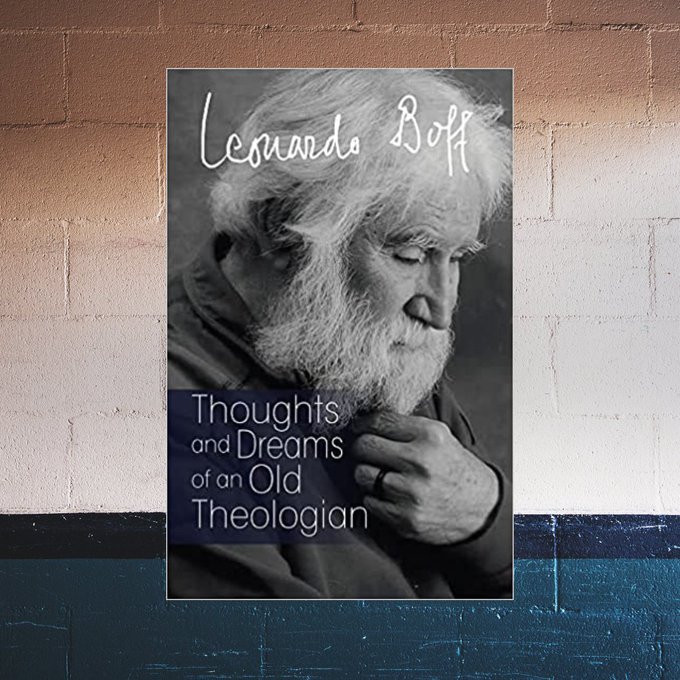
Leonardo Boff schrieb Die Suche nach dem gerechten Maß: Der ehrgeizige Fischer und der verzauberte Fisch, Vozes 2022 und Die Erde bewohnen: Welches ist der Weg zur universellen Brüderlichkeit? Vozes 2021; Thoughts and Dreams of an Old Theologian, Orbis Books, NY 2022.
God Will Not Be Mocked

The Rev. Dr. Walter Brueggemann
Organization: Columbia Theological Seminary, Decatur, GA
Denomination: United Church of Christ

Church Anew
Organization: Church Anew – A Ministry of St. Andrew Lutheran Church, Eden Prairie, MN
Denomination: Evangelical Lutheran Church in America

Those who mock the poor insult their Maker;

Those who are glad at calamity will not go unpunished

(Proverbs 17:5; see 14:21, 22:9, 28:3).

The claims and contours of liberation theology are now clearly articulated. In the 1960s and 1970s Roman Catholic theologians, priests, and bishops in Latin America freshly articulated a way to think, speak, and act about social power, social access, and social resources according to the claims of the gospel. That formulation orbits around the phrase, “God’s Preferential Option for the Poor.” That phrase voices the then scandalous, and still scandalous claim that God is partial to poor people, takes poor people as the object of special care and compassion, and sides with poor people in the class war that the powerful constantly wage against the powerless and resourceless. This interpretive stance, reiterated in many variations, causes scripture to be read very differently, and the mission of the church to be understood and practiced very differently.

The gains for the church in this articulation are immense. At the same time, however, it appears to me that this hermeneutical stance has not much penetrated the thinking, talk, or action of the church, including the Protestant denominations that I know best. It certainly has not impinged upon so-called evangelical churches that continue in their privatistic, other-worldly ways. And it has not much influenced progressive churches that mostly remain adamantly “liberal” in practice, something very different from “liberationist.” Because of the slowness of the church’s embrace of a liberationist perspective (and in some cases downright resistance), my simple intent here is to call attention to a new book written by Leonardo Boff in his old age, Thoughts and Dreams of an Old Theologian (Orbis Books, 2022). The book is readily readable and accessible, and will serve well as a study guide for a congregation. Boff, a Brazilian, from the outset has been among the earliest and most important voices in calling the church to liberationist perspective and practice. That perspective inevitably has led to a critical stance against the imperial propensity of the Roman Catholic Church, a stance that Boff labels “institutional arrogance.”

That critical stance has caused Boff (and his brother Clodovis, also a theologian) to be twice silenced by the Vatican under John Paul II. Nonetheless, Boff has continued his courageous work as a theologian and a teacher, who now counts Pope Francis as an ally in the work of liberation.

The book, in nine accessible succinct chapters, sums up a lifetime of research, teaching, and testimony. The outline of the book exhibits Boff following the contours of orthodox Trinitarianism, while he unpacks the tradition in fresh and telling ways. In his brief statement on the intention of Jesus, Boff appeals to “Our Father” and its petition for “our bread” (45). He identifies “three fundamental and inevitable hungers”:

The first hunger is for a meeting with Someone good…our kind Daddy (Abba).

The second hunger is the infinite hunger that is never satisfied, the dream of a full meaning for life… This comes with the name Kingdom of God.

There is yet another hunger… This is our daily bread. Without this material basis, talking about our Father and the Kingdom loses its meaning.

Boff summarizes his view of the church that has gotten him into so much trouble with the hierarchy. He pairs the “The Pauline Dimension (Charism) and the Petrine Dimension (Power)” (62). He distinguishes between “power as service” in Jesus and power “as control” in the Petrine Roman model of the church (65). He critiques the self-absorbed power-seeking of the Petrine Church and contrasts it to “the “Christianity of Popular Culture” in which the practical faith of the church, with its compassion and social awareness, does not linger over the perspective of the clergy elite. For good reason, Boff welcomes the great Dogmatic Constitution of the Church (Lumen Gentium) in Vatican II that saw “the people of God” as moving on in faith without excessive respect for the hierarchical structures of the church (71).

The church is not first and foremost a priestly body that creates communities, but the community of those who responded with faith to the call of God in Jesus through his Spirit. The network of these communities forms the People of God because this is the result of a communal, participatory process… Others arise that are more sporadic, but equally important for maintaining the life of the communities; the service of charity, concern for the poor, the promotion of social justice, particularly human, individual, and social rights, and the rights of nature and Mother Earth (74).

By contrast,

In an ecclesiology that regards the church as a hierarchical society (Petrine), there is no salvation for women in the sense of integration into community services and gifts (Pauline). They are forever marginalized, if not excluded. This state of affairs is incompatible with an ecclesiology that is minimally based on the gospel, which has to incorporate human values because they are also divine values. This is the fundamental reason why we should abandon an exclusively Petrine ecclesiology based on society and hierarchy and build up a Pauline ecclesiology, of community and the People of God (75).

Another recurring, crucial accent in Boff’s work is his deep concern for the earth in his “ecotheology.” He sees in our current thinking and practice two “cosmologies in conflict.” One is a “cosmology of conquest, of power as domination” (83). The alternative is a cosmology “gaining strength, the cosmology of transformation and liberation.” This latter option has received compelling articulation in the encyclical of Pope Francis, Laudato Si, “On Care for our Common Home” (2015). Boff pays attention to the processes of living organisms that grow and are transformed at death:

Behind all beings acts Fundamental Energy, also called the Nurturing Abyss of all being, which gave origin to the universe and keeps it in being, bringing into existence new beings. The most spectacular of these is the living Earth and we human beings with our component of consciousness and intelligence and the mission to care for the Earth (85).

Boff’s critique of the cosmology of domination is acute:

It started from a false premise that we could produce and consume without limit on a limited planet. The premise also assumes that the fictitious abstraction known as money represents the highest value and that competition and the pursuit of individual interest will result in general well-being. As I described earlier, it takes the form of a cosmology of domination. This cosmology has brought the crisis into the sphere of ecology, politics, ethics, and now economics. The eco-feminists have pointed out the close connection between anthropocentrism and patriarchy, which since Neolithic times has been doing violence to women and nature (86-87).

In his penultimate chapter Boff returns to his most elemental insistence:

The supreme and absolute principle of ethics is “Liberate the poor.” The principle is absolute because it governs actions always, in every place and for all. “Free the poor” presupposes (a) the condemnation of a social totality, of a closed system that excludes and produces poor people; (b) an oppressor who produces poor and excluded people; (c) poor people unjustly made poor and so impoverished; (d) taking into account the mechanisms that reproduce impoverishment; (e) the ethical duty to dismantle such mechanisms; (f) the urgency to build an escape route from the system that excludes people; and, finally (g) the obligation to bring about the new system in which all in principle have a role in participation, in justice and solidarity, including nature.

This ethics starts from the poor, but it is not just for the poor. It is for all, since no one looking at the face of an impoverished person can feel indifferent; everyone feels concerned. This ethics is fundamentally an ethics of justice, in the sense of restoring the recognition denied to the vast majority and including them in the society from which they feel—and indeed are—excluded (109).

At the outset of this piece I have placed a proverb that, well ahead of contemporary ecclesial formulation, had already seen the truth of God’s “preferential option for the poor.” The proverb asserts that God is particularly attached to and attentive to the poor, those who do not and cannot participate effectively in the production-consumption benefits of the economy.

I noticed the term “mock” in the proverb. The “mocking” of the poor is equivalent to insulting or scorning the creator who is the God of the poor. The equation is a remarkable formulation of a deep conviction of the gospel. We will do well to notice, in the context of this proverb, how it is that much church theology and practice have assumed that God and poor have no connection, as we have fashioned a faith that is individualized and privatized, or that is other-worldly in its escapism. The proverb insists otherwise. It affirms the inevitable, inescapable linkage of God to the economic realities of society, to the political reality that acknowledges not only the presence of the poor, but the production of the poor through the management and manipulation of the economy. This simple equation in the proverb amounts to a critical principle that contradicts our systemic arrangements and summons us to an alternative practice and policy.

The term “mock” in the proverb has led me, perhaps inevitably, to the assertion of the apostle Paul in a quite different context:

Do not be deceived; God is not mocked, for you reap whatever you sow _(Galatians 6:7).

Paul’s assertion is an insistence that God’s world is morally coherent, that it is a network of causes and effects, of deeds and consequences that are connected and guaranteed by the ordering of the creator. Thus “sow…reap.” Paul affirms that this linkage, guaranteed by the creator God, cannot be outflanked because it embodies the will of the creator God. God’s intention cannot be avoided, and God’s will cannot be mocked, either through neglect or defiance.

Consider for a moment this juxtaposition of texts:

God is not mocked;

God is insulted by the mocking of the poor.

So yes, God is mocked:

God is mocked whenever poor people lack food;

God is mocked whenever the children of poor people must attend inadequate schools;

God is mocked whenever poor people cannot receive adequate or reliable health care;

God is mocked whenever poor people are left homeless and without safe shelter; God is mocked whenever some in our society lack the security and dignity for full humanness among us.

God is mocked by an economic system of greed that does not notice the poor, or the poor are excluded from the wellbeing of the economy. But God will not finally be mocked, because God is in resolved solidarity with poor people. It only remains for us to devise social perspectives, policies, and practices that are congruent with the holy God who is alive, well, and active in the world.

Boff has seen all of this with courageous clarity. Because he is a Roman Catholic teacher and theologian, he has been preoccupied with the way the Roman Catholic Church has colluded in this grotesque distortion of creaturely reality. But of course Boff’s concern runs well beyond the Roman Catholic Church. His insistence and anticipation
is that the “peoples church” cannot be contained in any fearful ideology and that the church may indeed impact the body politic in transformative ways.

Boff concludes his final chapter on spirituality with an appeal to the Eucharist:

And now, beloved Earth, I perform the action Jesus performed in the power of his Spirit. Like him, filled with spiritual power, I take you in my impure hands and pronounce over you the sacred words the universe was hiding and which you longed to hear: “Hoc est enim corpus meum: This is my Body. Hic est sanguis meus. This is my blood.” And then I felt it: what was earth was transformed into Paradise, and what was human life was transformed into divine life. What was bread became God’s body, and what was wine became sacred blood. Finally, Earth, with your sons and daughters, you came to God. You became God by participation. At home, at last. (172).

Boff’s book is well worth sustained attentiveness. It is a fierce wake-up call to the reality of God in whom we trust and to whom we respond; it is this God who will, in the end, not be mocked.

Walter Brueggemann

May 20, 2022

……

Walter Brueggemann is one of the most influential Bible interpreters of our time. He is the author of over one hundred books and numerous scholarly articles. He continues to be a highly sought-after speaker.

                                  “A world war in pieces” 

                                             Leonardo Boff

On June 29 of this year 2022 the Madrid Summit of the countries that make up the North Atlantic Treaty Organization (NATO), to which the United States belongs as the main actor, took place. The relationship between these European countries and the United States is one of humiliating subordination.

In this Summit a “New Strategic Commitment” was established that in a certain way goes beyond the European limits and covers the whole world. To reinforce this globalist strategy, Japan, South Korea, Australia and New Zealand were also present. There, something extremely dangerous and provocative of a possible third world war was declared. Russia was reaffirmed as the direct enemy and China as the potential enemy of tomorrow. Nato is not only defensive, it has become offensive.

The perverse category of the “enemy” has been introduced, who must be confronted and defeated. This brings us back to Hitler’s Nazi-fascist jurist Carl Schmitt (1888-1985). In his The Concept of the Political (1932, Vozes 1992) he says: “the essence of a people’s political existence is its ability to define friend and foe” (p.76). By defining the enemy, fighting it, “treating it as evil and ugly and defeating it,” this establishes the identity of a people.

Again Europe falls victim to its own paradigm of the will to power and power as domination over others including nature and life. This paradigm led to two major wars with 100 million victims in the 20th century alone. It seems that it has learned nothing from history and even less from the lesson that Covid-19 is harshly teaching, because it struck like a bolt of lightning over the system and its mantras.

It is now known that behind the war taking place in Ukraine there is a confrontation between the USA and Russia/China as to who holds the geopolitical dominance of the world. Up until now, a unipolar world was in force with the complete predominance of the USA over the course of history, despite the defeats suffered in various military interventions, always brutal and destructive of ancient cultures.

Our master in geopolitics Luiz Alberto Moniz Bandeira (1935-2017) in his meticulous book A desordem mundial:o espectro da total dominação (Civilização Brasileira, RJ 2016) pointed out, of course, the three fundamental mantras of the Pentagon and US foreign policy:

(1)one world-one empire (USA);

(2) full spectrum dominance: dominate the entire spectrum of reality, on land, sea and air with some 800 military bases distributed worldwide;

(3) destabilize all governments of countries that resist or oppose this strategy. No longer through a coup d’état with tanks in the streets, but through the defamation of politics, as the world of the dirty and corrupt, destruction of the reputation of political leaders and a political-media-legal articulation to remove the resisting heads of state.

Effectively this occurred in Honduras, in Bolivia and in Brazil with the coup of this nature against Dilma Rousseff in 2016 and subsequently with the unjust imprisonment of Lula. Now NATO’s New Strategic Commitment obeys this guideline, imposed by the USA, being valid for all under the pretext of security and stability in the world.

It so happens that the American empire is adrift, no matter how much one still appeals to its exceptionalism and to the “manifest destiny” according to which the USA would be the new people of God who will bring democracy, freedom and rights to the nations (always understood within the capitalist code).  However, Russia has recovered from the erosion of the Soviet empire, armed itself with powerful nuclear weapons and unassailable missiles, and is fighting for a strong position in the globalization process. China has emerged with new projects such as the silk road and as an economic power so powerful that it will soon surpass that of the United States. Parallel to this, the Global South has emerged, a group of BRICS countries in which Brazil participates. In other words, there is no longer a unipolar world, but a multipolar one.

This fact exasperates the arrogance of the Americans especially the neocon supremacists who claim it is necessary to continue the war in Ukraine to bleed and eventually wipe out Russia and neutralize China to confront it at a later stage. In this way – this is the neocon claim – one would return to the unipolar world under the dominance of the USA.

Here are the elements that could lead to a third world war, which would be suicidal. Pope Francis in his clear intuition has repeatedly spoken that we are already in a  world war in pieces”. For this reason, in an almost desperate tone (but always personally hopeful) he calls for “we are all in the same boat; either we all save ourselves or no one is saved” (Fratelli tutti n.32). He emphatically states that there are enough madmen in the Pentagon and in Russia who want this war that could There are enough madmen in the Pentagon and in Russia who want this war that could put an end to the human species.

In this way the lethal paradigm of the dominus (lord and master) of modernity is reinforced and the alternative of the frater (brother and sister), proposed by Pope Francis in his encyclical Fratelli tutti, inspired by the best man in the West, Francis of Assisi, is weakened. Either we all fraternize among ourselves and with nature, or else we are, in the words of UN Secretary Antonio Guterrez,”digging our own grave”.

Why has the will to power been chosen over the will to live of the pacifists Albert Schweitzer, Leon Tolstoy and Mahatma Gandhi? Why did Europe, which has produced so many sages and saints, choose this path that could devastate the entire planet to the point of making it uninhabitable? Has it taken as its guide the most dangerous of all archetypes, according to C.G.Jung, that of power, capable of destroying ourselves? I leave open this question that Martin Heidegger took to his grave without an answer. He said: “Only  God can save us”.

For it is in this living God and source of life that we place our hope. This goes beyond the limits of science and instrumental-analytical reason. It is the leap of faith that also represents a virtuality present in the global cosmogenic process.The alternative to this hope is darkness. But light has more right than darkness. In that light we believe and hope.

Leonardo Boff wrote The search for the just measure: the ambitious fisherman and the enchanted fish,Vozes 2022 and Inhabiting the Earth: which is the way to universal brotherhood? Vozes 2021; Thoughts and Dreams of an Old Theologian, Orbis Books,NY 2022.

               “Una guerra mondiale a pezzi”.

                                   Leonardo Boff

Il 29 giugno 2022 si è svolto il Vertice di Madrid dei paesi che compongono l’Organizzazione del Trattato del Nord Atlantico (NATO) a cui gli USA appartengono come attore principale. In effetti, il rapporto tra questi paesi europei e gli USA è di umiliante subordinazione.

In questo Summit è stato stabilito un ‘Nuovo Impegno Strategico’ che, in un certo senso, va oltre i limiti geografici europei e copre tutto il mondo. Per rafforzare questa strategia globalista erano presenti anche Giappone, Corea del Sud, Australia e Nuova Zelanda. A Madrid si è dichiarato qualcosa di estremamente pericoloso e provocatorio su un’eventuale terza guerra mondiale. Si è riaffermata la Russia come il nemico diretto e la Cina come il nemico potenziale di domani. La Nato non è solo un’alleanza difensiva, è diventata offensiva.

Si è introdotta la categoria perversa del “nemico” che va affrontato e sconfitto. Questo ci riporta al giurista nazi-fascista di Hitler, Carl Schmitt (1888-1985). Nel suo «Il concetto del politico» pubblicato nel 1932 (in italiano in «Le categorie del ‘politico’. Saggi di teoria politica», Il Mulino, Bologna 2014) afferma: “l’essenza dell’esistenza politica di un popolo è la sua capacità di definire amico e nemico”. Definire il nemico, combatterlo, “trattarlo come brutto e cattivo, e sconfiggerlo”, questo stabilisce l’identità di un popolo.

Ancora una volta, l’Europa cade vittima del proprio paradigma di volontà di potenza e di potere come dominio sugli altri, compresa la natura e la vita. Questo paradigma ha significato che solo nel 20° secolo si facessero due grandi guerre con 100 milioni di vittime. Sembra che non abbia imparato nulla dalla storia, per non parlare della lezione che il Covid-19 sta duramente dando in quanto è caduto come un fulmine sul sistema e sui suoi mantra.

Si sa oggi che dietro la guerra che si svolge in Ucraina c’è una contrapposizione tra USA e Russia-Cina, nella prospettiva di chi assumerà il dominio geopolitico del mondo. Finora ha prevalso un mondo unipolare con il completo predominio degli USA nel corso della storia, nonostante le sconfitte subite in vari interventi militari, sempre brutali e distruttivi di antiche culture.

Il nostro maestro in geopolitica Luiz Alberto Moniz Bandeira (1935-2017) nel suo meticoloso libro «A desordem mundial:o espectro da total dominação» (Civilização Brasileira, Rio de Janeiro 2016) ha indicato chiaramente i tre mantra fondamentali del Pentagono e della politica estera nordamericana:

  • un mondo – un impero (USA);
  • full spectrum dominance: dominare l’intero spettro della realtà, in terra, nel mare e nell’aria, con circa 800 basi militari distribuite in tutto il mondo;
  • destabilizzare tutti i governi dei paesi che resistono o si oppongono a questa strategia.

Non più attraverso un colpo di stato con carri armati per strada, ma attraverso la diffamazione della politica, come il mondo degli sporchi e dei corrotti, la distruzione della reputazione dei leader politici e un’articolazione politico-mediatico-legale per rimuovere i capi di stato resistenti. In effetti è successo in Honduras, Bolivia e Brasile con il colpo di stato di questo tipo contro Dilma Rousseff nel 2016 e successivamente con l’ingiusta reclusione di Lula. Ora, il ‘Nuovo Impegno Strategico della Nato’ obbedisce a questo orientamento, imposto dagli USA, valido per tutti con il pretesto della sicurezza e della stabilità nel mondo.

Accade così che l’impero nordamericano sia alla deriva per quanto faccia appello al suo eccezionalismo e al “destino manifesto” secondo cui gli USA sarebbero il nuovo popolo di Dio che porterà democrazia, libertà e diritti alle nazioni (sempre inteso nel codice capitalista). Tuttavia, la Russia si è ripresa dall’erosione dell’impero sovietico, si è armata di potenti armi nucleari, di missili inattaccabili e si contende un forte spazio nel processo di globalizzazione. L’irruzione della Cina con nuovi progetti come la via della seta e come potenza economica così potente al punto di superare, tra poco, quella nordamericana. Allo stesso tempo, è emerso il Global South, un gruppo di paesi BRICS a cui partecipa il Brasile. In altre parole, non esiste più un mondo unipolare, ma multipolare.

Questo fatto esaspera l’arroganza dei nordamericani, in particolare dei suprematisti neocon che affermano che è necessario continuare la guerra in Ucraina per dissanguare e alla fine spazzare via la Russia e neutralizzare la Cina per affrontarla in una fase successiva. In questo modo – questa è la pretesa neo-con – si tornerebbe al mondo unipolare.

Ecco qui gli elementi che possono generare una terza guerra mondiale, che sarà suicida. Papa Francesco, nella sua chiara intuizione, ha più volte affermato che siamo già nella “terza guerra mondiale a pezzi”. Per questo afferma con tono quasi disperato (ma sempre personalmente fiducioso) che “siamo tutti sulla stessa barca; o ci salviamo tutti o nessuno si salva” (Fratelli tutti n.32). Denuncia  spesso le stesse cose l’eminente intellettuale Noam Chomsky. Egli afferma con enfasi che ci sono abbastanza pazzi al Pentagono e in Russia che vogliono questa guerra, che può porre fine alla specie umana. È la ragione diventata irrazionale, impazzita e suicida.

In questo modo si rafforza il paradigma letale del dominus (signore e padrone) della modernità e l’alternativa del frater (fratello e sorella) proposta da papa Francesco nella sua enciclica Fratelli tutti, ispirata all’uomo migliore d’Occidente, Francesco di Assisi, è indebolita. O tutti fraternizziamo gli uni con gli altri e con la natura o, nelle parole del segretario dell’ONU António Guterrez, “ci stiamo scavando la propria fossa”.

Perché è stata scelta la volontà di potenza e non la volontà di vivere dei pacifisti Albert Schweitzer, Leo Tolstoj e Mahatma Gandhi? Perché l’Europa, che ha prodotto tanti saggi e santi, ha scelto questa strada che può devastare l’intero pianeta fino a renderlo inabitabile? Ha accolto come guida il più pericoloso degli archetipi, secondo C.G.Jung, quello del potere, capace di autodistruggersi? Lascio aperta questa domanda che Martin Heidegger ha portato senza risposta nella tomba. Addolorato, ha lasciato scritto per essere pubblicato nell’aldilà: “Solo un Dio può salvarci”.

È in questo Dio vivente e fonte di vita che riponiamo la nostra speranza. Questo va oltre i limiti della scienza e della ragione strumentale-analitica. È il salto di fede che rappresenta anche una virtualità presente nel processo cosmogonico globale. L’alternativa a questa speranza è l’oscurità. Ma la luce ha più diritto delle tenebre. In questa luce noi crediamo e speriamo.

(Traduzione dal portoghese di Gianni Alioti)