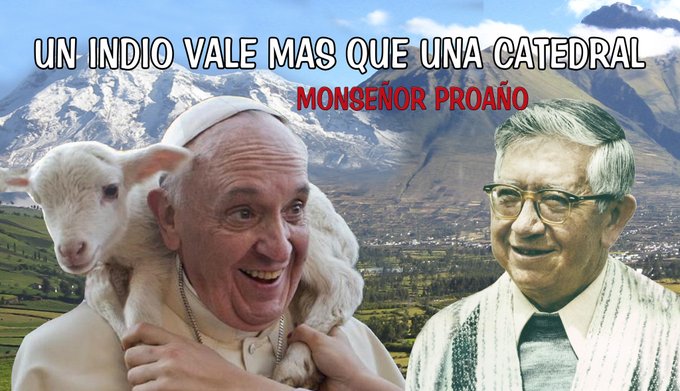
A brief account of «the destruction of the Indians» in Brazil

Meditating on the PanAmazon Synod of October 2019, makes me remember what Bartolome de las Casas called «the destruction of the Indians» when he was dealing with Central America.

The first encounter of April 21, 1500, idyllically narrated by the chronicler Pero Vaz de Caminha, soon turned into a profound disappointment: due to the greed of the colonizers there was no reciprocity between the Portuguese and the Indigenous people. Rather, it was a confrontation, unequal and violent, with disastrous consequences for the future of all Native Nations.

As in the entire Latin American continent, the Indigenous people were deprived of their status as human beings. Even in 1704, the Aguiras Chamber, in Ceara, Brazil, wrote in a letter to the king of Portugal that “there is no need for missions with these barbarians because they have only the form of humans, and whoever says anything different is clearly wrong.” Before Pope Paul III had to intervene, and with the Papal Bull Sublimis Deus of July 9, 1537, he proclaimed the absolute dignity of the Indigenous peoples as true human beings, free peoples and owners of their lands.

Due to the white invader’s diseases, against which the Indigenous people had no immunity: flu, chickenpox, measles, malaria and syphilis; to the Cross and the sword; the degradation of their lands, making hunting and farming impossible; because of slavery; the wars officially declared by Don João VI on May, 1808, against the Krenak in the Rio Dulce Valley; the systematic humiliation and denial of their identity… the five million indigenous were reduced to the current 930.000. The virtual eradication for political purposes of the Indigenous peoples was accomplished, either by forced acculturation, spontaneous and planed misogynistic practices, or by pure and simple genocide, much as Brazil’s General Governor, Mendes Sá, did with the Tupiniquim of Iheus: “The corpses were placed along the beaches, aligned in the extension of a legua.” In recent times, when the great highways and the hydroelectric damns in the Amazon were opened, chemical defoliants, helicopter attacks and low level flights of airplanes were used against the Indigenous populations, plus bacteria that were intentionally introduced.

We need quote only one paradigmatic example that reflects the logic of the “destruction of the Brazilian Indians”. In the beginning of the Twentieth century, when Dominican Friars created a Mission on the banks of the Araguaia River, 6 to 8.000 Kaiapo, were at war with the collectors of natural rubber of the region. By 1918 they had been reduced to 500. In 1927 there were 27, and in 1958 there was only one surviving Kaiapo. In 1962 the Kaiapo were declared extinct in the whole region.

With the annihilation of more than a thousand nations in 500 years of Brazilian history, a human inheritance, built over thousands of years of cultural work, dialogue with nature, creation of languages and construction of a world vision friendly to life and respectful of nature, disappeared forever. We are all poorer without them.

The nightmare of a Native Terena, related by one who knows well the souls of Brazilians and the Indigenous, shows the impact of this demographic devastation on people and nations: “I went to the old Guarani cemetery in the Reserve, and saw a big cross. Some white men came and nailed me face down to that cross. They left and I lay there, desperate, nailed to the cross. Suddenly I awoke, filled with fear” (Roberto Gambini, The Indigenous Mirror, (El espejo indio, Rio de Janeiro 1980, p. 9).

This fear, due to the continuous aggression of the barbarian white (who arrogantly calls himself civilized), has been converted in the Indigenous populations into terror of being exterminated forever from the face of the Earth.

Thanks to the Indigenous organizations and the new protectionist state laws, the support of civil society and the Churches, and to international pressure, the Indigenous nations are strengthening and growing in numbers. Their organizations reveal the high level of consciousness and articulation they have accomplished. They experience themselves as adult citizens who want to participate in the destiny of the national community, without renouncing their identity, cooperating with other historical subjects, sharing their cultural, ethical and spiritual wealth.

Still, the form of the Brazilian State, especially under the Bolsonaro government, is extremely offensive to their dignity. It threatens and mistreats them through its Indigenous policies, as if they were primitive and puerile. In fact, the Native people have an integrity that we Westerners, who are hostages to a paradigm of civilization that divides, atomizes and sets one against the other to totally dominate, have lost. The Indigenous people are the guardians of the sacred and complex unity of the human being with others, immersed in nature, of which we all are part and parcel. They preserve the happy consciousness of our belonging to the Whole and the eternal alliance between heaven and Earth, the origin of all things.

When, in October 1999, I encountered, in Umeo, the Samis,the Indigenous Norwegians, they first asked me a question before our conversation:

– Do the Brazilian Indigenous keep the marriage of heaven and Earth?

I immediately understood the question and firmly answered:

– But of course, they maintain this marriage, because from the marriage between heaven and Earth all things are born.

They happily replied:

– “Then they still are as truly Indigenous as we. They are not like our brothers from Stockholm who have forgotten heaven and only stayed with the Earth. This is why they are unhappy and so many commit suicide. If we maintain the unity of heaven and Earth, of spirit and matter, the Great Spirit and the human spirit, we will then save humanity and our Great Mother Earth”.

That surely is the great mission of the Original Peoples and the enormous challenge to help us save our Pacha Mama, our Mother Earth, who generates and supports us all and without which nothing in this world is possible.

We need to listen to their message and join in their commitment, to be, as they are, witnesses to the beauty, wealth and vitality of Mother Earth.

Leonardo Boff Leonardo Boff Eco-Theologian-Philosopher and  of the Earthcharter Commission

Free translation from the Spanish sent by
Melina Alfaro, alfaro_melina@yahoo.com.ar.
Done at REFUGIO DEL RIO GRANDE, Texas, EE.UU.

Um desafio: a salvaguarda da unidade da família humana.

Há o risco real de que a família humana seja bifurcada, entre aqueles que se beneficiam dos avanços tecnológicos, da biotecnologia e nanotecnologia e dispõem de todos os meios possíveis de vida e de bem-estar, cerca de 1,6 bilhões de pessoas, podendo prolongar a vida até aos 120 anos que corresponde à idade possível das células. E a outra humanidade, os restantes mais de 5,4 bilhões, barbarizados, entregues à sua sorte, podendo viver, se tanto, até os 60-70 anos com as tecnologias convencionais num quadro perverso de pobreza, miséria e exclusão.

Esse fosso deriva do horror econômico que tomou a cena histórica sob a dominação do capital globalizado especialmente do especulativo sob a regência cruel do neoliberalismo radical. Considerando-se triunfante face ao socialismo real cuja derrocada se deu no final dos anos 80, exacerbou seus princípios como a competição,o individualismo, a privatização e a difamação de todo tipo de política e satanização do Estado, reduzido ao mínimo. Cerca de 200 megacorporações, cujo poder econômico equivale a 182 países, conduzem junto com os organismos da ordem capitalista como o FMI, o Banco Mundial e a Organização Mundial do Comércio a economia mundial sob o princípio da competição sem qualquer sentido de cooperação e de respeito ecológico da natureza. Tudo é feito mercadoria, do sexo à religião, numa volúpia de acumulação desenfreada de riquezas e serviços à custa da devastação da natureza e da precarização ilimitada dos postos de trabalho.

O risco consiste em que os muito ricos criem um mundo só para si, que rebaixem os direitos humanos a uma necessidade humana que deve ser atendida pelos mecanismos do mercado (portanto só tem direitos quem paga e não quem é simplesmente pessoa humana), que façam dos diferentes desiguais e dos desiguais dissemelhantes, aos quais se nega praticamente a pertença à espécie humana. São outra coisa, óleo gasto,zeros econômicos.

No Ocidente que hegemoniza o processo de globalização, a ideia de igualdade politicamente nunca triunfou. Ela ficou limitada ao discurso religioso-cristão, de conteúdo idialístico. Esse déficit de uma cultura igualitária impediria a bifurcação da família humana. Pode triunfar uma idade das trevas mundial que se abateria sobre toda a humanidade. Seria a volta da barbárie.

O desafio a ser enfrentado é fazer tudo para manter a unidade da família humana, habitando a mesma Casa Comum. Todos são Terra, filhos e filhas da Terra, para os cristãos, criados à imagem e semelhança do Criador, feitos irmãos e irmãs de Cristo e templos do Espírito. Todos têm direito de serem incluídos nesta Casa Comum e de participarem de seus dons.

Para dar corpo a este desafio precisamos de uma outra ética humanitária que implica resgatar os valores ligados à solidariedade, à empatia e à compaixão. Importa recordar que foi a solidariedade/cooperação que permitiu a nossos ancestrais, há alguns milhões de anos, darem o salto da animalidade à humanidade. Ao saírem para coletar alimentos, não os comiam individualmente como o fazem os animais. Antes, reuniam os frutos e a caça e os levavam para o grupo de co-iguais e os repartiam solidariamente entre todos. Deste gesto primordial nasceu a socialidade, a linguagem e a singularidade humana. Será hoje ainda a solidariedade irrestrita, a partir de baixo, a compaixão que se sensibiliza diante do sofrimento do outro e da Mãe Terra, que garantirão o caráter humano de nossa identidade e de nossas práticas. Foi o que vergonhosamente faltou aos grandes credores internacionais que face à tragédia do tsunami do sudeste da Ásia não perdoaram os 26 bilhões de dívidas daqueles países flagelados, Apenas protelaram por um ano, o seu pagamento.

Sem o gesto do bom samaritano que se verga sobre os caídos da estrada ou a vontade de infinita compaixão do bodhisatwa que renuncia penetrar no nirvana por amor à pessoa que sofre, ao animal quebrantado ou à árvore mirrada, dificilmente faremos frente à desumanidade cotidiana que está se naturalizando a nível brasileiro e mundial.

Na perspectiva dos astronautas, daqueles que tiveram o privilégio de ver a Terra de fora da Terra, Terra e Humanidade formam uma só entidade, complexa mas una. Ambas estão agora ameaçadas. Ambas possuem um mesmo destino comum e comparecem juntas diante do futuro. Sua salvaguarda constitui o conteúdo maior de um ancestral sonho: todos sentados à mesa, numa imensa comensalidade, desfrutando dos frutos da boa e generosa Mãe Terra.

Se o cristianismo e os demais caminhos espirituais não ajudarem a realizar esse sonho e não levarem as pessoas a concretizá-lo, não teremos cumprido a missão que o Criador nos reservou no conjunto dos seres, que é a de sermos o anjo bom e não o Satã da Terra. Nem teremos escutado e seguido Aquele que disse: “Vim trazer vida e vida em abundância”(Jo 10,10).

Importa conscientizarmo-nos de nossa responsabilidade, sabendo que nenhuma preocupação é mais fundamental do que cuidar da única Casa Comum que temos e de alcançar que toda a família humana, superando as contradições sempre existentes, possa viver unida dentro dela com um mínimo de cuidado, de solidariedade, de irmandade, de compaixão e de reverência que produzem a discreta felicidade pelo curto tempo que nos é concedido passar por esse pequeno, belo e radiante Planeta.

Uma utopia? Sim, mas necessária se quisermos sobreviver.

Leonardo Boff escreveu:Proteger a Terra- salvar a vida. Como escapar do fim do mundo, Record, Rio 2010.

El Espíritu llega antes que el misionero en la Panamazonia

El Sínodo Panamazónico que se ha celebrado en Roma en el mes de octubre ha suscitado una gran discusión, especialmente entre católicos ligados a ciertas tradiciones y doctrinas, involucrando hasta a cardenales y obispos europeos, acerca de la evangelización de las culturas de los pueblos originarios. En este punto ha habido un cambio real de orientación, fruto de la apertura teológica del Concilio Vaticano II (1962-1965) y del diálogo interreligioso e intercultural, provocado por el proceso de mundialización. Este ha propiciado el encuentro de culturas y de religiones que antes apenas se conocían. Se ha desarrollado un rico diálogo y la exigencia de ver la presencia del Espíritu en aquellas culturas y religiones.

La cuestión se agudizó al tratar de la evangelización de los pueblos amazónicos que habitan en 9 países de nuestro Continente. Evangelizar sus culturas o evangelizar en sus culturas, se preguntaban. La evangelización tradicional buscaba evangelizar sus culturas, convirtiéndolas al cristianismo, moldeado según la cultura occidental. El índio, al hacerse cristiano, prácticamente dejaba de ser indio y se incorporaba a la cultura dominante occidental. Así fue siempre durante siglos. El cristianismo fue impuesto por la cruz y por la espada, ocasionando no raramente grandes matanzas de indígenas por causa de su resistencia.

Cómo olvidar aquella voz doliente del profeta maya Chilam Balam de Chumayel : “Ay! Entristezcámonos porque llegaron los españoles … vinieron a marchitar nuestras flores para que solo sus flores viviesen … vinieron a castrar el sol”. Y su lamento continúa: ”Entre nosotros se introdujo la tristeza, se introdujo el cristianismo… Ese fue el principio de nuestra miseria, el principio de nuestra esclavitud”.

A la Iglesia le cuesta admitir que el proyecto de colonización y el proyecto misionero son en realidad un único proyecto. Así ella se hizo cómplice del exterminio de millares de indígenas con la oposición de un Bartolomé de las Casas, Sahagún, Padre Vieira y otros.

Fue preciso que viniera el Papa Francisco, del gran Sur del mundo para reconocer en la apertura del Sínodo Panamazónico: ”Cuántas veces el don de Dios no fue ofrecido sino impuesto. Cuántas veces hubo colonización en vez de evangelización”. Más enfático fue en Puerto Maldonado (Perú), cuando dijo:”Pido humildemente perdón no sólo por las ofensas de la propia Iglesia sino también por los crímenes contra los pueblos originarios cometidos durante la conquista de América”.

Ahora lo que se propone es evangelizar en las culturas. La Iglesia no escoge la cultura en la cual quiere encarnarse. Toda cultura es apta para asumir el mensaje evangélico y expresarlo con los recursos lingüísticos y simbólicos de que dispone. Por tanto, se trata de evangelizar en y a partir de la cultura propia de los indígenas. Eso parece una obviedad. Pero no lo es en muchos círculos hasta el día de hoy. Reina todavía cierto exclusivismo cristiano y católico, en la convicción de que la única forma de Iglesia de Cristo es esta que existe actualmente, con el Papa, toda la jerarquía eclesiástica y la multitud de fieles. Esta sería la única válida y legítima.

Olvidan que Jesús no era un romano ni un griego. Era un hebreo medio-oriental, más próximo a la cultura de aquellos pueblos que a la grecolatina. Concretamente, el cristianismo actual es fruto de un gran sincretismo, tomado positivamente, con elementos judaicos, griegos, romanos, germánicos y modernos. No es una religión revelada sino un producto de la fe de convertidos, que, con los instrumentos de sus respectivas culturas, dieron cuerpo a las Iglesias históricas, y en particular a la Iglesia católica romana con sus teologías, liturgias y símbolos.

Lo que fue derecho de los cristianos europeos vale también para los pueblos originarios panamazónicos. Dice con razón el texto preparatorio: “Una Iglesia con rostro amazónico deja atrás una tradición colonial, monocultural, clerical e impositiva, y sabe discernir y asumir sin miedo las diversas expresiones culturales de los pueblos”. Aquí se presenta la oportunidad de una eclesiogénesis, es decir, de la génesis de otro tipo de Iglesia católica, no romana, sino en comunión con ella.

La evangelización convencional incurre en un reduccionismo: predica al Cristo encarnado, limitado al espacio palestino. Pero el Cristo real es el resucitado que llena el universo, el mundo, las personas y las Iglesias, como enseña la teología de San Pablo y de San Juan.Es el Cristo cósmico. Esta visión cristocéntrica olvidó al Dios-comunión de Personas divinas, la Santísima Trinidad, fundamento de la comunión entre los seres humanos y las culturas. Olvidó al Espíritu Santo que estuvo presente en el acto de la creación, que hizo engendrar a Jesús en el seno de María y continúa y actualiza siempre su mensaje. Este Espíritu está siempre presente en la creación, en las culturas y en el corazón de las personas. Donde reina el amor, se hace fuerte la solidaridad, se actualiza la misericordia y se abre el corazón en la veneración y en la unción a Dios, ahí estaba y está el Espíritu. Él siempre llega antes que el misionero en la Panamazonia. Este acoge el don del Espíritu en el pueblo, lo abraza y enriquece con la buena noticia de vida eterna de Jesús.

Bellamente dice el texto preparatorio: “Tenemos que captar lo que el Espíritu del Señor ha enseñado a estos pueblos a lo largo de los siglos: la fe en Dios Padre-Madre Creador, el sentido de comunión y de armonía con la tierra, el sentido de solidaridad con sus compañeros, el proyecto del buen vivir… Necesitamos que los pueblos originarios modelen culturalmente las Iglesias amazónicas locales”.

Seguramente en el contexto de la vieja cristiandad europea sería imposible dar ese paso adelante. Pero estamos en el nuevo mundo, donde somos mayoría de católicos y tenemos condiciones para gestar un rostro nuevo de la Iglesia de Cristo.

*Leonardo Boff es teólogo y filósofo y ha escrito: Eclesiogénesis: la reinvención de la Iglesia a partir de las bases, Record, Rio 2010.

Traducción de María José Gavito Milano

PS. El presente artículo fué leydo por el Papa Francisco que escribió a su autor:

“Querido hermano:

Gracias por tu correo y tu reflexiòn sobre el reduccionismo cristocentrico y la presencia del Espìritu. Me sirve mucho.
Rezo por vos. Por favor, no te olvides de hacerlo por mì.
Que Jesùs te bendiga y la Virgen Santa te cuide. Fraternalmente.

Francisco”


The neo-liberal project in the world and in Brazil is anti-life and the enemy of nature

I will address the reflections of one of our best philosophers, Manfredo de Oliveira, from the Federal University of Ceara, specialist in the relationship between the economy, society and ethics. His work on the topic is vast. We will summarize here a lengthy study on the project developed elsewhere, and now in Brazil: the ultra radical neo-liberalism.

de Oliveira writes:
«This project fundamentally consists of the radical extension of what is called “Economic Liberalism”. This theoretical economic current is known as the Chicago School. However, its philosophical foundations lie in the theses of the so called Austrian School, whose principal exponent is Ludwig von Mises. These are his basic theses: «the right of property is the only universal, fundamental and absolute right. It begins with the absolute right to one’s body and includes all the goods that can be acquired. From this right derives the absolute right of non aggression against one’s property and the right to defend that property».

«The State is seen as the great usurper of property. The only ethically acceptable institution in economic activity is the “Free Market”. Everyone in the free market has the same rights. Each individual is solely responsible for his objectives. Its rules constitute a mechanism similar to the laws of nature: they are objective, and humans cannot modify them. We must study human action as physics studies the laws of nature».

«In the same way that we cannot judge the law of gravity as good or bad, we cannot judge the laws of the market. There is no sense in positing ethical questions that belong on another level. Here the only question is its technical efficacy. The market is understood as a self organizing mechanism and as such it can be evaluated for its efficacy and not on an ethical basis».

«There are no rights other than the laws of the market. Consequently, inequality and exclusion have nothing to do with social injustice. Thus,poverty is not an ethical problem, but one of technical incompetence.The main error the opponents of capitalism commit is the accusation of social injustice, based on the idea that “nature” gave all persons some rights simply for having been born». For this reason, in reference to the distribution of wealth… «it makes no sense to refer to a supposed natural or divine principle of justice» (Cf. Mises L. von, The Anti-Capitalist Mentality, Auburn, 2008, p. 80, 81).

«Tax is a form of confiscation of property. Consequently, neither health, education nor justice, are legitimate when financed by the State. The poor are individuals who by their own fault lost the competition with others. Thus, merit emerges as the only criterion of social promotion».

«That social project is frequently denominated by Pope Francis as “anti-life”, “assassin of the poor and of nature”. It purports to oppose the Social Well Being State (in Brazil, Democratic State of Rights). This adheres to the following elements along the line of J. M. Keynes: 1) Intervention by the State in the mechanisms of the market; 2) Politics of full employment (improving the performances of citizens); 3) Institutionalization of the system of protection; 4) Institutionalization of help for those left behind by the work market».

«The result of this process has been the increase of the capacity of consumption of the least favored classes».

«The fundamental objective now, in the new model of neo-liberal society, is to maximize the profits made by capital. That makes social rights tend to disappear, along with deregulation of the labor markets, and that the wealth of the wealthiest increases. Hence the global crusade against intervention by the state, and the social and economic rights created by the policies of the Social State, because they constitute an obstacle to the functioning of the laws of the competence, and for that reason are considered irrational and populist policies. In this form, the defenders of the “totally free market” oppose social policies, considered inefficient and disruptive of the productive process».

«The path now is to totally trust in the market as a self-organizing system that, once free from regulation and undue intervention, solves by itself the socio-economic problems».

«In this context it is seen that the basic axis of the project of civilization is now the subordination of human’s quality of life to the accumulation of capital».

«It is important, then, to recognize that the results of this process threaten human life and all life on the planet. The unlimited exploitation of nature is seen in the socio-environmental catastrophes. The most prestigious scientists warn us of the fact that the current economic model can lead humanity to an ecological and social collapse».

If Bolsonaro and Guedes accept this ultra-neo-liberal project, they will create a country with millions of poor and even pariahs, with a few rich and a handful of multimillionaires, a country that is not just poor but also unjust.

Leonardo Boff Eco-Theologian-Philosopher, of the Earthcharter Commission

Free translation from the Spanish sent by
Melina Alfaro, alfaro_melina@yahoo.com.ar.
Done at REFUGIO DEL RIO GRANDE, Texas, EE.UU.