Dios: Padre maternal y Madre paternal

Existencialmente hablando. Dios es el nombre que simboliza aquella tiernísima Realidad y aquel Sentido amoroso capaz de llenar la incompletitud del ser humano. Dios sólo tiene sentido si emerge de nuestro radical deseo que para Aristóteles y Freud es infinito.

Esa Suprema Realidad (el Reale realissimum de los pensadores medievales) fue expresada en el contexto de la cultura del patriarcado: Dios se presenta como masculino. Como consecuencia, todas las grandes religiones históricas se estructuraron en el código patriarcal. Por eso, tales lenguajes necesitan ser hoy despatriarcalizados si queremos tener una experiencia totalizadora de lo Sagrado. En eso las mujeres pueden ser nuestras maestras y doctoras.

Todos hemos sido ayudados por el descubrimiento de la existencia, antes puesta en duda, de una fase matriarcal de la humanidad, ocurrida hace unos 20 mil años. Las divinidades eran todas femeninas. Esto significó un giro en la reflexión teológica. Hoy sólo hacemos justicia a nuestra experiencia de lo Divino si la traducimos en términos masculinos y femeninos simultáneamente. En un lenguaje inclusivo Dios emerge como Padre maternal y como Madre paternal. Como Dios-Él y Dios-Ella, en el decir de muchas feministas.

Obviamente “Dios” sobrepasa las determinaciones sexuales; sin embargo, hay valores positivos presentes en esta forma de nombrar a Dios. Masculino (animus) y femenino (anima) son principios estructuradores de nuestra identidad.

Todas las palabras del diccionario no pueden definir a Dios, pues Él sobrepasa a todas. Vive en la dimensión de lo inefable. Ante él más vale callar que hablar y vivir una actitud de respeto y de devoción.

Estimo, sin embargo, que no podemos renunciar a la palabra “Dios” en razón del rico significado semántico de su origen sánscrito (di) y griego (theós): la luminosidad que se irradia en nuestra vida (el significado de di en sánscrito) o la solicitud para con todos los seres, quemando con su bondad toda malicia cual fuego purificador (el sentido originario del theós griego).

Las mujeres se impusieron a sí mismas la tarea: como pensar lo divino, la revelación, la salvación, la gracia, el pecado, a partir de la experiencia de las mujeres mismas, es decir, a partir de lo femenino. En el contexto de la teología de la liberación, la pregunta es: ¿cómo pensar a Dios a partir de la mujer pobre, negra y oprimida?

En este campo ha habido contribuciones notables. En primer lugar, las mujeres mostraron cuán patriarcal y machista es el discurso considerado normal y oficial que penetró en la catequesis, en los discursos oficiales e incluso en la teología erudita. Rara vez los teólogos-hombres han tomado conciencia de su lugar social-sexual-patriarcal.

La teología todavía dominante constituye una elaboración que los hombres, como hombres, hacen de lo Divino. Es una teología poco espiritual, a diferencia de la teología femenina que es más narrativa, marcada por la inteligencia cordial y la espiritualidad.

A partir de la experiencia de lo femenino, el discurso teológico se volvió más existencial, inclusivo e integrador de lo cotidiano. Una cosa es decir Dios-Padre. En esta palabra resuenan arquetipos ancestrales ligados al orden, al poder, a la justicia y a un plan divino. Y otra cosa es decir Dios-Madre. Esta palabra evoca experiencias originarias y deseos arcaicos de protección, de útero acogedor, de misericordia y de amor incondicional.

Mientras la religión del Padre introduce el infierno, la religión de la Madre hace prevalecer la misericordia y el perdón.

Finalmente, cabe preguntar: ¿en qué medida lo femenino/masculino son caminos de la humanidad hacia Dios y en qué medida lo femenino/masculino son caminos de Dios hacia la humanidad? Sólo tenemos acceso integral a Dios mediante lo femenino y lo masculino, pues “son a su imagen y semejanza”.

Ya C. G. Jung y Paul Ricoeur observaron que lo masculino y lo femenino sobrepasan el ámbito de la razón. Entran en la dimensión de lo Profundo incognoscible, es decir, del misterio. Hay, por lo tanto, cierta afinidad entre la realidad Dios y la realidad femenino/masculino, porque ambas son misterio, aunque Dios es siempre mayor (semper maior).

Si lo femenino/masculino son perfecciones, entonces se anclan en Dios. Si es así, lo femenino/masculino adquieren dimensiones divinas.

La teología plantea todavía una pregunta radical: ¿a qué están llamados, en el plan último de Dios, lo femenino y lo masculino? Es una cuestión irrenunciable.

En una formulación extremadamente abstracta y generalista, pero verdadera, podemos decir: todas las religiones, por los caminos más diversos, prometen una plenitud y una eternización de la existencia humana, masculino/femenina. Serán Dios por participación, al decir del místico san Juan de la Cruz. Será una fusión con la Suprema Realidad que es amor y juego de relaciones recíprocas. El Cristianismo se suma a esta comprensión bienaventurada llamándola el Reino de la Trinidad.

Leonardo Boff escribió El rostro materno de Dios, Paulinas, Vozes 2012.

Traducción de Mª José Gavito Milano

Boaventura: Mensagem aos democratas brasileiros

Que fazer? A democracia brasileira está em perigo, e só as forças políticas de esquerda e de centro-esquerda a podem salvar. Mas só podem ter êxito nesta exigente tarefa caso se unam.

Por Boaventura de Sousa Santos.

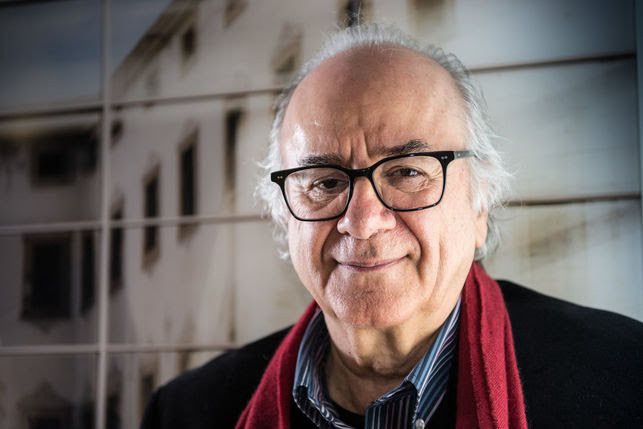
Em momentos sombrios como os nossos é imperativo escutar vozes de lucidez de pessoas que conhecem nosso país. Entre tantas, sobressai o sociólogo português Boaventura de Souza Santo.É considerado uma das melhores cabeças que pensam o mundo, a globalização, a partir do Grande Sul. Fez sua tese morando numa favela do Brasil, para conhecer por dentro o mundo da pobreza. Professor em Colimbra e em Wisconsin-Madison nos USA, ganhou fama mundial por ter introduzido várias categorias sociológicas novas para entender o mundo novo que está nascendo. Publicamos aqui seu apelo aos democratas do Brasil pelo amor que tem por nosso país e por seu povo. Lboff

Dirijo-me aos democratas brasileiros porque só eles podem estar interessados no teor desta mensagem. Vivemos um tempo de emoções fortes. Para alguém, como eu e tantos outros que nestes anos acompanhamos as lutas e iniciativas de todos os brasileiros no sentido de consolidar e aprofundar a democracia brasileira e contribuir para uma sociedade mais justa e menos racista e menos preconceituosa, este não é um momento de júbilo. Para alguém, como eu e tantos outros que nas últimas décadas se dedicaram a estudar o sistema judicial brasileiro e a promover uma cultura de independência democrática e de responsabilidade social entre os magistrados e os jovens estudantes de direito, este é um momento de grande frustração. Para alguém, como eu e tantos outros que estiveram atentos aos objetivos das forças reacionárias brasileiras e do imperialismo norte-americano no sentido de voltarem a controlar os destinos do país, como sempre fizeram mas pensaram que desta vez as forças populares e democratas tinham prevalecido sobre eles, este é um momento de algum desalento.

As emoções fortes são preciosas se forem parte da razão quente que nos impele a continuar, se a indignação, longe de nos fazer desistir, reforçar o inconformismo e municiar a resistência, se a raiva ante sonhos injustamente destroçados não liquidar a vontade de sonhar. É com estes pressupostos que me dirijo a vós. Uma palavra de análise e outra de princípios da ação.

Porque estamos aqui? Este não é lugar nem o momento para analisar os últimos quinze anos da história do Brasil. Concentro-me nos últimos tempos. A grande maioria dos brasileiros saudou o surgimento da operação Lava Jato como um instrumento que contribuiria para fortalecer a democracia brasileira pela via da luta contra a corrupção. No entanto, em face das chocantes irregularidades processuais e da grosseira seletividade das investigações, cedo nos demos conta de que não se tratava disso mas antes de liquidar, pela via judicial, não só as conquistas sociais da última década como também as forças políticas que as tornaram possíveis. Acontece que as classes dominantes perdem frequentemente em lucidez o que ganham em arrogância.

A destituição de Dilma Rousseff, a Presidente que foi talvez o Presidente mais honesto da história do Brasil, foi o sinal que a arrogância era o outro lado da quase desesperada impaciência em liquidar o passado recente. Foi tudo tão grotescamente óbvio que os brasileiros conseguiram afastar momentaneamente a cortina de fumo do monopólio mediático. O sinal mais visível da sua reação foi o modo como se entusiasmaram com a campanha pelo direito do ex-Presidente Lula da Silva a ser candidato às eleições de 2018, um entusiasmo que contagiou mesmo aqueles que não votariam nele, caso ele fosse candidato. Tratou-se pois de um exercício de democracia de alta intensidade.

Temos, no entanto, de convir que, da perspectiva das forças conservadoras e do imperialismo norte-americano, a vitória deste movimento popular era algo inaceitável. Dada a popularidade de Lula da Silva, era bem possível que ganhasse as eleições, caso fosse candidato. Isso significaria que o processo de contra-reforma que tinha sido iniciado com a destituição de Dilma Rousseff e a condução política da Lava Jato tinha sido em vão. Todo o investimento político, financeiro e mediático teria sido desperdiçado, todos os ganhos econômicos já obtidos postos em perigo ou perdidos. Do ponto de vista destas forças, Lula da Silva não poderia voltar ao poder. Se o Judiciário não tivesse cumprido a sua função, talvez Lula da Silva viesse a ser vítima de um acidente de aviação, ou algo semelhante. Mas o investimento imperial no Judiciário (muito maior do que se pode imaginar) permitiu que não se chegasse a tais extremos.

Que fazer? A democracia brasileira está em perigo, e só as forças políticas de esquerda e de centro-esquerda a podem salvar. Para muitos, talvez seja triste constatar que neste momento não é possível confiar nas forças de direita para colaborar na defesa da democracia. Mas esta é a verdade. Não excluo que haja grupos de direita que apenas se revejam nos modos democráticos de lutar pelo poder. Apesar disso, não estão dispostos a colaborar genuinamente com as forças de esquerda. Por quê? Porque se vêem como parte de uma elite que sempre governou o país e que ainda não se curou da ferida caótica que os governos lulistas lhe infligiram, uma ferida profunda que advém do facto de um grupo social estranho à elite ter ousado governar o país, e ainda por cima ter cometido o grave erro (e foi realmente grave) de querer governar como se fosse elite.

Neste momento, a sobrevivência da democracia brasileira está nas mãos da esquerda e do centro-esquerda. Só podem ter êxito nesta exigente tarefa se se unirem. São diversas as forças de esquerda e a diversidade deve ser saudada. Acresce que uma delas, o PT, sofre do desgaste da governação, um desgaste que foi omitido durante a campanha pelo direito de Lula a ser candidato. Mas à medida que entrarmos no período pós-Lula (por mais que custe a muitos), o desgaste cobrará o seu preço e a melhor forma de o estabelecer democraticamente é através de um regresso às bases e de uma discussão interna que leve a mudanças de fundo. Continuar a evitar essa discussão sob o pretexto do apoio unitário a um outro candidato é um convite ao desastre. O patrimônio simbólico e histórico de Lula saiu intacto das mãos dos justiceiros de Curitiba & Co. É um patrimônio a preservar para o futuro. Seria um erro desperdiçá-lo, instrumentalizando-o para indicar novos candidatos. Uma coisa é o candidato Lula, outra, muito diferente, são os candidatos de Lula. Lula equivocou-se muitas vezes, e as nomeações para o Supremo Tribunal Federal aí estão a mostrá-lo.

A unidade das forças de esquerda deve ser pragmática, mas feita com princípios e compromissos detalhados. Pragmática, porque o que está em causa é algo básico: a sobrevivência da democracia. Mas com princípios e compromissos, pois o tempo dos cheques em branco causou muito mal ao país em todos estes anos. Sei que, para algumas forças, a política de classe deve ser privilegiada, enquanto para outras, as políticas de inclusão devem ser mais amplas e diversas. A verdade é que a sociedade brasileira é uma sociedade capitalista, racista e sexista. E é extremamente desigual e violenta. Entre 2012 e 2016 foram assassinadas mais pessoas no Brasil do que na Síria (279.000/256.000), apesar de este último país estar em guerra e o Brasil estar em “paz”. A esquerda que pensar que só existe política de classe está equivocada, a que pensar que não há política de classe está desarmada.

***

boaventura_01
@Metabolic Rifts, Porto

Boaventura de Sousa Santos nasceu em Coimbra, 15 de Novembro de 1940. É doutor em Sociologia do Direito pela Universidade de Yale (1973), além de professor catedrático jubilado da Faculdade de Economia da Universidade de Coimbra e distinguished legal scholar da Universidade de Wisconsin-Madison. Foi também global legal scholar da Universidade de Warwick e professor visitante do Birkbeck College da Universidade de Londres. Seu livro mais recente é A difícil democracia: reinventar as esquerdas (Boitempo, 2016). Pela Boitempo, publicou também Renovar a teoria crítica e reinventar a emancipação social (2007). Colabora com o Blog da Boitempo esporadicamente.

Animals: endowed with rights

Whether one acknowledges the dignity of animals depends on that person’s paradigm (vision of the world and values). Two paradigms have been handed down to us since the most remote antiquity, and still endure today.

The first partadigm understands the human being as part of nature and, with her, another inhabitant participating in the immense community of life that has existed for 3.8 billion years. When the Earth was nearly complete, with all her biodiversity, we arose on the evolutionary scene as one more member of nature, one endowed with a singular characteristic; that of having the capacity to feel, think, love and care. This does not give us the right to consider ourselves masters of the reality that preceded us and that created the conditions for us to emerge. The culmination of evolution occurred with the appearance of life, not with the human being. Human life is a sub-chapter in the main chapter of life.

The second paradigm starts with the idea that the human being is the apex of evolution, and that all things are at his disposal to dominate and use as the human being pleases. He forgets that to emerge, humans needed all the natural factors that preceded us. Humans joined everything already in existence; he was not placed above everything else.

The two positions have had representatives throughout the centuries, who exhibited very different behavior. The first position finds its best manifestation in the Orient, with Buddhism and the religions of India. Among us, besides Bentham, Schopenhauer and Schweitzer, its main proponent was Francis of Assisi, considered by Pope Francis in his Encyclical letter “On the caring for the Common Home” as someone «who lived a marvelous harmony with God, with others and with himself… an example of integral ecology» (n. 10). But this tender and fraternal behavior of fusion with nature is not the vision that prevailed.

In the second paradigm, the human being is the “master and lord of nature”, as Descartes put it, who made himself hegemonic. It sees nature from the outside, not part of nature, but as her master. This is the root of modern anthropocentrism. Humans dominated nature, subjugated peoples and exploited all the Earth’s resources, such that we now have reached a critical point of insustainability. Its representatives are the founding fathers of the modern paradigm, such as Newton, Francis Bacon and others, and contemporary industrialism, which views nature merely as a collection of resources for its enrichment.

The first paradigm –the human being as part of nature– enjoys a fraternal and amicable relationship with all beings. The Kantian principle must be widened: not only is the human being an end in itself, but so are all living beings, which therefore must be respected. There is scientific data favoring this position. When Drick and Dawson decoded the genetic code in the 1950’s, it was shown that all living beings, from the most ancient amoeba, through the great jungles and the dinosaurs, and down to us, the human beings, possess the same basic genetic code: the 20 amino acids and four phosphoric bases. This led The Earthcharter, one of UNESCOS’ principal documents on modern ecology, to affirm that «we have a kinship spirit with all life» (Introduction). Pope Francis is more emphatic: «we walk together as brothers and sisters, and a link binds us with tender affection to Brother Sun, Sister Moon, to Brother River and Mother Earth» (n. 92). From this perspective, all beings, since they are our cousins and bothers and sisters, and possess their own form of sensibility and intelligence, are endowed with dignity and rights. If Mother Earth has rights, as the United Nations has affirmed, they, as living parts of the Earth, participate in those rights.

The second paradigm –the human being as the master of nature– has a utilitarian relationship with other beings and animals. On learning how cattle and poultry are slaughtered, we are terrified by the suffering to which they are subjected. The Earthcharter warns us: «wild animals must be protected from hunting methods, traps and fishing that cause extreme, prolonged and avoidable suffering» (n. 15b). Here we remember the wise words of the Suquamish-Duwamish Elder Grandfather Si’aul, aka, Seattle, (1854): «What is man without the other animals? If all the animals disappeared, man would die of spiritual loneliness. Because what happens to the animals will also happen to man. We all are related».

If we do not convert to the first paradigm, we will continue with the barbarity against our brothers and sisters in the community of life, the animals. As ecological consciousness grows, we become ever more aware that we are related, and as such we should treat each other as Saint Francis treated the brother wolf of Gubbio, and the simpler beings of nature.

Leonardo Boff Eco-Theologian-Philosopher Earthcharter Commission

Free translation from the Spanish sent by
Melina Alfaro, alfaro_melina@yahoo.com.ar.
Done at REFUGIO DEL RIO GRANDE, Texas, EE.UU.

What to think of the new forms of cohabitation

Besides the marriage-families constituted in the socio-juridic and sacramental framework, more and more appear families of simple cohabitation and free unions that are mutually agreed outside the traditional framework that exist as long as the consensus lasts giving origin to the common law non conjugal families.

All over the world grow unions of homoaffective persons, (man-man and woman-woman), who struggle for the creation of a juridical framework that guarantees them stability and social recognition.

It is not licit to pass ethical judgement about these forms of cohabitation without having tried before to understand the phenomenon. Concretely, how to think of the family seeing all the varied forms in which a family is presently being structured?

Marco Antonio Fetter, a Brazilian specialist creator of the first University of the Family, in Porto Alegre, Brazil, that offers all the academic degrees, defines family this way: «the family is a unit of persons with common objectives and with links and strong emotional bonds each one of them with a defined role, where naturally appear the roles of father, mother, children and siblings»(Correio Riograndense, 29/10/2003,11).

On the other hand, an important transformation has happened in the family with the apparition of preservatives and contraceptives, now already incorporated into the culture as something normal and that help avoid AIDS and other sexually transmitted diseases. Moreover, with preservatives and the pill, sexuality has been separated from procreation and from steady love.

Frequently now, sexuality and marriage as well are seen as opportunities for personal realization, without including procreation. Conjugal sexuality gains intimacy and spontaneity because with contraceptives and family planning is liberated from non desired and unwanted pregnancies. The children are wanted and decided in common agreement.

The emphasis in sexuality as personal realization has made possible the apparition of forms of cohabitation not strictly matrimonial. Expression of this are the consensual and free unions without any other compromise than the mutual realization of the partners or of the homoaffective cohabitation.

Such practices, new as they are, must also include an ethical and spiritual perspective. It is important to care that they are expressions of love and mutual trust. From a Christian point of view of the phenomenon, if there is love, has to do with God, because God is love (1John 4,12.16). Hence, neither prejudices nor discrimination are correct. Better, there must be respect and openness to understand those facts and also place them before God. If the persons in the compromise do it this way and assume that relationship with responsibility, religious and spiritual relevance to that relationship can not be denied. An atmosphere that helps overcome the temptation of promiscuity appears, stability is enforced and social prejudices diminished.

If there is sex with no procreation, procreation without sex can exist. Is the complex problem of in vitro procreation, of artificial insemination and of the «uterus for rent». All this question is extremely polemic in ethical and spiritual terms, and there seems not to be consensus.

The official Catholic position often tends to a naturalist vision that demands, with respect to procreation, the direct sexual relationship of the spouses when, in fact, is reasonable to admit the legitimacy of the union of an ovule of the wife with a sperm of the husband in an artificial form; and later to implant in the uterus the fecund ovule, as long as such procedure is justified by love.

About this complex question we rely on the opinion of a Catholic Dutch specialist:

«The technification of human procreation is not free of problems. Artificial insemination in its different forms, the fecundation in vitro and the transplant of embryos permit us to have a pregnancy out of the security frameworks of the traditional marriage. Thus, is possible that a woman gets pregnant by the artificial insemination of the sperm of an anonymous donor; sperms and ovules can be unified in vitro, and later implanted them in the woman, a child can be had through a «mother of rent». These technical means are not at our disposal in a neutral form, as a capability merely instrumental: an ethical responsibility must be present in their utilization» («Concilium» magazine, 260, 1995, 36). These are means at the service of parental love.

Is not enough artificial procreation. The human being has the right to be humanly born, from a father and a mother that in love desired him. If for any problem a technical intervention is used that never has to lack a true human inspiration and a well based ethical purpose.

The son or daughter born that way must be able to have a name and last name and be socially welcome. The social identity, in these cases, is anthropologically more important than the biological identity. Moreover, is important that the creature is included in a familiar environment so that, in the process of individuation, the complex of Electra in relation to the mother or of Oedipus in relation to the father, can successfully be realized. This way irreparable damages are avoided.

Finally, life must be always understood as the culmination of the cosmogenesis and the best gift of the Creator.

Leonardo Boff Eco-Theologian-Philosopher Earthcharter Commission

Free translation from the Spanish sent by
Melina Alfaro, alfaro_melina@yahoo.com.ar.
Done at REFUGIO DEL RIO GRANDE, Texas, EE.UU.