CONCLAMAÇÃO PELA VIDA E PELA DEMOCRACIA

Este texto, CONCLAMAÇÃO Pela Vida e pela Democracia, nasceu como expressão de amor à pátria, ao povo brasileiro, especialmente, aos milhões de empobrecidos e marginalizadso que passam fome ou se encontram em grave insuficiência nutricional e às famílias que choram as mais de 676 mil vítimas do Coronavírus, a maioria delas, evitáveis.

Nasceu também como protestação contra os verdadeiros crimes cometidos pelo atual presidente contra o povo, os pobres, os povos indígenas, negros,quilombolas,  mulheres, de outra opção sexual e jovens, contra a natureza e a própria humanidade. Especialmente a forma torpe como enxovalhou membros do STF e do TSE e a segurança das urnas eletrônicas diante de 40 embaixadores estrangeiros convocados ao palácio presidencial.

O grande desafio consiste na reconstrução do que foi literalmente destruído e na criação de uma atmosfera de civilidade, de dignidade e de irmandade entre todas as pessoas.

Esse é o sentido desta CONCLAMAÇÃO Pela Vida e pela Democracia ssubscrita principalmente por pessoas ligadas aos direitos humanos, ao trabalho com comunidades de base, por professores universitários, psicólogas, por teólogos e teólogas de várias igrejas, filósofos, por intelectuais e pessoas do meio popular.

               CONCLAMAÇÃO PELA VIDA E PELA DEMOCRACIA

Vivemos tempos dramáticos, como mundo e como país, tempos que nos obrigam a fazer uma opção, especialmente pela forma como o presidente enxovalhou instituições nacionais e pôs em dúvida a segurança das urnas eletrônicas diante de 40 embaixadores de países estrangerios. Somamo-nos à indignação que veio das principais instâncias do país. Por imperativo humano, ético e também espiritual afirmamos:

Somos pela vida, em toda a sua diversidade, especialmente pela vida humana a partir daqueles que menos vida têm, condenados a morrer antes do tempo.

Somos contra a morte produzida pela violência secularmente praticada contra pobres, negros, indígenas, mulheres e LGBTIQ+, e hoje agravada, pois insuflada a partir de cima e naturalizada. Nos insurgimos contra a morte das mais de 676 mil pessoas vitimadas pela Covid-19 que, em grande parte, poderia ter sido evitada se não fosse a irresponsabilidade do governo.

Somos pelo ato de amar que move o céu, as estrelas e nossos corações.

Somos contra armar a população, o que fez disparar o número de mortes violentas na rua, no trânsito e nas casas, como claramente ocorreu em Foz do Iguaçu-PR.

Somos contra o ódio, a difamação, os maus hábitos e a violência simbólica, difundidos pelas redes sociais, Rádios, TVs e imprensa.

Somos pela verdade contra toda a mentira, as fake news e o ocultamento da realidade, como políticas de estado. Consequentemente condemos  orçamento secreto  parlamentar  sem transparência nem indicação clara da aplicção dos bilhões de reais  liberados.

Somos pelo cuidado e pela preservação de nossas riquezas naturais, de nossas florestas e biomas, Amazônia, Mata Atlântica, Cerrado, Caatinga e Pantanal, cada vez mais agredidos e devastados; de nossas águas e solos contaminados pelo excesso de adubação química e dos agrotóxicos.

Somos contra a sistemática devastação de nossos ecossistemas, via mineração, garimpos ilegais em terras indígenas, madeireiras, avanço das pastagens e do gado, da soja, algodão e outras monoculturas do agronegócio, voltadas para a exportação em detrimento da produção de alimentos para a população. Com a disparada dos preços, a fome voltou a rondar a mesa das famílias.

Somos pela defesa de nosso rico patrimônio cultural, pelo incentivo à educação de qualidade para todos, à ciência e à tecnologia para estarmos à altura da complexidade e das demandas de nossa sociedade.

Por esta razão, somos contra e condenamos veementemente a desmonte oficialmente conduzido de nosso  sistema educacional, de nossas instituições científico-técnicas, das universidades públicase do menosprezo de nossas  tradições populares, afro e indígenas.

Somos contra a privatização dos bens que pertencem a todo o povo, como a água, as terras públicas, as áreas de proteção ambiental, a energia, a Eletrobrás e a Petrobrás.

Somos contra um chefe de estado que não pratica as virtudes que deveriam ser abraçadas pelos cidadãos e pelas cidadãs, que é deseducado, usa palavras de baixo calão, exalta a violência e até mesmo a tortura e está permanentemente em conflito com as instituições que regem um estado democrático de direito.

Somos contra as constantes ameaças de uma ruptura institucional, por parte do chefe de estado, ao arrepio da constituição e no desrespeito às leis.

Somos pela democracia como valor universal a ser vivido em todas as instâncias e como forma de organização social, que busca representar os interesses gerais da população e não os interesses dos poderosos, com privilégios acobertados pelo orçamento secreto. Toda destinação de dinheiro público deve ser transparente, acompanhada pelos cidadãos, e auditada pelos Tribunais de Conta e controlada pelo parlamento e por uma imprensa livre.

Somos pela plena liberdade democrática na manifestação das opiniões, no direito de frequentar todos os espaços públicos e de ter acesso aos bens comuns.

Cultivamos a esperança de que a verdade triunfará sobre a falsidade e de que a convivência pacífica entre todos e todas corresponda ao anelo mais profundo do nosso ser.

Estimamos que a democracia representa uma das melhores formas de as pessoas participarem na construção do bem comum e construir relações que propiciem uma vida mais humana e espiritual e que torne mais fácil o amor, a solidariedade e o cuidado recíproco de uns pelos outros e pela Mãe Terra.

Estamos, finalmente, seguros de que a Vida seguirá abrindo uma senda de esperança no caminhar de nossa atribulada sociedade brasileira.

Petrópolis, 21 de julho de 2022.

Maria Helena Arrochellas– Diretora do Centro Alceu Amoroso Lima para a Liberdade/CAALL, Coordenadora Editorial do Boletim REDE de Cristãos e membro do grupo Emaús.

Leonardo Boff – Teólogo,filósofo e Membro da Iniciativa Internacional da Carta da Terra, do Centro de Defesa dos Direitos Humanos/CDDH de Petrópolis, escritor  e  do grupo Emaús.

Márcia Maria Monteiro de Miranda – Educadora popular, Teóloga, Co-fundadora do CDDH de Petrópolis e membro do grupo Emaús.
José Oscar Beozzo– Historiador, Coordenador Geral do Centro Ecumênico de Serviços à Evangelização e Educação Popular/CESEEP e membro do grupo Emaús.

Celso Carias –  professor universitário e do grupo Emaús.

Aurelina de Jesus Cruz Carias (Leu Cruz) Educadora, liturgista, animadora da Comunidade Batismo do Senhor – Duque de Caxias, RJ e membro do grupo Emaús.

Francisco Assis Dias de Araujo

Dayse de Paula Silva

Vilma Baptista

Márcia Cristina Ferreira

Marlene Bartolomeu de Oliveira Silva

Mariana Freire Lopes – Raiz Orgânica Agricultura

Valmira Freire Lopes

Maria Amélia Clemente Coelho

Jorge Luiz de Souza

Jorge Manoel Coelho

Wagner Jorge Clemente Coelho

Tatiana Coelho Gomes da Silva

Vera Neves Pereira

Roberto Martins Gomes da Silva

Umbandistas de Duque de Caxias, RJ

Maria de Lourdes Cruz

Anna Maria Hassel

Marta Aparecida Batista da Silva

Ildete Ferreira Neto

Flavio Luiz Oliva

Rafael Cruz Carias

Marcelo Barros – Monge, escritor, Teólogo niilista e membro do Grupo de Emaus.

Sarah Silva Telles – Socióloga, PUC Rio.

Ivo Lesbaupin -Sociólogo, coordenador do Iser Assessoria e do Gruupo Emaús.
Cesar Kuzma – Teólogo, professor da PUC-Rio, presidente da SOTER e membro do Grupo Emaús.

Rosemary Fernandes da Costa – Professora, assessora do MEL (Movimento de Juventudes e Espiritualidade Libertadora), membro do Grupo Emaús e da Comunidade Batismo do Senhor
Maria Clara Bingemer – Teóloga, Professora do Dpto. Teologia da PUC-Rio.

Cláudio Ribeiro – Pastor Metodista, teólogo, membro do grupo Emaús
Edward Guimarães – Teólogo e Professor Universitário PUC MG
Luiz Carlos Suzin – Teólogo e Professor Universitário PUC Rio Grande do Sul. Professor permanente e pesquisador do programa de pós-graduação em Teologia.
Edson Fernando de Almeida – Teólogo, Pastor da Igreja Cristã de Ipanema, professor universitário e membro do Grupo de Emaús

Anna Paula Florenzano de Almeida – pela Universidade Estadual de Londrina – PR e Pesquisadora Graduada em do Laboratório Interdisciplinar de Pesquisa em Atenção Primária à Saúde (LIPAPS/UERJ).

Rosi Schwantes – Doutora em Ciências da Religião e psicóloga.
Maurício Abdala -Professor de filosofia da UFES e membro da rede nacional de Assessores do Cefep.

Maria Tereza Sartorio – Pedagoga, membro da coordenação do Movimento Nacional Fé e Política, Juiz de Fora – MG

Pedro A. Ribeiro de Oliveira – Sociólogo, professor aposentado da UFJF e PUC-Minas, membro da coordenação do Movimento Nacional Fé e Política, de Juiz de Fora – MG.

Pastora Romi Márcia Bencke – Pastora da IECLB – Conselho Nacional de Igrejas Cristãs.

.
God Will Not Be Mocked

The Rev. Dr. Walter Brueggemann
Organization: Columbia Theological Seminary, Decatur, GA
Denomination: United Church of Christ

Church Anew
Organization: Church Anew – A Ministry of St. Andrew Lutheran Church, Eden Prairie, MN
Denomination: Evangelical Lutheran Church in America

Those who mock the poor insult their Maker;

Those who are glad at calamity will not go unpunished

(Proverbs 17:5; see 14:21, 22:9, 28:3).

The claims and contours of liberation theology are now clearly articulated. In the 1960s and 1970s Roman Catholic theologians, priests, and bishops in Latin America freshly articulated a way to think, speak, and act about social power, social access, and social resources according to the claims of the gospel. That formulation orbits around the phrase, “God’s Preferential Option for the Poor.” That phrase voices the then scandalous, and still scandalous claim that God is partial to poor people, takes poor people as the object of special care and compassion, and sides with poor people in the class war that the powerful constantly wage against the powerless and resourceless. This interpretive stance, reiterated in many variations, causes scripture to be read very differently, and the mission of the church to be understood and practiced very differently.

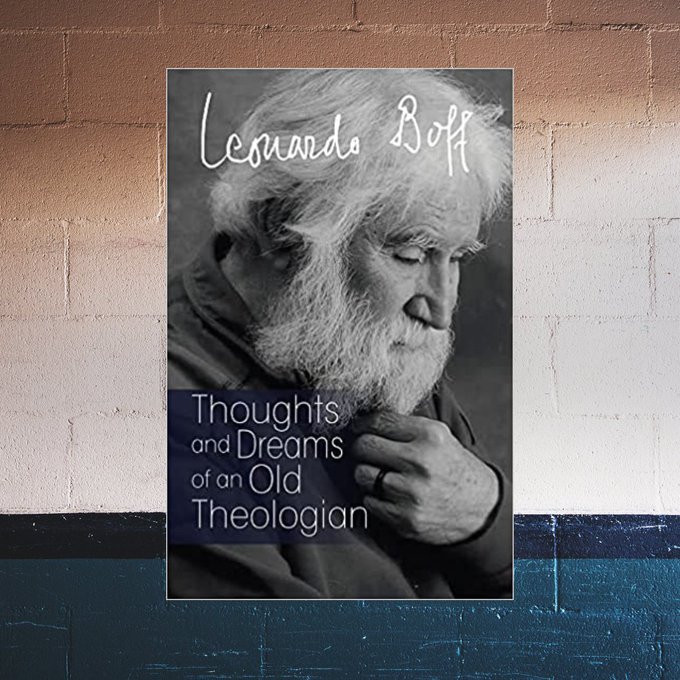
The gains for the church in this articulation are immense. At the same time, however, it appears to me that this hermeneutical stance has not much penetrated the thinking, talk, or action of the church, including the Protestant denominations that I know best. It certainly has not impinged upon so-called evangelical churches that continue in their privatistic, other-worldly ways. And it has not much influenced progressive churches that mostly remain adamantly “liberal” in practice, something very different from “liberationist.” Because of the slowness of the church’s embrace of a liberationist perspective (and in some cases downright resistance), my simple intent here is to call attention to a new book written by Leonardo Boff in his old age, Thoughts and Dreams of an Old Theologian (Orbis Books, 2022). The book is readily readable and accessible, and will serve well as a study guide for a congregation. Boff, a Brazilian, from the outset has been among the earliest and most important voices in calling the church to liberationist perspective and practice. That perspective inevitably has led to a critical stance against the imperial propensity of the Roman Catholic Church, a stance that Boff labels “institutional arrogance.”

That critical stance has caused Boff (and his brother Clodovis, also a theologian) to be twice silenced by the Vatican under John Paul II. Nonetheless, Boff has continued his courageous work as a theologian and a teacher, who now counts Pope Francis as an ally in the work of liberation.

The book, in nine accessible succinct chapters, sums up a lifetime of research, teaching, and testimony. The outline of the book exhibits Boff following the contours of orthodox Trinitarianism, while he unpacks the tradition in fresh and telling ways. In his brief statement on the intention of Jesus, Boff appeals to “Our Father” and its petition for “our bread” (45). He identifies “three fundamental and inevitable hungers”:

The first hunger is for a meeting with Someone good…our kind Daddy (Abba).

The second hunger is the infinite hunger that is never satisfied, the dream of a full meaning for life… This comes with the name Kingdom of God.

There is yet another hunger… This is our daily bread. Without this material basis, talking about our Father and the Kingdom loses its meaning.

Boff summarizes his view of the church that has gotten him into so much trouble with the hierarchy. He pairs the “The Pauline Dimension (Charism) and the Petrine Dimension (Power)” (62). He distinguishes between “power as service” in Jesus and power “as control” in the Petrine Roman model of the church (65). He critiques the self-absorbed power-seeking of the Petrine Church and contrasts it to “the “Christianity of Popular Culture” in which the practical faith of the church, with its compassion and social awareness, does not linger over the perspective of the clergy elite. For good reason, Boff welcomes the great Dogmatic Constitution of the Church (Lumen Gentium) in Vatican II that saw “the people of God” as moving on in faith without excessive respect for the hierarchical structures of the church (71).

The church is not first and foremost a priestly body that creates communities, but the community of those who responded with faith to the call of God in Jesus through his Spirit. The network of these communities forms the People of God because this is the result of a communal, participatory process… Others arise that are more sporadic, but equally important for maintaining the life of the communities; the service of charity, concern for the poor, the promotion of social justice, particularly human, individual, and social rights, and the rights of nature and Mother Earth (74).

By contrast,

In an ecclesiology that regards the church as a hierarchical society (Petrine), there is no salvation for women in the sense of integration into community services and gifts (Pauline). They are forever marginalized, if not excluded. This state of affairs is incompatible with an ecclesiology that is minimally based on the gospel, which has to incorporate human values because they are also divine values. This is the fundamental reason why we should abandon an exclusively Petrine ecclesiology based on society and hierarchy and build up a Pauline ecclesiology, of community and the People of God (75).

Another recurring, crucial accent in Boff’s work is his deep concern for the earth in his “ecotheology.” He sees in our current thinking and practice two “cosmologies in conflict.” One is a “cosmology of conquest, of power as domination” (83). The alternative is a cosmology “gaining strength, the cosmology of transformation and liberation.” This latter option has received compelling articulation in the encyclical of Pope Francis, Laudato Si, “On Care for our Common Home” (2015). Boff pays attention to the processes of living organisms that grow and are transformed at death:

Behind all beings acts Fundamental Energy, also called the Nurturing Abyss of all being, which gave origin to the universe and keeps it in being, bringing into existence new beings. The most spectacular of these is the living Earth and we human beings with our component of consciousness and intelligence and the mission to care for the Earth (85).

Boff’s critique of the cosmology of domination is acute:

It started from a false premise that we could produce and consume without limit on a limited planet. The premise also assumes that the fictitious abstraction known as money represents the highest value and that competition and the pursuit of individual interest will result in general well-being. As I described earlier, it takes the form of a cosmology of domination. This cosmology has brought the crisis into the sphere of ecology, politics, ethics, and now economics. The eco-feminists have pointed out the close connection between anthropocentrism and patriarchy, which since Neolithic times has been doing violence to women and nature (86-87).

In his penultimate chapter Boff returns to his most elemental insistence:

The supreme and absolute principle of ethics is “Liberate the poor.” The principle is absolute because it governs actions always, in every place and for all. “Free the poor” presupposes (a) the condemnation of a social totality, of a closed system that excludes and produces poor people; (b) an oppressor who produces poor and excluded people; (c) poor people unjustly made poor and so impoverished; (d) taking into account the mechanisms that reproduce impoverishment; (e) the ethical duty to dismantle such mechanisms; (f) the urgency to build an escape route from the system that excludes people; and, finally (g) the obligation to bring about the new system in which all in principle have a role in participation, in justice and solidarity, including nature.

This ethics starts from the poor, but it is not just for the poor. It is for all, since no one looking at the face of an impoverished person can feel indifferent; everyone feels concerned. This ethics is fundamentally an ethics of justice, in the sense of restoring the recognition denied to the vast majority and including them in the society from which they feel—and indeed are—excluded (109).

At the outset of this piece I have placed a proverb that, well ahead of contemporary ecclesial formulation, had already seen the truth of God’s “preferential option for the poor.” The proverb asserts that God is particularly attached to and attentive to the poor, those who do not and cannot participate effectively in the production-consumption benefits of the economy.

I noticed the term “mock” in the proverb. The “mocking” of the poor is equivalent to insulting or scorning the creator who is the God of the poor. The equation is a remarkable formulation of a deep conviction of the gospel. We will do well to notice, in the context of this proverb, how it is that much church theology and practice have assumed that God and poor have no connection, as we have fashioned a faith that is individualized and privatized, or that is other-worldly in its escapism. The proverb insists otherwise. It affirms the inevitable, inescapable linkage of God to the economic realities of society, to the political reality that acknowledges not only the presence of the poor, but the production of the poor through the management and manipulation of the economy. This simple equation in the proverb amounts to a critical principle that contradicts our systemic arrangements and summons us to an alternative practice and policy.

The term “mock” in the proverb has led me, perhaps inevitably, to the assertion of the apostle Paul in a quite different context:

Do not be deceived; God is not mocked, for you reap whatever you sow _(Galatians 6:7).

Paul’s assertion is an insistence that God’s world is morally coherent, that it is a network of causes and effects, of deeds and consequences that are connected and guaranteed by the ordering of the creator. Thus “sow…reap.” Paul affirms that this linkage, guaranteed by the creator God, cannot be outflanked because it embodies the will of the creator God. God’s intention cannot be avoided, and God’s will cannot be mocked, either through neglect or defiance.

Consider for a moment this juxtaposition of texts:

God is not mocked;

God is insulted by the mocking of the poor.

So yes, God is mocked:

God is mocked whenever poor people lack food;

God is mocked whenever the children of poor people must attend inadequate schools;

God is mocked whenever poor people cannot receive adequate or reliable health care;

God is mocked whenever poor people are left homeless and without safe shelter; God is mocked whenever some in our society lack the security and dignity for full humanness among us.

God is mocked by an economic system of greed that does not notice the poor, or the poor are excluded from the wellbeing of the economy. But God will not finally be mocked, because God is in resolved solidarity with poor people. It only remains for us to devise social perspectives, policies, and practices that are congruent with the holy God who is alive, well, and active in the world.

Boff has seen all of this with courageous clarity. Because he is a Roman Catholic teacher and theologian, he has been preoccupied with the way the Roman Catholic Church has colluded in this grotesque distortion of creaturely reality. But of course Boff’s concern runs well beyond the Roman Catholic Church. His insistence and anticipation
is that the “peoples church” cannot be contained in any fearful ideology and that the church may indeed impact the body politic in transformative ways.

Boff concludes his final chapter on spirituality with an appeal to the Eucharist:

And now, beloved Earth, I perform the action Jesus performed in the power of his Spirit. Like him, filled with spiritual power, I take you in my impure hands and pronounce over you the sacred words the universe was hiding and which you longed to hear: “Hoc est enim corpus meum: This is my Body. Hic est sanguis meus. This is my blood.” And then I felt it: what was earth was transformed into Paradise, and what was human life was transformed into divine life. What was bread became God’s body, and what was wine became sacred blood. Finally, Earth, with your sons and daughters, you came to God. You became God by participation. At home, at last. (172).

Boff’s book is well worth sustained attentiveness. It is a fierce wake-up call to the reality of God in whom we trust and to whom we respond; it is this God who will, in the end, not be mocked.

Walter Brueggemann

May 20, 2022

……

Walter Brueggemann is one of the most influential Bible interpreters of our time. He is the author of over one hundred books and numerous scholarly articles. He continues to be a highly sought-after speaker.

                                  “A world war in pieces” 

                                             Leonardo Boff

On June 29 of this year 2022 the Madrid Summit of the countries that make up the North Atlantic Treaty Organization (NATO), to which the United States belongs as the main actor, took place. The relationship between these European countries and the United States is one of humiliating subordination.

In this Summit a “New Strategic Commitment” was established that in a certain way goes beyond the European limits and covers the whole world. To reinforce this globalist strategy, Japan, South Korea, Australia and New Zealand were also present. There, something extremely dangerous and provocative of a possible third world war was declared. Russia was reaffirmed as the direct enemy and China as the potential enemy of tomorrow. Nato is not only defensive, it has become offensive.

The perverse category of the “enemy” has been introduced, who must be confronted and defeated. This brings us back to Hitler’s Nazi-fascist jurist Carl Schmitt (1888-1985). In his The Concept of the Political (1932, Vozes 1992) he says: “the essence of a people’s political existence is its ability to define friend and foe” (p.76). By defining the enemy, fighting it, “treating it as evil and ugly and defeating it,” this establishes the identity of a people.

Again Europe falls victim to its own paradigm of the will to power and power as domination over others including nature and life. This paradigm led to two major wars with 100 million victims in the 20th century alone. It seems that it has learned nothing from history and even less from the lesson that Covid-19 is harshly teaching, because it struck like a bolt of lightning over the system and its mantras.

It is now known that behind the war taking place in Ukraine there is a confrontation between the USA and Russia/China as to who holds the geopolitical dominance of the world. Up until now, a unipolar world was in force with the complete predominance of the USA over the course of history, despite the defeats suffered in various military interventions, always brutal and destructive of ancient cultures.

Our master in geopolitics Luiz Alberto Moniz Bandeira (1935-2017) in his meticulous book A desordem mundial:o espectro da total dominação (Civilização Brasileira, RJ 2016) pointed out, of course, the three fundamental mantras of the Pentagon and US foreign policy:

(1)one world-one empire (USA);

(2) full spectrum dominance: dominate the entire spectrum of reality, on land, sea and air with some 800 military bases distributed worldwide;

(3) destabilize all governments of countries that resist or oppose this strategy. No longer through a coup d’état with tanks in the streets, but through the defamation of politics, as the world of the dirty and corrupt, destruction of the reputation of political leaders and a political-media-legal articulation to remove the resisting heads of state.

Effectively this occurred in Honduras, in Bolivia and in Brazil with the coup of this nature against Dilma Rousseff in 2016 and subsequently with the unjust imprisonment of Lula. Now NATO’s New Strategic Commitment obeys this guideline, imposed by the USA, being valid for all under the pretext of security and stability in the world.

It so happens that the American empire is adrift, no matter how much one still appeals to its exceptionalism and to the “manifest destiny” according to which the USA would be the new people of God who will bring democracy, freedom and rights to the nations (always understood within the capitalist code).  However, Russia has recovered from the erosion of the Soviet empire, armed itself with powerful nuclear weapons and unassailable missiles, and is fighting for a strong position in the globalization process. China has emerged with new projects such as the silk road and as an economic power so powerful that it will soon surpass that of the United States. Parallel to this, the Global South has emerged, a group of BRICS countries in which Brazil participates. In other words, there is no longer a unipolar world, but a multipolar one.

This fact exasperates the arrogance of the Americans especially the neocon supremacists who claim it is necessary to continue the war in Ukraine to bleed and eventually wipe out Russia and neutralize China to confront it at a later stage. In this way – this is the neocon claim – one would return to the unipolar world under the dominance of the USA.

Here are the elements that could lead to a third world war, which would be suicidal. Pope Francis in his clear intuition has repeatedly spoken that we are already in a  world war in pieces”. For this reason, in an almost desperate tone (but always personally hopeful) he calls for “we are all in the same boat; either we all save ourselves or no one is saved” (Fratelli tutti n.32). He emphatically states that there are enough madmen in the Pentagon and in Russia who want this war that could There are enough madmen in the Pentagon and in Russia who want this war that could put an end to the human species.

In this way the lethal paradigm of the dominus (lord and master) of modernity is reinforced and the alternative of the frater (brother and sister), proposed by Pope Francis in his encyclical Fratelli tutti, inspired by the best man in the West, Francis of Assisi, is weakened. Either we all fraternize among ourselves and with nature, or else we are, in the words of UN Secretary Antonio Guterrez,”digging our own grave”.

Why has the will to power been chosen over the will to live of the pacifists Albert Schweitzer, Leon Tolstoy and Mahatma Gandhi? Why did Europe, which has produced so many sages and saints, choose this path that could devastate the entire planet to the point of making it uninhabitable? Has it taken as its guide the most dangerous of all archetypes, according to C.G.Jung, that of power, capable of destroying ourselves? I leave open this question that Martin Heidegger took to his grave without an answer. He said: “Only  God can save us”.

For it is in this living God and source of life that we place our hope. This goes beyond the limits of science and instrumental-analytical reason. It is the leap of faith that also represents a virtuality present in the global cosmogenic process.The alternative to this hope is darkness. But light has more right than darkness. In that light we believe and hope.

Leonardo Boff wrote The search for the just measure: the ambitious fisherman and the enchanted fish,Vozes 2022 and Inhabiting the Earth: which is the way to universal brotherhood? Vozes 2021; Thoughts and Dreams of an Old Theologian, Orbis Books,NY 2022.

“La Amazonia, santuario intangible de la Casa Común”

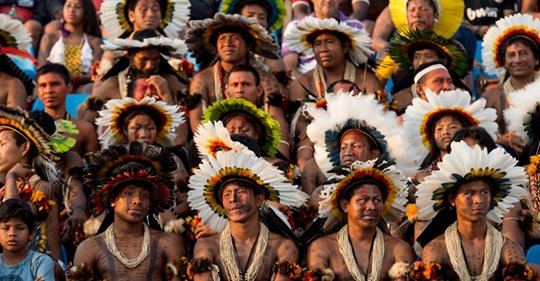
Después del asesinato del indigenista Bruno Pereira y del periodista inglés Dom Phillips en el Valle del Jari amazónico, el tema de la Amazonia ha vuelto a estar presente en las discusiones en Brasil y en el mundo. El agravamiento de los cambios climáticos ha sido señalado en el Informe del Grupo Intergubernamental de Expertos sobre el Cambio Climático (IPCC) en tres partes, alertando sobre la aceleración de los índices del calentamiento global. Es bueno oír la voz de aquellos que conocen la selva y se sienten parte de ella y captan cual es el sentido de aquel inmenso bioma que se extiende por 9 países. Con ocasión del Sínodo Panamazónico en Roma hace dos años, ellos entregaron al Papa Francisco el siguiente documento. Vale la pena oír su voz que viene de lo más profundo de la selva, voz que nunca o poquísimas veces fue escuchada. Tiene mucho que enseñarnos. Lboff

Este es el texto

          “Amazonia, santuario intangible de la Casa Común”

Saludamos la realización del Sínodo Panamazónico, una extraordinaria iniciativa del Papa Francisco por la cual esta importante asamblea colegial puede ver la problemática, analizar y evaluar la realidad a la luz de la Palabra y diseñar propuestas de acción. La iniciativa es una señal de esperanza en medio de los peligros que amenazan la supervivencia de la Casa  Común.

Pedimos al Papa Francisco y a todos los padres sinodales una declaración de la Amazonia como Santuario de la Casa Común.

Esta declaración sería un llamamiento espiritual y profético a todos los hombres y mujeres de buena voluntad para que se reconozca a la Amazonia, que se extiende por nueve países, como tierra santa, tan sagrada como la zarza ardiente de Moisés, que escuchó estas palabras de Dios “el lugar en el que estás es tierra santa”.

Sería un llamamiento a la conciencia universal y particularmente una petición a los organismos mundiales y a los estados responsables para que tomen las medidas urgentes y profundas que se hacen necesarias para salvar la vida en el planeta.

Las medidas deberían ser hechas y aplicadas con sentido de emergencia, considerando la velocidad y profundidad de los cambios adversos que están afectando cada vez más el clima, el hábitat y la vida de los pueblos amazónicos. Los objetivos deben enfocar el problema como un todo, pues todo está afectado sistémicamente. Han sido impactadas la flora y la fauna, el clima, el aire y el régimen de lluvias, comprometiendo el delicado equilibrio de todos los ecosistemas así como la vida de los pueblos amazónicos, cuyo exterminio está cada vez más próximo. Los pueblos no son una especie más del sistema. Son una obra magnífica de Dios, su imagen y semejanza. Ellos recibieron del Creador ese paraíso natural, lo disfrutan y lo protegen. Sabiéndose y sintiéndose uno con su mundo, saben cómo vivir sin comprometer su equilibrio.

Consecuentemente deberían implementarse las siguientes medidas.

1. Que se determinen legalmente los territorios suficientes para cada una de las distintas nacionalidades indígenas que habitan en la Amazonia, considerando su forma de vivir y de interactuar con la naturaleza.

2. Que la delimitación y la localización de los territorios sea tal que cada uno constituya un refugio seguro y la base de sustento y nutrición de los pueblos indígenas y la vida de la Amazonia.

3. Que se aplique a estos territorios una moratoria significativa de las actividades extractivistas que perjudican a la selva, también de las petroleras y de las mineras. De la misma manera, que se discuta seriamente la implementación de plantaciones y de cría de ganado que implican deforestación. Especialmente que se garantice la sostenibilidad de una eventual apertura de carreteras y de centrales eléctricas. En fin, que cesen las intervenciones predatorias tanto por parte de los gobiernos como de los grupos económicos interesados, nacionales e internacionales.

4. Que los pueblos indígenas puedan ejercer en estos territorios su autoridad, en el marco de la autodeterminación, del autogobierno, de la justicia ancestral de acuerdo con los usos y costumbres, y su vida política, cultural y espiritual en plenitud, sintiéndose parte de la nación.

Los acuerdos y pactos internacionales han resultado ineficaces porque no son obligatorios para los países. No se establecieron consecuencias por su no implementación. Aspiramos a que el Sínodo pueda demandar a los organismos internacionales para que pidan la aplicación efectiva y eficaz de las resoluciones tomadas.

Pedimos a los padres sinodales que actúen con energía para pedir que los estados ejecuten los compromisos contraídos en favor de la Amazonia mediante la adopción de mecanismos idóneos, independientes del vaivén de las coyunturas políticas.

De esta forma, la Declaración de Santuario será un instrumento idóneo para salvaguardar a los pueblos indígenas en aislamiento voluntario. Ellos son los grupos humanos más vulnerables de la Amazonia y del mundo, víctimas de la violencia del modelo económico global, depredador, impuesto. Al mismo tiempo comparecen como un testimonio de resistencia a esta globocolonización que uniformiza y mata la diversidad y la vida de la humanidad y del planeta.

“Para el indígena, la Tierra es madre. No se trata de una manera de hablar, no es puro sentimentalismo. El pueblo indígena considera, dentro de su núcleo cultural, dentro de su pensamiento, a la tierra como su madre… pensamiento que por otra parte se identifica con el pensamiento de las Sagradas Escrituras, en otras palabras, con el pensamiento de Dios” (Don Leonidas Proaño, obispo de Riobamba, Ecuador). Y el Papa Francisco en su encíclica Laudato Si sobre el cuidado de la Casa Común, añade todavía: «Para los indígenas, la Tierra no es un bien económico, sino un don de Dios y de sus antepasados que descansan en ella, un espacio sagrado pues lo necesitan para interactuar y para sustentar su identidad y sus valores; cuando permanecen en sus territorios, son precisamente ellos quienes los cuidan mejor» (n.146).

Queremos finalizar con las palabras de Bernardo Alves, del pueblo indígena Sateré-Mawé. “Los pueblos indígenas son bibliotecas vivas. Son guardianes, cuidadores y jardineros de la Amazonia y del planeta. Cada vez que un pueblo indígena es exterminado o desaparece, un rostro de Tupãna (Dios) muere y el cosmos, el planeta y toda la humanidad se empobrecen”.

Coordinadora- Pueblo Indio del Ecuador, Quito.

E-mail: fpie@fundaciónpuebloindio.org

Siguen más de 400 adhesiones de líderes indígenas, de muchos obispos, especialistas, militantes, misioneros y misioneras y representantes de los pueblos de la selva.