Foi eleito presidente do Brasil um figura sinistra, claramente possuída pela pulsão de morte e de ódio. Parece ter sofrido uma lobotomia pois estão estranhamente ausentes nele quaisquer sentimentos de empatia face às milhões de famílias enlutadas pela ação mortal do Covid-19 de quem se fez aliado, pois o minimizou, ridicularizou e combateu, sendo responsável por grande parte dos mais de 600 mil de vítimas. Fez da distorção da realidade, da fake news e da mentira método de governo. Semeou ódio e espírito de vingança entre seus seguidores e apoiou práticas criminosas com referência à Amazônia e discriminatórias à população indígena, negra, quilombola, de outra condição sexual e, em geral, aos pobres e marginalizados.
Esta triste figura que não possui um centro, conseguiu trazer à toma as várias sombras que acompanham a nossa sociedade, desde o genocídio indígena, da colonização, do escravismo e da dominação das elites opulentas que sempre ocuparam o estado e seus aparelhos em benefício próprio e à custa do bem estar das grandes maiorias. Liberou a dimensão dia-bólica (que divide) que habita nos porões escuros da psiqué pessoal e coletiva, a ponto de escantear a dimensão sim-bòlica (a que une), aquela que nos faz verdadeiramente humanos e sociáveis. O assassinato por razões políticas em Foz do Iguaçu por um bolsonarista, não exime de responsabilidade moral o presidente, pois ele deu a senha para o uso da violência.
A essa onda de ódio que está tomando várias nações no mundo mas de forma exponencial entre nós fez com que o eminente intelectual norte-americano Noam Chomsky, casado com uma brasileira, dissesse recentemente:”O Brasil é uma espécie de caso especial; raramente vi um país onde elementos da elite têm tanto desprezo e ódio pelos pobres e pelo povo trabalhador”.
A esse ódio devemos contrapor o amor, a amorosidade, na linguagem de Paulo Freire: promover aqueles valores que ele,seus filhos e seus seguidores jamais poderão usar: como o amor, a solidariedade, a fraternidade, o cuidado de uns para com os outros e para com a natureza, o direito de cada um de possuir um pedacinho de Terra, a Casa Comum, que Deus destinou a todos, uma moradia decente, o cultivo da compaixão para com os sofredores, o respeito, a compreensão, a renúncia a todo espírito de vingança, a transparência dos atos governamentais e o direito de ser feliz . Todos estes valores são negados teorica e praticamente pela verdadeira seita bolsonarista.
Abordarei o tema do amor não no sentido ético/moral, filosófico e teológico. Basear-me-ei somente em sua base biológica, tão bem formulada pelos cientistas Humberto Maturana e James D.Watson que junto com Francis Crick em 1953 descoficou o código genético.
O biólogo chileno Humberto Maturana, em seus estudos sobre a autopoiesis, vale dizer, sobre a auto-orgnização da matéria da qual resulta a vida, mostrou como o amor irrompe de dentro do processo evolucionário. Na natureza, afirma ele, se verificam dois tipos de conexões (ele chama de acoplamentos) dos seres com o meio e entre si: um necessário, ligado à própria subsistência e outro espontâneo, vinculado a relações gratuitas, por afinidades eletivas e por puro prazer, no fluir do próprio viver.
Quando esta última ocorre, mesmo em estágios primitivos da evolução há bilhões de anos, ai surge a primeira manifestação do amor como fenômeno cósmico e biológico. Na medida em que o universo se inflaciona e se complexifica, essa conexão espontânea e amorosa tende a incrementar-se. No nível humano, ganha força, faz-se um projeto consciente de vida e se torna o móvel principal das ações humanas (Cf.A árvore da vida: a base biológica do entendimento humano,1955).
O amor se orienta sempre pelo outro. Significa uma aventura abraâmica, a de deixar a sua própria realidade e ir ao encontro do outro, homem ou mulher, e estabelecer uma relação de afetividade, de aliança vital e de amor.
Whatson, em seu volumoso livro DNA:o segredo da vida (2005) afirma explicitamente:
”No DNA, o manual de instruções da vida humana, o amor pertence à essência do ser humano.Embora eu não seja religioso não deixo de ver elementos profundamente verdadeiros, escritos por São Paulo na sua primeira Carta aos Coríntio (13,1-13):’ainda que eu falasse línguas, a dos homens e as dos anjos…ainda que tivesse o dom da profecia, o conhecimento de todo os mistérios e de toda a ciência…se não tivesse o amor nada seria”. Continua Whatson: “Paulo, no meu entendimento, revelou com clareza a essência de nossa humanidade; o amor, esse impulso que nos faz ter cuidado com o outro, foi o que permitiu a nossa sobrevivência e sucesso no planeta; é esse impulso, creio, que salvaguardará nosso futuro…tão fundamental é o amor à natureza humana, estou certo de que a capacidade de amar está inscrita em nosso DNA; um Paulo secular como eu diria que o amor é a maior dádiva de nossos genes à humanidade”(p.413-414).
Como se depreende, quem faz tais afirmações são cientistas da maior seriedade e de reconhecimento internacional. O amor pertence à nossa natureza essencial. Agindo contra ele, como o faz o presidente e o bolsonarismo, se colocam na contramão da humanidade e da lógica do universo. Daí sua maldade e perversidade.
A sociedade brasileira não pode se construir sobre esta barbárie e anti-humanismo. O povo deverá rejeitar sua reeleição, não só por razões ético-morais-políticas e de bom senso, mas também por razões científicas.
De sua boca ouvi e de seu exemplo aprendi o que meu pai legou a toda família: “Quem não vive para servir, não serve para viver”. O atual presidente não serve o povo brasileiro, pior, nega aquela única energia que cresce e se renova quanto mais é vivida e doada: o amor. Amor, repito, negado ao povo brasileiro, à natureza e à Mãe Terra.
Leonardo Boff é teólogo,filósofo e escreve: Brasil: concluir a refundação ou prolongar a dependência, Vozes 2018; A busca da justa medida, Vozes 2022.
El día 29 de junio del corriente año de 2022 tuvo lugar en Madrid la Cúpula de los países que componen la Organización del Tratado del Atlántico Norte (OTAN) de la cual forma parte como actor principal Estados Unidos. De hecho, la relación entre estos países europeos y Estados Unidos es de humillante subordinación.
En esta Cúpula se estableció un “Nuevo Compromiso Estratégico” que en cierta forma va más allá de los límites europeos y alcanza a todo el mundo. Para reforzar esta estrategia globalista se hicieron también presentes Japón, Corea del Sur, Australia y Nueva Zelanda. Allí se declaró algo extremadamente peligroso y provocador de una eventual tercera guerra mundial. Se reafirmó como enemigo directo a Rusia y a China como enemigo potencial de mañana. La OTAN ya no se presenta solo como defensiva, ha pasado a ser ofensiva.
Se introdujo la categoría perversa del “enemigo” a quien hay que enfrentarse y derrotar. Eso nos remite al jurista nazi-fascista de Hitler, Carl Schmitt (1888-1985). En su Concepto de lo Político (1932, Vozes 1992) dice: “la esencia de la existencia política de un pueblo es su capacidad de definir al amigo y al enemigo” (p.76). Definido el enemigo, combátelo, “trátalo como malo y feo y derrótalo”, eso instaura la identidad de un pueblo.
Nuevamente Europa se vuelve víctima de su propio paradigma de voluntad de poder y del poder como dominación sobre los otros, incluso sobre la naturaleza y la vida. Este paradigma hizo que sólo en el siglo XX se produjeran dos grandes guerras con 100 millones de víctimas. Parece que ella no aprendió nada de la historia y mucho menos de la dura lección que la Covid-19 está dando, pues ha caído como un rayo sobre el sistema y sus mantras.
Hoy se sabe que detrás de la guerra que se está desarrollando en Ucrania se está produciendo el enfrentamiento entre Estados Unidos y Rusia/China, en el sentido de ver quién puede conseguir el dominio geopolítico del mundo. Hasta ahora había un mundo unipolar con predominio completo de Estados Unidos sobre el curso de la historia, no obstante las derrotas sufridas en varias intervenciones militares, siempre brutales y destructoras de antiguas culturas.
Nuestro maestro en geopolítica Luiz Alberto Moniz Bandeira (1935-2017) en su minucioso libro El desorden mundial: el espectro de la dominación total (Civilização Brasileira, RJ 2016) señaló claramente los tres mantras fundamentales del Pentágono y de la política exterior norteamericana: (1) un mundo-un imperio (USA); (2) full spectrum dominance: dominar todo el espectro de la realidad, en la tierra, en el mar y en el aire, con cerca de 800 bases militares distribuidas por todo el mundo; (3) desestabilizar todos los gobiernos de los países que resisten o se oponen a esta estrategia. No más vía golpe de estado con tanques en la calle, sino mediante la difamación de la política como el mundo de lo sucio y lo corrupto, la destrucción de la fama de los líderes políticos y una articulación político-mediático-jurídica para alejar a los jefes de estado resistentes. Efectivamente así ocurrió en Honduras, en Bolivia y en Brasil, con el golpe de esta naturaleza contra Dilma Rousseff en 2016 y posteriormente con la injusta prisión de Lula. Ahora el Nuevo Compromiso Estratégico de la OTAN obedece a esta orientación, impuesta por Estados Unidos, válida para todos bajo el pretexto de la seguridad y estabilidad del mundo.
Ocurre que el imperio norteamericano está a la deriva por más que se apele aún a su excepcionalismo y al “destino manifiesto” según el cual Estados Unidos sería el nuevo pueblo de Dios que llevará a las naciones la democracia, la libertad y los derechos (entendidos siempre dentro del código capitalista). Sin embargo, Rusia se rehízo de la erosión del imperio soviético, se ha armado con armas nucleares potentes, con misiles inatacables y disputa un amplio espacio en el proceso de globalización. China ha irrumpido con proyectos nuevos como la ruta de la seda y como una potencia económica tan poderosa que, dentro de poco, sobrepasará a la norteamericana. Paralelamente a esto surgió en el Sur Global, el grupo BRICS de países en el que participa Brasil. En otras palabras, ya no hay un mundo unipolar, sino multipolar.
Este hecho exaspera la arrogancia de los norteamericanos, especialmente la de los supremacistas neocons, que afirman que es necesario continuar la guerra en Ucrania para desangrar y eventualmente arrasar a Rusia y neutralizar a China para enfrentarse a ella en una fase posterior. De esta forma –esta es la pretensión neocon– se volvería al mundo unipolar.
Estos son los elementos que pueden producir una tercera guerra mundial, que será suicida. El Papa Francisco con su clara intuición ha dicho repetidas veces que estamos ya dentro de la “tercera guerra mundial a pedazos”. Por esta razón dice en tono casi desesperado (aunque personalmente esperanzado) que “estamos todos en el mismo barco; o nos salvamos todos o no se salva nadie” (Fratelli tutti n.32). No denuncia otra cosa, y lo hace con frecuencia, el eminente intelectual Noam Chomsky. Enfáticamente afirma que hay suficientes locos en el Pentágono y en Rusia que quieren esa guerra que puede poner fin a la especie humana. Es la razón que se ha vuelto irracional y enloquecida.
De esta forma se refuerza el paradigma letal del dominus (dueño y señor) de la modernidad y se debilita la alternativa del frater (hermano y hermana), propuesta por el Papa Francisco en su encíclica Fratelli tutti, inspirado en el mejor hombre de Occidente, Francisco de Asís. O nos confraternizamos todos entre nosotros y con la naturaleza o si no, estamos, en palabras del secretario de la ONU António Guterrez, cavando nuestra propia sepultura.
¿Por qué se optó por la voluntad de poder y no por la voluntad de vivir de los pacifistas Albert Schweitzer, Leon Tolstói y Mahatma Gandhi? ¿Por qué Europa, que produjo tantos sabios y santos y santas, escogió este camino que puede devastar todo el planeta hasta hacerlo inhabitable? ¿Acogió como orientador el más peligroso de los arquetipos, según C.G.Jung, el del poder capaz de autodestruirnos? Dejo abierta esta pregunta que Martin Heidegger se llevó sin respuesta a la tumba. Apesadumbrado dejó escrito para ser publicado después de su muerte: “Sólo un Dios podrá salvarnos”.
En ese Dios vivo y fuente de vida ponemos nuestra esperanza. Esto sobrepasa los límites de la ciencia y de la razón instrumental-analítica. Es el salto de la fe que también representa una virtualidad presente en el proceso global cosmogénico. La alternativa a esta esperanza son las tinieblas. Pero la luz tiene más derecho que las tinieblas. En esa luz creemos y esperamos.
*Leonardo Boff ha escrito La busca de la justa medida: el pescador ambicioso y el pez encantado, Vozes 2022, y Habitar la Tierra: ¿cuál es el camino para la fraternidad universal?, Vozes 2021.
Am 29. Juni 2022 fand in Madrid das Gipfeltreffen der Länder statt, die die Organisation des Nordatlantikvertrags (NATO) bilden, der die Vereinigten Staaten als Hauptakteur angehören. Die Beziehung zwischen diesen europäischen Ländern und den Vereinigten Staaten ist von demütigender Unterordnung geprägt.
Auf diesem Gipfel wurde ein “Neues Strategisches Engagement” festgelegt, das in gewisser Weise über die europäischen Grenzen hinausgeht und die ganze Welt umfasst. Um diese globalistische Strategie zu untermauern, waren auch Japan, Südkorea, Australien und Neuseeland anwesend. Dort wurde etwas äußerst Gefährliches und Provokatives im Hinblick auf einen möglichen dritten Weltkrieg erklärt. Russland wurde als direkter Feind und China als potenzieller Feind von morgen bekräftigt. Die Nato ist nicht nur defensiv, sie ist offensiv geworden.
Es wurde die perverse Kategorie des “Feindes” eingeführt, der bekämpft und besiegt werden muss. Dies bringt uns zurück zu Hitlers nazifaschistischem Rechtsgelehrten Carl Schmitt (1888-1985). In seinem “Begriff des Politischen” (1932, Vozes 1992) sagt er: “Das Wesen der politischen Existenz eines Volkes ist seine Fähigkeit, Freund und Feind zu definieren” (S.76). Indem es den Feind definiert, ihn bekämpft, “ihn als böse und hässlich behandelt und besiegt”, schafft es die Identität eines Volkes.
Wieder einmal fällt Europa seinem eigenen Paradigma des Willens zur Macht und der Macht als Herrschaft über andere, einschließlich der Natur und des Lebens, zum Opfer. Dieses Paradigma hat allein im 20. Jahrhundert zu zwei großen Kriegen mit 100 Millionen Opfern geführt. Es scheint, dass es nichts aus der Geschichte gelernt hat und noch weniger aus der Lektion, die Covid-19 mit aller Härte erteilt, denn sie schlug wie ein Blitz in das System und seine Mantras ein.
Es ist inzwischen bekannt, dass hinter dem Krieg in der Ukraine eine Konfrontation zwischen den USA und Russland/China um die geopolitische Vorherrschaft in der Welt steht. Bisher galt eine unipolare Welt mit der vollständigen Vorherrschaft der USA im Laufe der Geschichte, trotz der Niederlagen, die in verschiedenen militärischen Interventionen erlitten wurden, die immer brutal und zerstörerisch für alte Kulturen waren.
Unser Meister der Geopolitik Luiz Alberto Moniz Bandeira (1935-2017) hat in seinem akribischen Buch A desordem mundial:o espectro da total dominação (Civilização Brasileira, RJ 2016) natürlich auf die drei grundlegenden Mantras des Pentagon und der US-Außenpolitik hingewiesen:
(1) Eine Welt – ein Imperium (USA);
(2) Dominanz des gesamten Spektrums: Beherrschung des gesamten Spektrums der Realität zu Lande, zu Wasser und in der Luft mit etwa 800 weltweit verteilten Militärstützpunkten;
(3) Destabilisierung aller Regierungen von Ländern, die sich dieser Strategie widersetzen oder sie ablehnen. Nicht mehr durch einen Staatsstreich mit Panzern in den Straßen, sondern durch die Diffamierung der Politik als Welt der Schmutzigen und Korrupten, die Zerstörung des Ansehens der politischen Führer und eine politisch-medienrechtliche Artikulation zur Absetzung der sich widersetzenden Staatschefs.
Tatsächlich geschah dies in Honduras, in Bolivien und in Brasilien mit dem Putsch dieser Art gegen Dilma Rousseff im Jahr 2016 und anschließend mit der ungerechten Inhaftierung von Lula. Nun gehorcht das Neue Strategische Engagement der NATO dieser von den USA auferlegten Leitlinie, die unter dem Vorwand der Sicherheit und Stabilität in der Welt für alle gilt.
So kommt es, dass das amerikanische Imperium ins Trudeln geraten ist, auch wenn man sich noch so sehr auf seinen Exzeptionalismus und die “offenkundige Bestimmung” beruft, wonach die USA das neue Gottesvolk sein werden, das den Völkern Demokratie, Freiheit und Rechte bringen wird (immer im Rahmen des kapitalistischen Kodex). Russland hat sich jedoch von der Erosion des Sowjetimperiums erholt, sich mit mächtigen Atomwaffen und unangreifbaren Raketen bewaffnet und kämpft um eine starke Position im Globalisierungsprozess. China ist mit neuen Projekten wie der Seidenstraße und als so mächtige Wirtschaftsmacht hervorgetreten, dass es die Vereinigten Staaten bald übertreffen wird. Parallel dazu hat sich der Globale Süden herausgebildet, eine Gruppe von BRICS-Ländern, zu denen auch Brasilien gehört. Mit anderen Worten: Es gibt keine unipolare Welt mehr, sondern eine multipolare.
Diese Tatsache verärgert die Arroganz der Amerikaner, insbesondere der Neokonservativen, die behaupten, man müsse den Krieg in der Ukraine fortsetzen, um Russland ausbluten zu lassen und schließlich auszulöschen und China zu neutralisieren, um es zu einem späteren Zeitpunkt zu konfrontieren. Auf diese Weise – so die Behauptung der Neocons – würde man zur unipolaren Welt unter der Vorherrschaft der USA zurückkehren.
Hier sind die Elemente, die zu einem dritten Weltkrieg führen könnten, der selbstmörderisch wäre. Papst Franziskus hat in seiner klaren Intuition wiederholt davon gesprochen, dass wir uns bereits in einem “Weltkrieg in Stücken” befinden. Aus diesem Grund ruft er in einem fast verzweifelten Ton (aber immer persönlich hoffnungsvoll) dazu auf, “dass wir alle im selben Boot sitzen; entweder wir retten uns alle oder niemand wird gerettet” (Fratelli tutti Nr. 32). Er stellt mit Nachdruck fest, dass es genug Verrückte im Pentagon und in Russland gibt, die diesen Krieg wollen, der der menschlichen Spezies ein Ende setzen könnte.
Auf diese Weise wird das tödliche Paradigma des dominus (Herr und Meister) der Moderne gestärkt und die Alternative des frater (Bruder und Schwester), die Papst Franziskus in seiner Enzyklika Fratelli tutti (Brüder und Schwestern) vorschlägt und die vom besten Mann des Abendlandes, Franz von Assisi, inspiriert wurde, geschwächt. Entweder verbrüdern wir uns alle untereinander und mit der Natur, oder wir schaufeln uns, um es mit den Worten von UN-Sekretär Antonio Guterrez zu sagen, “unser eigenes Grab”.
Warum hat man den Willen zur Macht dem Lebenswillen der Pazifisten Albert Schweitzer, Leon Tolstoi und Mahatma Gandhi vorgezogen? Warum hat Europa, das so viele Weise und Heilige hervorgebracht hat, diesen Weg gewählt, der den gesamten Planeten bis zur Unbewohnbarkeit verwüsten könnte? Hat es sich von dem gefährlichsten aller Archetypen nach C.G. Jung leiten lassen, dem Archetyp der Macht, der fähig ist, uns selbst zu zerstören? Ich lasse diese Frage offen, die Martin Heidegger ohne Antwort mit ins Grab genommen hat. Er sagte: “Nur Gott kann uns retten“.
Denn auf diesen lebendigen Gott, die Quelle des Lebens, setzen wir unsere Hoffnung. Das geht über die Grenzen der Wissenschaft und der instrumentell-analytischen Vernunft hinaus. Es ist der Sprung des Glaubens, der auch eine Virtualität darstellt, die im globalen kosmogenen Prozess gegenwärtig ist: Die Alternative zu dieser Hoffnung ist die Finsternis. Aber das Licht hat mehr Recht als die Finsternis. An dieses Licht glauben wir und hoffen wir.
Leonardo Boff schrieb Die Suche nach dem gerechten Maß: Der ehrgeizige Fischer und der verzauberte Fisch, Vozes 2022 und Die Erde bewohnen: Welches ist der Weg zur universellen Brüderlichkeit? Vozes 2021; Thoughts and Dreams of an Old Theologian, Orbis Books, NY 2022.
The Rev. Dr. Walter Brueggemann Organization: Columbia Theological Seminary, Decatur, GA Denomination: United Church of Christ
Church Anew Organization: Church Anew – A Ministry of St. Andrew Lutheran Church, Eden Prairie, MN Denomination: Evangelical Lutheran Church in America
Those who mock the poor insult theirMaker;
Those who are glad at calamity will not go unpunished
(Proverbs 17:5; see 14:21, 22:9, 28:3).
The claims and contours of liberation theology are now clearly articulated. In the 1960s and 1970s Roman Catholic theologians, priests, and bishops in Latin America freshly articulated a way to think, speak, and act about social power, social access, and social resources according to the claims of the gospel. That formulation orbits around the phrase, “God’s Preferential Option for the Poor.” That phrase voices the then scandalous, and still scandalous claim that God is partial to poor people, takes poor people as the object of special care and compassion, and sides with poor people in the class war that the powerful constantly wage against the powerless and resourceless. This interpretive stance, reiterated in many variations, causes scripture to be read very differently, and the mission of the church to be understood and practiced very differently.
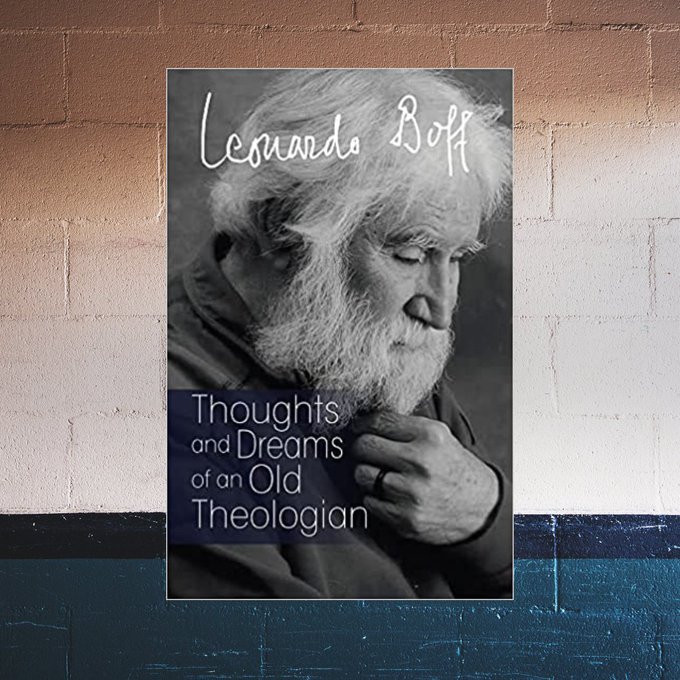
The gains for the church in this articulation are immense. At the same time, however, it appears to me that this hermeneutical stance has not much penetrated the thinking, talk, or action of the church, including the Protestant denominations that I know best. It certainly has not impinged upon so-called evangelical churches that continue in their privatistic, other-worldly ways. And it has not much influenced progressive churches that mostly remain adamantly “liberal” in practice, something very different from “liberationist.” Because of the slowness of the church’s embrace of a liberationist perspective (and in some cases downright resistance), my simple intent here is to call attention to a new book written by Leonardo Boff in his old age, Thoughts and Dreams of an Old Theologian (Orbis Books, 2022). The book is readily readable and accessible, and will serve well as a study guide for a congregation. Boff, a Brazilian, from the outset has been among the earliest and most important voices in calling the church to liberationist perspective and practice. That perspective inevitably has led to a critical stance against the imperial propensity of the Roman Catholic Church, a stance that Boff labels “institutional arrogance.”
That critical stance has caused Boff (and his brother Clodovis, also a theologian) to be twice silenced by the Vatican under John Paul II. Nonetheless, Boff has continued his courageous work as a theologian and a teacher, who now counts Pope Francis as an ally in the work of liberation.
The book, in nine accessible succinct chapters, sums up a lifetime of research, teaching, and testimony. The outline of the book exhibits Boff following the contours of orthodox Trinitarianism, while he unpacks the tradition in fresh and telling ways. In his brief statement on the intention of Jesus, Boff appeals to “Our Father” and its petition for “our bread” (45). He identifies “three fundamental and inevitable hungers”:
The first hunger is for a meeting with Someone good…our kind Daddy (Abba).
The second hunger is the infinite hunger that is never satisfied, the dream of a full meaning for life… This comes with the name Kingdom of God.
There is yet another hunger… This is our daily bread. Without this material basis, talking about our Father and the Kingdom loses its meaning.
Boff summarizes his view of the church that has gotten him into so much trouble with the hierarchy. He pairs the “The Pauline Dimension (Charism) and the Petrine Dimension (Power)” (62). He distinguishes between “power as service” in Jesus and power “as control” in the Petrine Roman model of the church (65). He critiques the self-absorbed power-seeking of the Petrine Church and contrasts it to “the “Christianity of Popular Culture” in which the practical faith of the church, with its compassion and social awareness, does not linger over the perspective of the clergy elite. For good reason, Boff welcomes the great Dogmatic Constitution of the Church (Lumen Gentium) in Vatican II that saw “the people of God” as moving on in faith without excessive respect for the hierarchical structures of the church (71).
The church is not first and foremost a priestly body that creates communities, but the community of those who responded with faith to the call of God in Jesus through his Spirit. The network of these communities forms the People of God because this is the result of a communal, participatory process… Others arise that are more sporadic, but equally important for maintaining the life of the communities; theservice of charity, concern for the poor, the promotion of social justice, particularly human, individual, and social rights, and the rights of nature and Mother Earth (74).
By contrast,
In an ecclesiology that regards the church as a hierarchical society (Petrine), there is no salvation for women in the sense of integration into community services and gifts (Pauline). They are forever marginalized, if not excluded. This state of affairs is incompatible with an ecclesiology that is minimally based on the gospel, which has to incorporate human values because they are also divine values. This is the fundamental reason why we should abandon an exclusively Petrine ecclesiology based on society and hierarchy and build up a Pauline ecclesiology, of community and the People of God (75).
Another recurring, crucial accent in Boff’s work is his deep concern for the earth in his “ecotheology.” He sees in our current thinking and practice two “cosmologies in conflict.” One is a “cosmology of conquest, of power as domination” (83). The alternative is a cosmology “gaining strength, the cosmology of transformation and liberation.” This latter option has received compelling articulation in the encyclical of Pope Francis,LaudatoSi, “On Care for our Common Home” (2015). Boff pays attention to the processes of living organisms that grow and are transformed at death:
Behind all beings acts Fundamental Energy, also called the Nurturing Abyss of all being, which gave origin to the universe and keeps it in being, bringing into existence new beings. The most spectacular of these is the living Earth and we human beings with our component of consciousness and intelligence and the mission to care for the Earth (85).
Boff’s critique of the cosmology of domination is acute:
It started from a false premise that we could produce and consume without limit on a limited planet. The premise also assumes that the fictitious abstraction known as money represents the highest value and that competition and the pursuit of individual interest will result in general well-being. As I described earlier, it takes the form of a cosmology of domination. This cosmology has brought the crisis into thesphere of ecology, politics, ethics, and now economics. The eco-feminists have pointed out the close connection between anthropocentrism and patriarchy, which since Neolithic times has been doing violence to women and nature (86-87).
In his penultimate chapter Boff returns to his most elemental insistence:
The supreme and absolute principle of ethics is “Liberate the poor.” The principle is absolute because it governs actions always, in every place and for all. “Free the poor” presupposes (a) the condemnation of a social totality, of a closed system that excludes and produces poor people; (b) an oppressor who produces poor and excluded people; (c) poor people unjustly made poor and so impoverished; (d) taking into account the mechanisms that reproduce impoverishment; (e) the ethical duty to dismantle such mechanisms; (f) the urgency to build an escape route from the system that excludes people; and, finally (g) the obligation to bring about the new system in which all in principle have a role in participation, in justice and solidarity, including nature.
This ethics starts from the poor, but it is not just for the poor. It is for all, since no one looking at the face of an impoverished person can feel indifferent; everyone feels concerned. This ethics is fundamentally an ethics of justice, in the sense of restoring the recognition denied to the vast majority and including them in the society from which they feel—and indeed are—excluded (109).
At the outset of this piece I have placed a proverb that, well ahead of contemporary ecclesial formulation, had already seen the truth of God’s “preferential option for the poor.” The proverb asserts that God is particularly attached to and attentive to the poor, those who do not and cannot participate effectively in the production-consumption benefits of the economy.
I noticed the term “mock” in the proverb. The “mocking” of the poor is equivalent to insulting or scorning the creator who is the God of the poor. The equation is a remarkable formulation of a deep conviction of the gospel. We will do well to notice, in the context of this proverb, how it is that much church theology and practice have assumed that God and poor have no connection, as we have fashioned a faith that is individualized and privatized, or that is other-worldly in its escapism. The proverb insists otherwise. It affirms the inevitable, inescapable linkage of God to the economic realities of society, to the political reality that acknowledges not only the presence of the poor, but the production of the poor through the management and manipulation of the economy. This simple equation in the proverb amounts to a critical principle that contradicts our systemic arrangements and summons us to an alternative practice and policy.
The term “mock” in the proverb has led me, perhaps inevitably, to the assertion of the apostle Paul in a quite different context:
Do not be deceived; God is not mocked, for you reap whatever you sow _(Galatians 6:7).
Paul’s assertion is an insistence that God’s world is morally coherent, that it is a network of causes and effects, of deeds and consequences that are connected and guaranteed by the ordering of the creator. Thus “sow…reap.” Paul affirms that this linkage, guaranteed by the creator God, cannot be outflanked because it embodies the will of the creator God. God’s intention cannot be avoided, and God’s will cannot be mocked, either through neglect or defiance.
Consider for a moment this juxtaposition of texts:
God is not mocked;
God is insulted by the mocking of the poor.
So yes, God is mocked:
God is mocked whenever poor people lack food;
God is mocked whenever the children of poor people must attend inadequate schools;
God is mocked whenever poor people cannot receive adequate or reliable health care;
God is mocked whenever poor people are left homeless and without safe shelter; God is mocked whenever some in our society lack the security and dignity for full humanness among us.
God is mocked by an economic system of greed that does not notice the poor, or the poor are excluded from the wellbeing of the economy. But God will not finally be mocked, because God is in resolved solidarity with poor people. It only remains for us to devise social perspectives, policies, and practices that are congruent with the holy God who is alive, well, and active in the world.
Boff has seen all of this with courageous clarity. Because he is a Roman Catholic teacher and theologian, he has been preoccupied with the way the Roman Catholic Church has colluded in this grotesque distortion of creaturely reality. But of course Boff’s concern runs well beyond the Roman Catholic Church. His insistence and anticipation is that the “peoples church” cannot be contained in any fearful ideology and that the church may indeed impact the body politic in transformative ways.
Boff concludes his final chapter on spirituality with an appeal to the Eucharist:
And now, beloved Earth, I perform the action Jesus performed in the power of his Spirit. Like him, filled with spiritual power, I take you in my impure hands and pronounce over you the sacred words the universe was hiding and which you longed to hear: “Hoc est enim corpus meum: This is my Body. Hic est sanguis meus. This is my blood.” And then I felt it: what was earth was transformed into Paradise, and what was human life was transformed into divine life. What was breadbecameGod’s body, and what was wine became sacred blood. Finally, Earth, with your sons and daughters, you came to God. You became God by participation. At home, at last. (172).
Boff’s book is well worth sustained attentiveness. It is a fierce wake-up call to the reality of God in whom we trust and to whom we respond; it is this God who will, in the end, not be mocked.
Walter Brueggemann
May 20, 2022
……
Walter Brueggemann is one of the most influential Bible interpreters of our time. He is the author of over one hundred books and numerous scholarly articles. He continues to be a highly sought-after speaker.

 Leonardo Boff