La elección de Lula: lo improbable sucedió 

Los hechos son siempre hechos. Se producen a partir de virtualidades presentes en la realidad, que sorprendentemente o por causas previsibles acaban viniendo a la existencia.

En las elecciones presidenciales de este año lo improbable sucedió. Alguien al que las Escrituras llaman el “inimicus homo”, el hombre del mal, en su afán de perpetuarse en el poder usó todos los medios legítimos y principalmente los ilegítimos para conseguir su objetivo. Él posee las características del “anti-cristo”,  que para el Nuevo Testamento es más un espíritu que una persona concreta. Puede ganar cuerpo en un movimiento y en su líder, pero es fundamentalmente una realidad enemiga de todo lo que es vida y de todo lo que es sagrado.

La característica del “anti-cristo” es arrogarse el lugar de Dios. Y sentirse más allá del bien y del mal. Y entonces usa ambos, pero principalmente el mal: promueve la mentira, difunde fake news, estimula la calumnia, incentiva la violencia real, asesinando, o simbólica, propagando difamaciones; todo lo que proviene del trasfondo más ancestral de nuestras sombras irrumpe con toda desfachatez.

Nuestro país ha vivido durante todo un gobierno bajo el espíritu del “anti-cristo”. Nunca en nuestra historia se vio tanta maldad, tanta mentira establecida como método de gobierno, tanta insensibilidad exaltada como virtud, tanta proclamación de la maledicencia como forma de comunicación oficial. Como dice san Pablo en su Epístola a los Romanos, “aprisionaron la verdad bajo la injusticia” (1,18).

Es  propio del espíritu del “anti-cristo” ocultarse en el mundo de lo oscuro, de las zonas enemigas de la luz y destrozar todos los rasgos de transparencia. Es propio también de este tipo de espíritu subyugar a personas que se dejan fascinar por la brutalidad de los comportamientos, por la insensatez de las decisiones y por la violencia infligida a los más débiles, a los más cobardemente marginados, como los pobres, las mujeres, los negros, los indígenas y aquellos que por sí solos no consiguen defenderse. Dicen exultantes: “tiene que ser así, hay que usar la violencia, es bueno ser borde y grotesco”; “así es como hay que ser”.  Y proclamaban “mito” o “nuestro héroe” a aquel por el que se sienten representados.

Pero la experiencia secular humana ha mostrado que la noche nunca perdura todo el tiempo, que no hay tempestad que no cese en un momento dado y de lugar a la alegría del brillo del sol. Y así ha ocurrido en nuestro país. Quien tenía la absoluta certeza de triunfar, hasta por pretendida promesa divina, se vio en el último momento, derrotado. El “mito” se deshizo con la rapidez de un cubito de hielo, simplemente se sintió un muerto-vivo, como escondido en su propia sepultura. Las palabras murieron en su garganta. Las lágrimas nunca antes lloradas, cuando era digno  llorarlas, no paraban de correr por el rostro entumecido.

Se comprueba lo que la historia irreversiblemente ha revelado: lo improbable sucede. Por eso tenemos que contar siempre con lo improbable y lo inconcebible, pues ambos forman parte de la historia. Quien usó de todo, pero de todo, hasta de lo más sagrado que es el espacio de lo Religioso, no pudo impedir que irrumpiese lo improbable y sorprendentemente lo derrotase.

Vemos unos ejemplos. Lo más improbable en Estados Unidos era que un negro llegase un día a la presidencia. Y llegó Obama. Que un prisionero político, también negro, con años de prisión a trabajos forzados, llegase a ser presidente de Sudáfrica, Mandela. Era totalmente improbable que alguien venido “del fin del mundo”, prácticamente desconocido, fuese elegido para el supremo pontificado, como el papa Francisco.   Era absolutamente improbable que una joven campesina  de 17 años, como Juana de Arco, dirigiese un ejército y venciese a una parte del ejército inglés en la guerra de los cien años.

Por lo tanto, lo improbable existe y puede suceder. Ningún hecho realiza todas las posibilidades escondidas dentro de él. Innumerable virtualidades están ahí dentro y cuando la historia madura o el mal llega a su paroxismo y tiene que ser vencido, entonces lo improbable irrumpe victorioso. Contra todas las expectativas el “inimicus homo” perdió. Lo improbable lo derrotó.

Brasil  ha vuelto a respirar un aire menos contaminado por el veneno de la injusticia, de la cobardía y de la mentira.

Lo improbable realizado nos lleva a soñar con los ojos despiertos. Quien tiene hambre puede tener la seguridad de que va a comer, quien está desempleado de que va a poder trabajar. Quien soportó todo tipo de injuria y de humillación se siente protegido por la ley que va a valer para todos. Y la esperanza esperante   volvió finalmente para  posibilitarnos un destino más halagüeño que nos permita  vivir con la paz posible concedida a los hijos e hijas de los bíblicos Adán y Eva.

*Leonardo Boff ha escrito En busca de la justa medida: el pescador ambicioso y el pez encantado, Vozes 2022.

Traducción de María José Gavito Milano
     O improvável acontece e aconteceu

Os fatos são sempre feitos. São feitos a partir de virtualidades presentes na realidade que surpreendentemente ou por  causas previsíveis, acabam vindo à existência.

Nas eleições presidenciais deste ano o improvável aconteceu. Alguém que as Escrituras chamam de o “inimicus homo”, o homem do mal, no afã de se perpetuar no poder usou todos os meios legítimos e principalmente os  ilegítimos para conseguir seu objetivo. Ele possui as características do “anti-cristo” que para o Novo Testamento o  “anti-cristo” é mais um espírito do que uma pessoa concreta. Pode ganhar corpo num movimento e no seu líder, mas é, fundamentalmente, uma realidade inimiga de tudo que é vida e de tudo o que é sagrado.

A característica do “anti-cristo” é arrogar-se o lugar de Deus. É sentir-se para além do bem e do mal. E então usa a ambos,mas principalmente o mal: promove a mentira, difunde fake news, estimula a calúnia, incentiva a violência real, assassinando, ou simbólica, propalando difamações: tudo o que provém do transfundo mais ancestral de nossas sombras irrompe com toda a desfaçatez.

O nosso país viveu durante todo um governo sob o espírito do “anti-cristo”.Nunca se viu em nossa história tanta maldade, tanta mentira estabelecida como método de governo, tanta insensibilidade exaltada como virtude, tanta proclamação da maledicência como forma de comunicação oficial. E com disse São Paulo em sua Epístola aos Romanos, “aprisionaram a verdade sob a injustiça”(1,18).

É próprio do espírito do “anti-cristo” ocultar-se no mundo do obscuro, das zonas inimigas da luz  e destroçar todos os traços de transparência. É próprio também deste tipo de espírito arrebanhar pessoas que se deixam fascinar pela brutalidade dos comportamentos, pela insensatez das decisões e pela violência infligida aos mais fracos, aos covardemente postos à margem como os pobres, as mulheres, os negros, os indígenas e aqueles que, por si só,não conseguem se defender. Dizem exultantes: “é isso mesmo;, tem que se usar de violência; é bom ser grosso e grotesco”; “é isso que tem que ser”. E proclamam aquele com quem se sentem representados como “mito” ou o “nosso herói”.

Mas a experiência secular humana tem mostrado que a noite nunca perdura por todo o tempo, que não há tempestade que, num dado momento, não cesse e dê lugar a alegria do brilho do sol. Pois assim ocorreu em nosso país.Quem tinha a absoluta certeza de triunfar, até por pretensa promessa divina, se viu, no último momento, derrotado. O “mito” se desfez com a  rapidez de um pequeno bloco de gelo, simplesmente se sentiu um morto-vivo, como que escondido em sua própria sepultura. As palavras morreram-lhe na garganta. As lágrimas nunca antes choradas, quando era digno chorá-las, não paravam de escorrer pelo rosto entumecido.

Comprova-se o que  história irreversivelmente tem revelado: o improvável acontece. Por isso temos que contar com o improvável e com o inconcebível. Eles pertencem à história. Quem usou de tudo, mas de tudo mesmo, até do mais sagrado que é o espaço do Religioso, não impediu que o improvável irrompesse e o derrotasse surpreendentemente.

Demos uns exemplos. O mais improvável dos USA era que um negro chegasse, um dia, à presidência da república. E Obama  chegou. Que  um prisioneiro político, com anos de prisão sob trabalhos forçados, também negro, chegasse a ser o presidente da África do Sul, Mandela. Seria totalmente improvável que alguém vindo “do fim do mundo” praticamente desconhecido, fosse eleito ao supremo pontificado, como o Papa Francisco. Era absolutamente improvável que uma jovem camponesa de 17 anos chefiasse um exército, como Joana d’Arc, vencendo parte do exército inglês na guerra dos cem anos.

Portanto,o improvável existe e pode acontecer. Nenhum fato realiza todas as possibilidades escondidas dentro dele.Inúmeras virtualidades estão lá dentro e quando a história madura ou o mal chegou ao seu paroxismo e tem que ser vencido. Então o improvável irrompe vitorioso. Contra todas as expectativas o “inimicus homo” perdeu. O improvável o derrotou.

A Brasil voltou a respirar um pouco de ar menos contaminado pelo veneno da injustiça, da covardia e da mentira.

O improvável realizado nos leva a sonhar com os olhos acordados.Quem tem fome pode ter a certeza que vai comer, quem está desempregado sabe que vai poder trabalhar. Quem suportou todo tipo de injúria e de humilhação se sente protegido pela lei que vai valer para todos. E a esperança esperante,finalmente, voltou para nos possibilitar um destino mais auspicioso que nos propicie viver com a paz possível, concedida aos filhos e filhas dos bíblicos Adão e Eva.

Leonardo Boff escreveu A busca da justa medida: o pescador ambicioso e o peixe encantado, Vozes 2022.

Stadien der tragischen ökologischen Aggressivität des Menschen

Reduziert man die 13,7 Milliarden Jahre der Existenz des Universums auf ein Jahr, so ist der heutige Mensch, sapiens sapiens, nach Berechnungen mehrerer Kosmologen am 31. Dezember um 23 Stunden, 58 Minuten und 10 Sekunden im Prozess der Evolution erschienen. Wir erscheinen also weniger als zwei Minuten nach Beginn des letzten kosmischen Jahres. Welchen Sinn hat es, so spät im kosmogenen Prozess angekommen zu sein? Um einen solchen Prozess zu krönen oder um ihn zu zerstören? Das ist eine offene Frage. Was wir sehen können, ist unsere wachsende Zerstörungswut gegenüber der Umwelt, in der wir leben, der Natur und unserem gemeinsamen Haus. Schauen wir uns einige Stufen unserer Aggressivität an. Das wirft beunruhigende Fragen auf.

1. Interaktion mit der Natur

Am Anfang hatten unsere Vorfahren, verloren in den Schatten der Urzeit, eine harmonische Beziehung zur Natur. Sie unterhielten eine nicht destruktive Interaktion: Sie nahmen, was die Natur ihnen reichlich bot. Diese Zeit dauerte einige Jahrtausende und begann in Afrika, wo der Mensch vor 8-9 Millionen Jahren auftauchte. Daher sind wir alle in gewisser Weise Afrikaner. Dort haben sich unsere körperlichen, psychischen, intellektuellen und geistigen Strukturen herausgebildet, die im Unbewussten aller Menschen bis heute präsent sind.

2. Eingriffe in die Natur

Vor mehr als zwei Millionen Jahren brach der geschickte Mensch (homo habilis) in den Prozess der Anthropogenese (der Entstehung des Menschen in der Evolution) ein. Hier fand ein erster Wendepunkt statt. Es begann, was heute in extremer Weise kulminiert.

Der geschickte Mensch erfand Instrumente, mit denen er in die Natur eingriff: einen spitzen Stock, einen scharfen Stein und andere ähnliche Mittel. Was die Natur ihm spontan bot, war nicht genug. Mit einem Eingriff konnte er ein Tier mit dem scharfen Ende eines Stocks verwunden und töten oder Pflanzen mit scharfen Steinwerkzeugen schneiden.

Dieser Eingriff dauerte Jahrtausende. Aber mit der Einführung von Landwirtschaft und Bewässerung entwickelte er sich noch viel intensiver. Dies geschah vor etwa 10-12 Tausend Jahren (je nach Region unterschiedlich), in der so genannten Jungsteinzeit. Man leitete das Wasser von Flüssen wie dem Tigris und dem Euphrat im Nahen Osten, dem Nil in Ägypten, dem Indus und dem Ganges in Indien und dem Gelben Fluss in China ab. Sie verbesserten den Ackerbau, züchteten Schlachttiere und Vögel, insbesondere Hühner, Schweine, Rinder und Schafe. Die menschliche Bevölkerung wuchs schnell. Zu dieser Zeit hörten die Menschen auf, Nomaden zu sein, und wurden sesshaft. Sie gründeten Dörfer und Städte, im Allgemeinen entlang der oben erwähnten Flüsse oder um den riesigen Binnensee, den Amazonas, der vor Tausenden von Jahren in den Pazifik mündete.

3. Aggression gegen die Natur

Von der Intervention ging es weiter zur Aggression der Natur. Sie entstand, als Metallinstrumente, Speere, Äxte und Waffen verwendet wurden, um Tiere und Menschen zu töten. Die Aggression spezialisierte sich, bis sie im Industriezeitalter des 18. Jahrhunderts in Europa, angefangen in England, ihren Höhepunkt erreichte. Es wurden riesige Maschinen erfunden, mit denen man der Natur enorme Reichtümer entlocken konnte. Ein entscheidender Schritt in der Aggression wurde in der Neuzeit vollzogen, als die Technowissenschaft mit ihrer immensen Kapazität zur Erforschung der Natur auf allen Ebenen und an allen Fronten aufkam.

Sie beruhte auf der Annahme, dass der Mensch sich als “Herr und Besitzer” der Natur und nicht als Teil von ihr fühlte. Die treibende Idee, die sie leitete, war der Wille zur Macht, verstanden als die Fähigkeit, alles zu beherrschen: andere Menschen, soziale Gruppen, Völker, Kontinente, die Natur, die Materie, das Leben und die Erde selbst als Ganzes.

Der Engländer Francis Bacon drückte dieses Ziel mit den Worten aus: “Man muss die Natur quälen, wie der Folterer sein Opfer quält, bis sie alle ihre Geheimnisse preisgibt”. Damit erhielt die Aggression einen offiziellen Status. Sie wurde und wird bis zum heutigen Tag angewandt.

Der Ausgangspunkt war die (falsche) Annahme, dass die natürlichen Ressourcen unbegrenzt seien. So konnte ein Entwicklungsprojekt geschmiedet werden, das ebenfalls unbegrenzt war. Heute wissen wir, dass die Erde begrenzt und endlich ist und dass sie kein Projekt für unbegrenztes Wachstum zulässt. Dennoch ist dieser Glaube immer noch vorherrschend.

4. Die Zerstörung der Natur

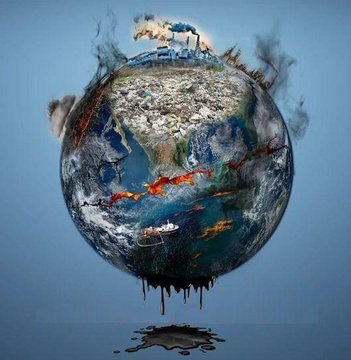
In den letzten Jahrzehnten, vor allem nach dem Zweiten Weltkrieg (1939-1945), nahm die systematische Aggression ein Ausmaß an, das einer echten Zerstörung der Ökosysteme und der biologischen Vielfalt gleichkam. Mutter Erde selbst wurde nun an allen Fronten angegriffen. Um den gegenwärtigen Verbrauch der Menschheit zu decken, brauchen wir anderthalb Erden, was zum “Earth Overshoot” führt, der dieses Jahr am 22. Juli stattfand.

Namhaften Wissenschaftlern zufolge haben wir ein neues geologisches Zeitalter, das Anthropozän, eingeläutet, in dem der Mensch die größte Bedrohung für die Natur und das Leben darstellt. Wir sind an einem Punkt angelangt, an dem unser industrieller Prozess und unser konsumorientierter Lebensstil jährlich etwa 100 000 lebende Organismen dezimieren. Aufgrund dieser wahren biologischen Tragödie sprechen wir vom Nekrozän, d. h. dem Zeitalter des Massensterbens (necro) von natürlichem Leben und auch von menschlichem Leben. Auch im Amazonasgebiet werden ganze Ökosysteme in Mitleidenschaft gezogen. Schließlich sprechen einige bereits vom Pyrozän (Pyros ist griechisch für Feuer). Die Veränderung des Klimaregimes und die unaufhaltsame Erwärmung trocknen den Boden aus und erhitzen auch die Steine so, dass Stöcke und trockene Blätter Feuer fangen, das sich ausbreitet und riesige Brände verursacht, die bereits in Europa, Australien, dem Amazonas und anderen Orten zu beobachten sind.

Wer wird den zerstörerischen Impetus und die Wut des Menschen stoppen, der mit chemischen, biologischen und nuklearen Waffen bereits die Mittel zu seiner eigenen Selbstzerstörung geschaffen hat? Nur göttliches Eingreifen? Gott, so heißt es in der Heiligen Schrift, ist der Herr des Lebens und der “leidenschaftliche Liebhaber des Lebens”. Wirst du intervenieren? Die Fragen bleiben offen.

Leonardo Boff Befreiungstheologe aus Brasulien, Auchtor mit Mark Hathaway, The Tao of liberatioin, N.Yorl 2010.

Stages of the tragic ecological aggressiveness of human beings

If we reduce the 13.7 billion years of the existence of the universe, to just one year, the current human being, sapiens sapiens, appeared in the process of evolution on December 31, at 23 hours, 58 minutes and 10 seconds, according to calculations by several cosmologists. So we appear less than two minutes into the final cosmic year. What is the point of having arrived so late in the cosmogenic process? To crown such a process or to destroy it? This is an open question. What we can see is our growing destructiveness of the environment in which we live, nature and our Common Home. Let’s see some stages of our aggressiveness. It leaves us with disturbing questions.

1. Interaction with nature

In the beginning, our ancestors, lost in the shadows of time immemorial, had a harmonious relationship with nature. They entertained a non-destructive interaction: they took what nature plentifully offered them. That time lasted a few millennia, starting in Africa, where human beings appeared 8-9 million years ago. Therefore, we are all, in some way, Africans. Our bodily, psychic, intellectual and spiritual structures were formed there, which are present in the unconscious of all humans until the present day.

2. Intervention in nature

More than two million years ago, skilled man (homo habilis) erupted in the process of anthropogenesis (the genesis of the human being in evolution). Here a first turning point occurred. It began what culminated in an extreme way today.

The skillful man invented instruments with which he operated an intervention in nature: a pointed stick, a sharp stone and other similar resources. What nature spontaneously offered him was not enough. With intervention, he could wound and kill an animal with the sharp end of a stick or he could cut plants with sharp stone tools.

This intervention lasted millennia. But with the introduction of agriculture and irrigation it developed much more intensely. This occurred around 10-12 thousand ago (different in different regions), in the so-called Neolithic era. Waters were diverted from rivers, such as the Tigris and Euphrates in the Middle East, the Nile in Egypt, the Indus and Ganges in India and the Yellow in China. They improved crops, raised animals and birds to be slaughtered, especially chickens, pigs, oxen and sheep. The human population grew rapidly. It is the time when humans stopped being nomads and became sedentary. They created towns and cities, generally, along the rivers mentioned above or around the immense internal lake, the Amazon, which thousands of years ago flowed into the Pacific.

3.Aggression to nature

From intervention we moved on to the aggression of nature. It occurred when metal instruments, spears, axes, and weapons were used to kill animals and people. Aggression specialized until it culminated in the industrial age of the 18th century in Europe, starting in England. Vast machinery was invented that allowed extracting enormous riches from nature. A decisive step in aggression was taken in modern times, when techno-science emerged with an immense capacity for exploring nature on all levels and fronts.

It was based on the premise that human beings felt themselves to be “masters and owners” of nature and not part of it. The driving idea that guided them was the will to power, understood as the ability to dominate everything: other people, social groups, peoples, continents, nature, matter, life and the Earth itself as a whole.

The Englishman Francis Bacon expressed this purpose by saying: “One must torture nature as the torturer tortures his victim, until she gives up all her secrets”. Here aggression gained official status. It was and continues to be applied to the present day.

The starting point was the (false) assumption that natural resources were unlimited. This allowed forging a development project that was also unlimited. Today we know that the Earth is limited and finite and that it does not support a project of unlimited growth. But this belief is still dominant.

4. The destruccion od the nature

In recent decades, especially after the Second World War (1939-1945), systematic aggression gained dimensions of true destruction of ecosystems and biodiversity. Mother Earth itself began to be attacked on all its fronts. To meet current human consumption, we need an Earth and a half, which produces the Earth Overshoot, which this year occurred on July 22nd.

According to notable scientists, we have inaugurated a new geological era, the Anthropocene, in which human beings emerge as the greatest threat to nature and life. It has reached the point where our industrialist process and consumerist lifestyle decimate around 100,000 living organisms annually. Based on this true biological tragedy, we speak of the necrocene, that is, the era of mass death (necro) of natural lives and also of human lives. Entire ecosystems are also being affected in the Amazon. Finally, some already refer to the pyrocene (Pyros in Greek is fire). The change in the climate regime and the unstoppable warming dry out the soil and also heat up the stones in such a way that sticks and dry leaves catch fire that spreads, generating huge fires already experienced throughout Europe, Australia, the Amazon and other places. .

Who will stop the destructive impetus and fury of the human being who has already built the means of his own self-destruction with chemical, biological and nuclear weapons? Just divine intervention? God, according to the Scriptures, is the Lord of life and the “passionate lover of life.” Will you intervene? Questions remain open.

Leonardo Boff, wrote The satan man or good angel? Record, Rio de Janeiro 20