The Mysterious Destiny of Each One

Each of us is as old as the universe, 13.7 billion years. We were all there in that tiny point, smaller than the head of a pin, but full of energy and matter. The big bang created the enormous red stars, containing all the physical-chemical elements that comprise the universe and and all beings that were created from them. We are the sons and daughters of the stars and cosmic dust. We are also the portion of the living Earth that has come to feel, think, love and venerate. Through us, the Earth and the Universe knows that it forms a large Whole. And we can develop awareness of that belonging.

What is our place in that Whole? More immediately, in the process of evolution? On Mother Earth? In human history? We cannot know that yet. Perhaps it will be the great revelation when we make the alchemc pass from this side of life to the other. There, I hope, all will be clear and we will be surprised because everything is interrelated, forming the immense chain of beings and the fabric of life.

We will fall, that I believe, into the arms of God-Father-and-Mother of infinite mercy for whomever needs it, due to wickedness, and in a eternal loving embrace for those whose lives were guided by good and love. After passing through the clinic of God-mercy, the others will also come.

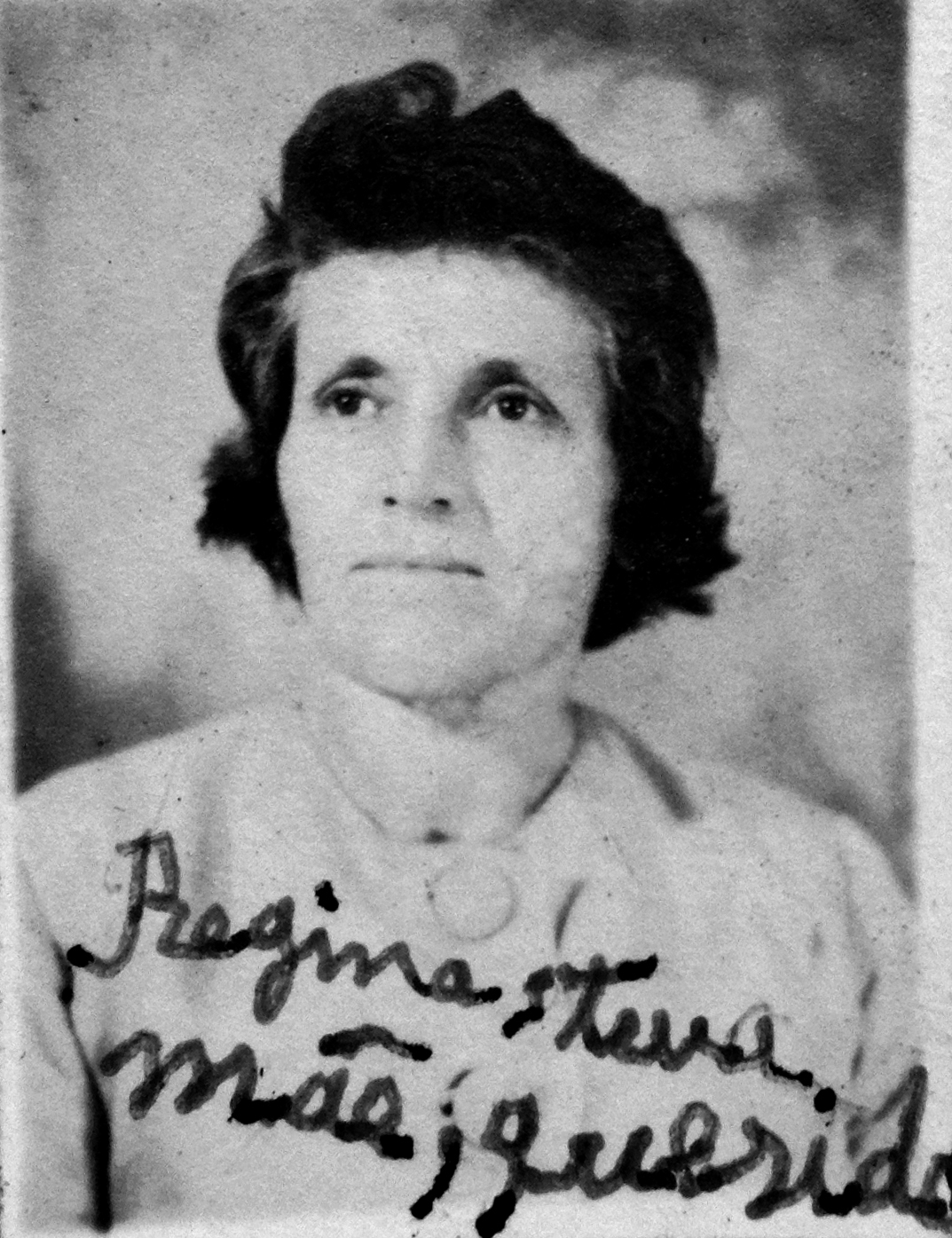
As an infant of a few months, I was condemned to die. My mother remembers, and my aunts would always repeat, that I had “el macaquiño”, the popular name for profound anemia. Whatever I took in, I would vomit. Everyone said, in the véneto dialect: “poareto, va morir”: “poor little child, he will die”.

Desperate and in secret from my father, who did not believe in such things, my mother went to the prayer woman, to the old Campañola. She prayed, and told to my mother: “give the child a bath with these herbs and after baking bread in the oven, wait until it is lukewarm and put your little child inside”. That is what Regina, my mother, did. She scooped out the freshly baked bread and put me inside. And she left me there for a good while.

A transformation occurred. When I was taken out, as they say, I began to cry and seek my mother’s breast and to suckle my mother’s milk. Afterwards, my mother would chew some stronger foods and she would give that to me. I began to eat and become stronger. I survived. And here I am, officially an 80 year old man.

I went through several close calls that could have cost me my life: a DC-10 plane in flames on way to New York; a car accident with a dead horse on the highway that left me totally broken; a huge nail that fell in front of me when I was studying in Munich, that could have killed me if it had fallen on my head. I fell into a deep snow covered ravine in the Alps and some Bavarian peasants, seeing my dark habit and that I was falling deeper and deeper, pulled me out with a rope. And there were others.

Norberto Bobbio gave me the title honorary doctor of politics from the University of Turin. He understood that the theology of liberation had made an important contribution by affirming the historic strength of the poor. The classic helpfulness or mere solidarity, keeping the poor always dependent, is insufficient, it is not enough. The poor can be the subjects of their own liberation when they are made aware (concientizados) and organized. We overcame the “for the poor.” We insist on walking “with the poor,” they being the protagonists. And those who can and have that charisma, live as the poor. Many did, such as Dom Pedro Casaldaliga.

II remember that I began my words of gratitude for the degree I received from that noble figure, Norberto Bobbio, with: “I come from carved stone, from the bottom of history, when we barely had the means to survive. My Italian ancestors and my family made a clearing in an uninhabited region covered with pine groves, in Concordia, on the edge of Santa Catarina. They had to struggle to survive. Many died for lack of medical care. Later on I rose on the ladder of evolution: the 11 brothers studied, went to the university, and I was able to complete my studies in Germany. And now I am here in this famous University”.

At Bobbio’s request, I did a study of the purposes of Theology of Liberation, that has at the core the preferential option for the poor, against poverty and in favor of social justice. I have given many lectures all over the world, I have written a lot, wiped away tears and kept strong the hope of militants who were frustrated by the course of events in our country.

What will my destiny be? I do not know. I took as my motto that of my father, who lived it: “who does not live to serve, does not have a life worth living”. God has the last word.

Leonardo Boff Eco-Theologian-Philosopher Earthcharter Commission

Free translation from the Spanish sent by
Melina Alfaro, alfaro_melina@yahoo.com.ar.
Done at REFUGIO DEL RIO GRANDE, Texas, EE.UU.
 

The Age of Unproductive Capital: New Architectures of Power: L.Dowbor

Ladislau Dowbor é um dos nossos melhores economistas, professor de pós-graduação da PUC-SP, com vasta experiência internacional. É crítico do atual sistema do capital, particularmente o especulativo que domina e explora o mundo inteiro. Comparece como  um dos poucos  que associa economia com ecologia e por isso nos dá uma visão ampliada da economia e dos riscos que correm o sistema vida e o sistema Terra. Recebeu um grande elogio do Noam Chomsky, considerado possivelmente o maior intelectual dos USA. Publicamos aqui uma apresentação do livro em inglês pois nos convida a lê-lo e iluminar nossa perspectiva sobre os caminhos do poder econômico que se espraia em todos os países. LBoff

***********************************************

Ladislau Dowbor – The Age of Unproductive Capital: New Architectures of Power – Cambridge Scholars, UK, 2019

This book offers a very direct and readable analysis of the main challenges facing our societies today, such as reducing inequality, protecting the planet, and in particular mobilizing our financial resources which linger in tax havens and feed speculation, instead of funding the sustainable development we need. It precisely considers the most important factors, including corporate governance, financialization, capturing political power, and the limits to adequate national economic policies in a world dominated by global finance. The Brazilian experience has been highlighted. The book’s presentation of how sensible and productive policies are dismantled will be highly interesting for the international community, whether in the academic, corporate or government spheres.

“Ladislau Dowbor’s work on unproductive capital [is] a revealing and deeply informed study of the enormous power that has accrued to financial institutions and the deleterious impact on the global economy as financial transactions drain the economy and undercut productive investment.  Dowbor’s focus is on the Brazilian experience, analyzed with care and insight, but the implications, as he clearly shows, are global in scope.  A very important contribution.”

Noam Chomsky – Massachusetts Institute of Technology, USA

Cover and back-cover:

http://dowbor.org/blog/wp-content/uploads/2019/01/19-Cambridge-capa.pdf

Sample first 30 pages:

https://www.cambridgescholars.com/download/sample/65049

Cambridge Scholars book-shop:

https://www.cambridgescholars.com/search?Q=dowbor&As=true&As=false

Contact Ladislau Dowbor: ldowbor@gmail.com

Ladislau Dowbor web-page : http://dowbor.org


The foolishness of anti-globalism

An anti-globalist wave is breaking out around the world. This is perhaps one of the most regressive and absurd things in the world today. There was certain anti-globalism, fruit of the protectionism of several countries, but it was not a threat to the general and irreversible process of globalization. That wave was adopted for his political platform by Donald J.Trump who, according to Economics Nobel laureate Paul Krugman, is one of most stupid Presidents in Northamerican history. The same can be said of our recently elected President, the former captain Bolsonaro and his secretaries of State and of Education, deniers of this phenomenon, that only prejudiced and uninformed persons cannot see.

Why is this such a senseless blunder? Because it contravenes the logic of an uncontrollable historical process. We have reached a new phase in the history of the Earth and Humanity. So let’s see: thousands of years ago, human beings, who arose in Africa, (all of us are Africans) began to disperse throughout the vast world, beginning with Eurasia and ending in Oceania. By the end of superior paleolithic, some forty thousand years ago, human beings already occupied the whole planet, with about one million people.

Since the XVI century the return of the diaspora began. In 1521 Fernando de Magallanes accomplished the first journey around the planet, proving that the Earth is round. Any place can be reached from any where else. The European colonialist project Westernized the whole world. Great networks, especially commercial, connected everything. This process started in the XVII century and continued through the XIX century when European imperialism, with sword and musket, subjected the whole world to its interests. We, of the Far West, were born already globalized. The movement grew in the XX century, after World War II.

At present, it was realized when Internet social networks, at the speed of light, connected everyone, and the economy took this process into account, especially through the “great transformation” (K. Polanyi), the transition from a market economy to a market society. Everything, including even the most sacred of truths and religions, was reduced to merchandise. Karl Marx in his book, The Misery of Philosophy (1847) called this “the general corruption” and “universal venality”.

Globalization, which the French prefer to call, with good reason, planetization, is an undeniable historical fact. We all find ourselves in the same place: planet Earth. We are in the tyrannosaur phase of globalization, that is being formed under the sign of the worldwide integrated economy, as voracious as the largest of the dinos, the tyrannosaur, for being profoundly inhumane regarding the poverty it causes and the absurd accumulation it allows.
We have already entered the human-social phase of globalization, due to some factors that have become universal, such the UN, OMC, FAO, and others, human rights, the democratic spirit, the awareness of a common destiny as Earth-Humanity, and of being homo sapiens sapiens and demens, a single species.

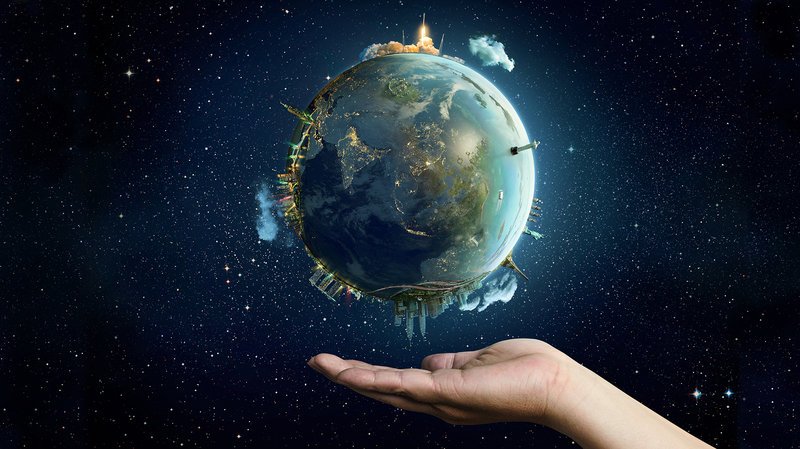
We already sense the dawn of the echozoic-spiritual phase of globalization. The integral ecology and life in its diversity, and not the economy, will be central. The reverence before all of creation and the new appreciation for the Earth, seen as Mother and a living super Organism that we must care for and love, are profoundly spiritual values. The idea is growing that we are the portion of the living Earth that with a high degree of complexity started to feel, to think, love and to venerate. Earth and Humanity form a single entity, as the astronauts have well testified from their space ships.

The moment has come, as paleontologist and scientist Pierre Teilhard de Chardin prophesied in 1933, when “the age of nations has passed. If we do not want to die, it is time to shake off old prejudices and build the Earth”. She is our unique Common Home, the only one we have, as Pope Francis emphasized in his encyclical letter On the Caring for the Common Home. (2015). We do not have any other.

We are hearing strange prejudices from future power holders and secretaries, claiming that globalization is a communist plot to dominate the world. They are those who, according to Chardin, do not take the time to build the Common Home, but who become prisoners of their petty minded small world, their tiny brains lacking of light.
If they cannot see the new shining star, the problem is not with the star, but with their blind eyes.

Leonardo Boff Eco-Theologian-Philosopher  and of the Earthcharter Commission

Free translation from the Spanish sent by
Melina Alfaro, alfaro_melina@yahoo.com.ar.
Done at REFUGIO DEL RIO GRANDE, Texas, EE.UU.
Cries of captivity and liberation on Black Awareness Day

The Passion of Christ continues century after century in the bodies of the crucified. Jesus will agonize until the end of the world, so long as a single one of His brothers and sisters is still subject to some cross, like the Buddhist bodhisatwas (the Illuminated) who pause at the threshold of Nirvana, do not enter, returning to the world of the suffering –samsara– in solidarity with all who suffer — persons, animals and plants. With this conviction, the Catholic Church, in the liturgy of Good Friday, puts these moving words in the mouth of Jesus Christ:
“My people, what have I done, how have I offended you?, answer me. What else could I have done for you? How did I fail you? I had you leave Egypt and fed you manna. I prepared good land for you, and you prepared a cross for your king”.

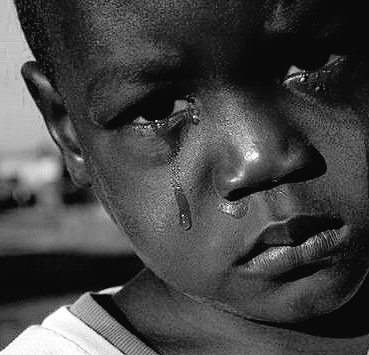
As we Brazilians celebrate the abolition of slavery, (May 13, 1888), we realize that it is still incomplete. The Passion of Christ continues in the passion of the Black people. A second abolition is needed: the abolition of misery and hunger. The cries of captivity and liberation are still heard, coming from the senzalas, and now from the favelas around our cities. The Black population still talks to us through wails and pleading.

“White brother and sister of mine, my people: what have I done to you, how have I offended you? Answer me! ”

I inspired in you music full of banzo and contagious rhythm. I taught you how to use the bumbo, the cuica and the atabaque. It was I who gave you the rock and ginga of the samba. And you took what was mine, made a name… a big name, accumulated money with your compositions and returned nothing to me.

I came down from the mountains and showed you a world of dreams, a world of boundless fraternity. I created for you thousands of multicolored fantasies, and for you I prepared the greatest feast in the world: I danced the carnival for you. And you were so very happy that you gave me a standing ovation. But soon, very soon, you forgot me, sending me back to the mountains, to the favelas, to the naked and crude reality of unemployment, hunger and oppression. .

“White brother and sister of mine, my people: what have I done to you, how have I offended you? Answer me! ”

As an inheritance, I gave you the beans and rice that are the day-to-day dish. Of the left overs I made the feijoada, the vatapá, the efó and the acarajé: the typical cuisine of Bahia and Brazil. And you make me endure hunger. And you let my children die of malnutrition or suffer irremediable brain injury, leaving them forever stunted.

I was violently snatched from my African homeland. I knew the negreros’ nave-phantom. I was made a thing; a “piece“, a slave. I was the Black mother to your children. I cultivated the fields, harvested the tobacco and planted the sugarcane. I did all the jobs. It was I who built the beautiful churches that everyone admires and the palaces that the slave owners inhabit. And you call me sluggish and arrest me as a vagabond. You discriminate against me for the color of my skin and still treat me as if I continued to be a slave.

“White brother and sister of mine, my people: what have I done to you, how have I offended you? Answer me!”

I knew how to resist. I managed to run away and founded quilombos: fraternal societies, without slaves, of people who were poor but free: Blacks, mestizos and whites. In spite of the lashes on my back, I passed cordiality and sweetness to the Brazilian soul. And you sent me to the capitão-do-mato, hunting me like a bug. You razed my quilombos and still now you ensure that abolishing the misery that enslaves cannot be forever a daily and effective truth.

I showed you what it means to be a living temple of God. And therefore, how to feel God in a body filled with axé, and how to celebrate God in rhythm, in dance, and in food. And you repressed my religions, calling them Afro-Brazilian rites or considering them simple folklore. You invaded my terreiros, throwing salt on them and destroying our sacred figures. Often you turned the macumba into a police case. The majority of the youth murdered in the peripheries between 18 and 24 years of age are Black, and because they are Black they are suspected of being at the service of the drug mafias The majority of them are simple laborers.

“White brother and sister of mine, my people: what have I done to you, how have I offended you? Answer me!”

When with so much work and sacrifice I enabled some advance in life, receiving a hard-earned salary, buying my little house, educating my children, singing my samba, supporting my favorite team and being able to have a cold beer with their friends on the week end, you say that I am a Black man with a white man’s soul, thus degrading the value of our souls as dignified and hard working Black men. And in the contests, under equal conditions, you almost always leave me behind, in favor of a white.

And when policies were developed to repair the historic perversity, allowing that which you always denied me, to study and prepare myself in the universities and technical schools, so that I could improve my life and the life of my family, the majority of your people shouted: that violates the Constitution, it is discrimination, a social injustice.

“White brother and sister of mine, my people: what have I done to you, how have I offended you? Answer me!”

My Black brothers and sisters, on this November 20th, the day of Zumbí and of the Black Consciousness, I wish to pay homage to you, to all of you, who have managed to survive during all this long time, because the happiness, the music, the dance and the sacred are all inside of you in spite of all this Way of the Cross. of the sufferings that are unjustly imposed on you.

With much axé and love, Leonardo Boff white and Black, by option.

Leonardo Boff Eco-Theologian-Philosopher Earthcharter Commission

Free translation from the Spanish sent by
Melina Alfaro, alfaro_melina@yahoo.com.ar.